
For centuries, museums have preserved the objects through which humanity understands itself: beauty, craft, memory, belief, power, and imagination. The British Museum is one of the rare institutions where this story can be read across civilisations, from ancient worlds to modern visual culture. Yet today, the Museum’s responsibility extends beyond preservation: it is to turn history into a living language of accessibility and inclusion, one that can be experienced not only inside galleries, but carried into the world by the people who engage with it.
By Sheng Alferez
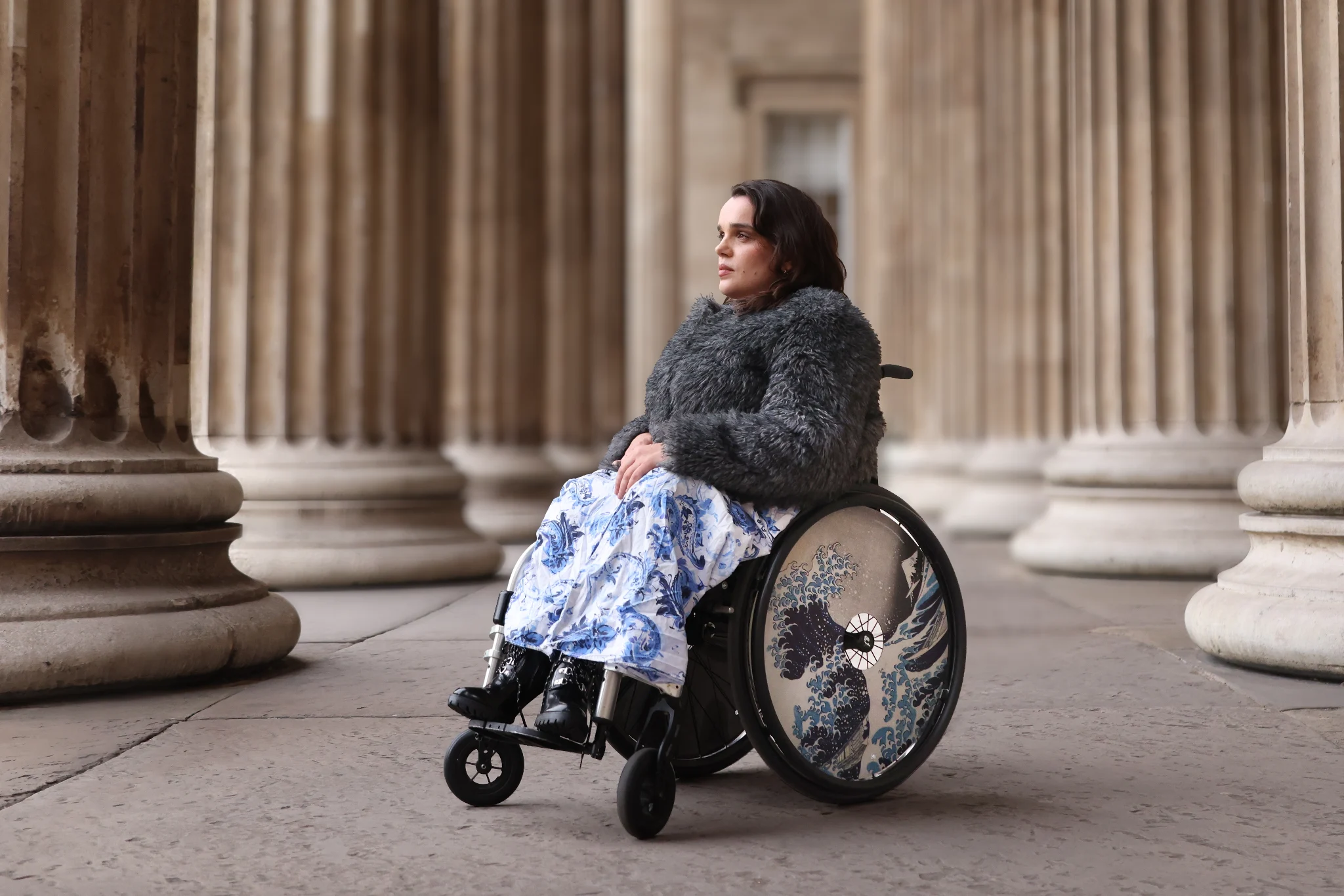
Photo courtesy of Bergh Special Products | Photography by Jaime Prada | In frame: Alexandra Kutas
This question lies at the centre of a new collaboration between the British Museum and Bergh Special Products, the Dutch mobility accessories company founded in 1999 by Frank Bod. Together, they have created an official licensed collection of wheelchair spoke guards adapted from artworks and artefacts in the Museum’s collection. The project brings cultural heritage onto one of the most personal and visible surfaces in mobility design: the wheelchair.
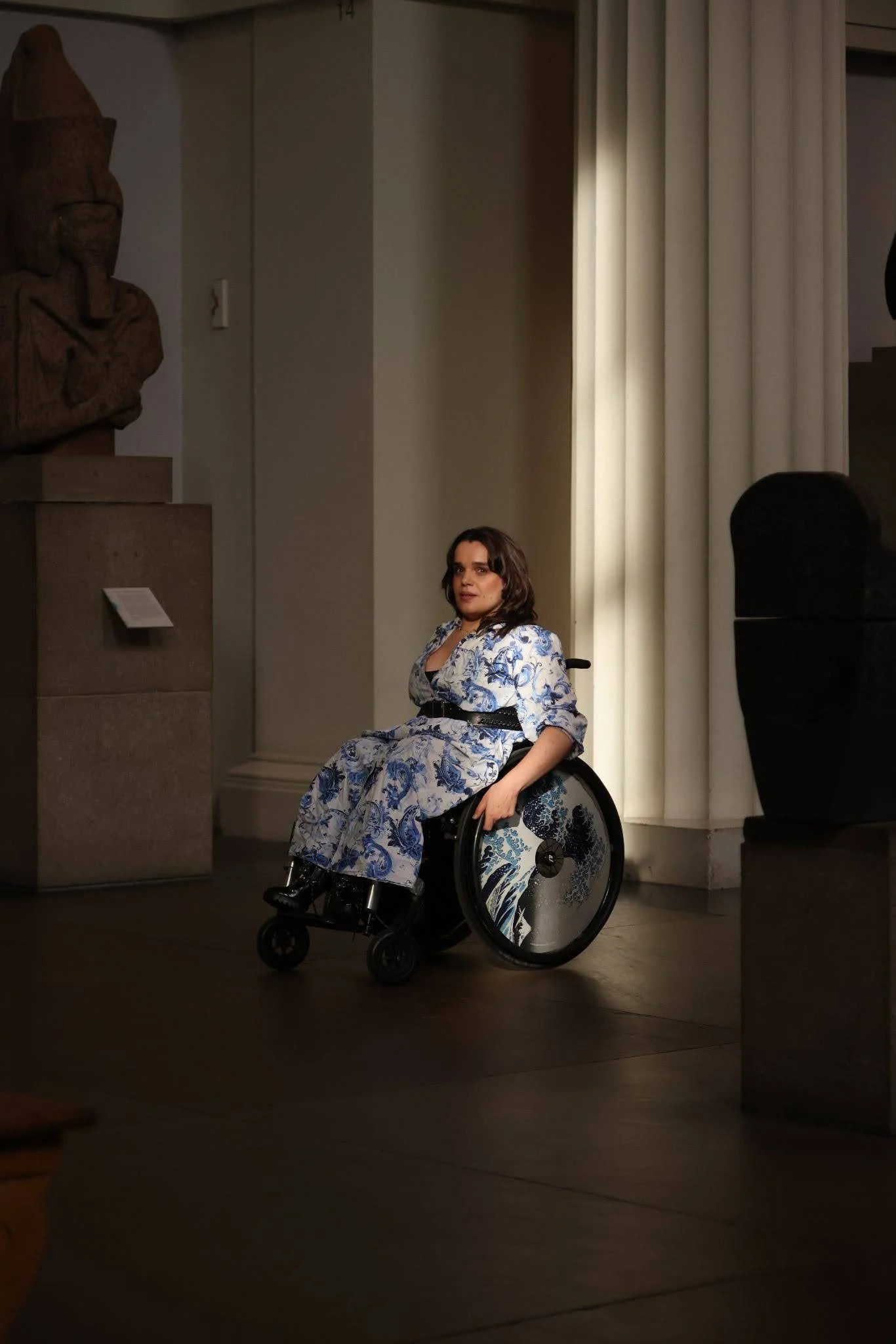
The result is more than a product launch. It is a statement about accessibility, identity, and the role culture can play in the everyday lives of wheelchair users.
A New Surface for Culture
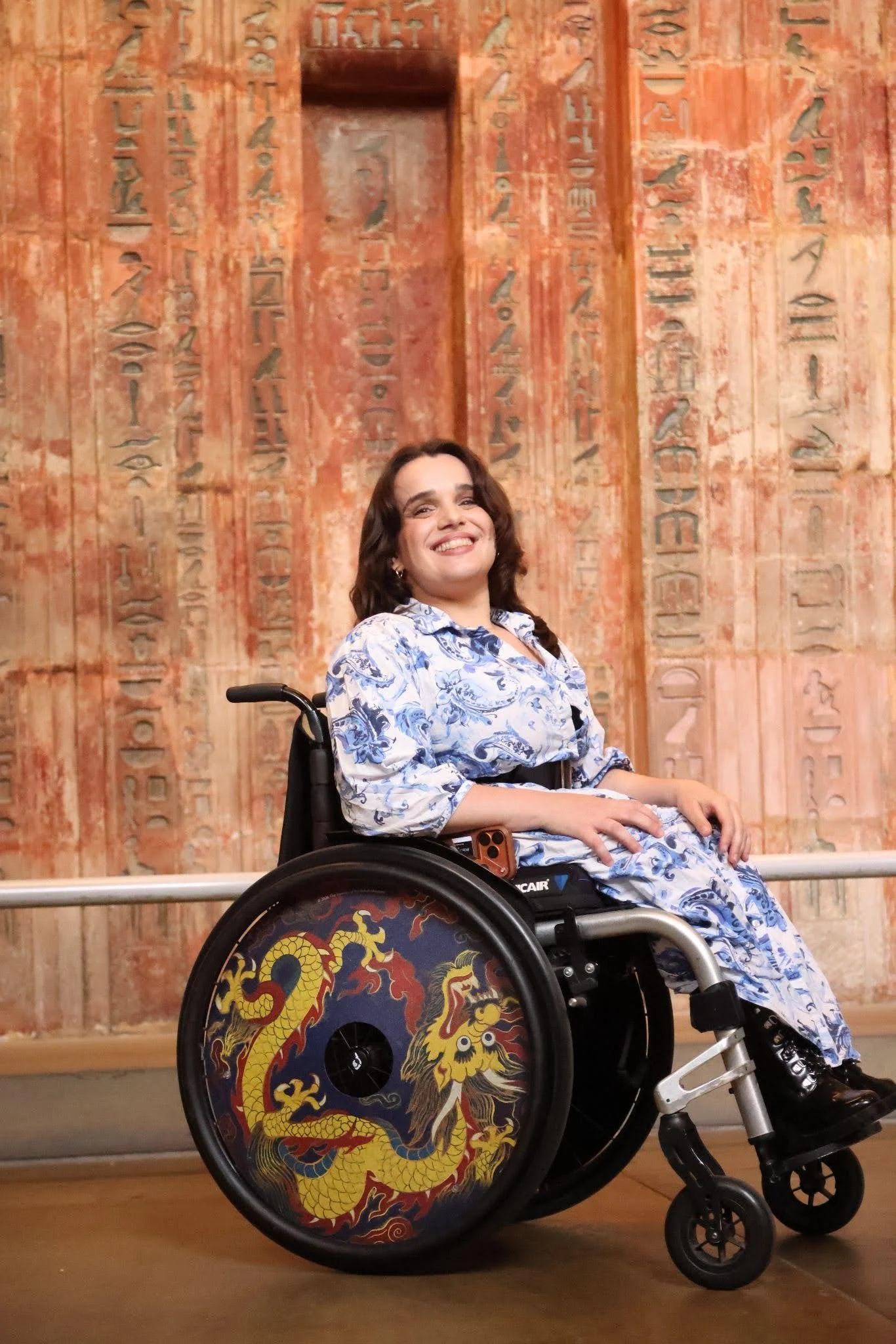
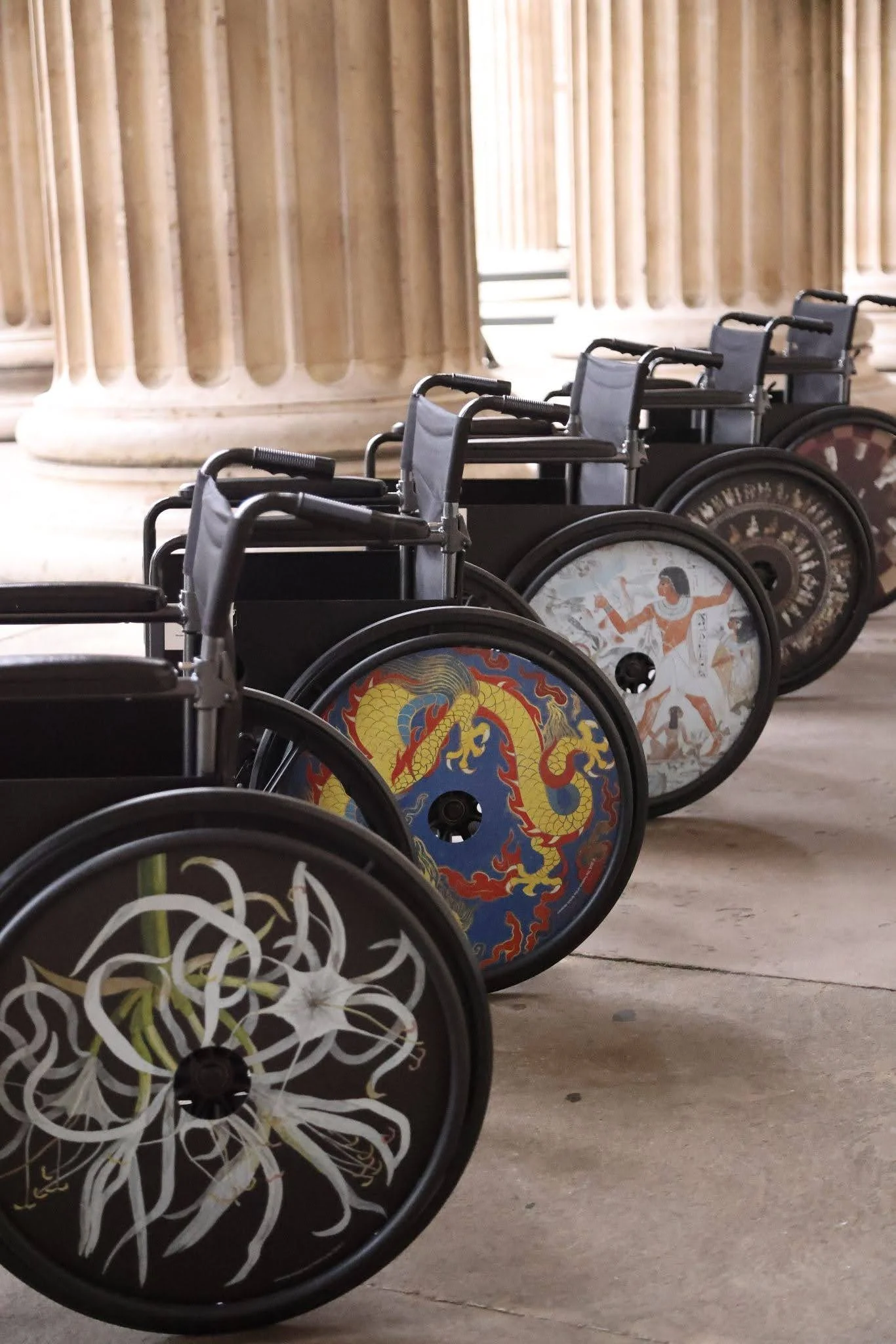
The collection includes eleven designs inspired by different periods, geographies, and artistic traditions represented in the British Museum. Rather than presenting a simple sequence of famous images, the line creates a visual journey through human creativity: East Asian printmaking, ancient Egyptian painting, Mesopotamian storytelling, Greek mythology, medieval European craftsmanship, celestial mapping, botanical collage, and historic playing cards.
Each design has been adapted for the circular form of spoke guards, where image, movement, and personal choice meet. This transformation is important. These are not museum objects copied onto a product without context. They are cultural references reimagined for a surface that moves through the world with its owner.
Someone might choose the energy of a Japanese wave, the symbolism of a dragon, the mystery of ancient Egypt, the character of medieval chess figures, or the dreamlike language of a star map. The meaning is not imposed. It is selected. And that act of selection is central to the project.
The spoke guard becomes a personal artefact in motion — a protective object transformed into a carrier of culture, memory, identity, and emotional meaning.
From Function to Personal Expression
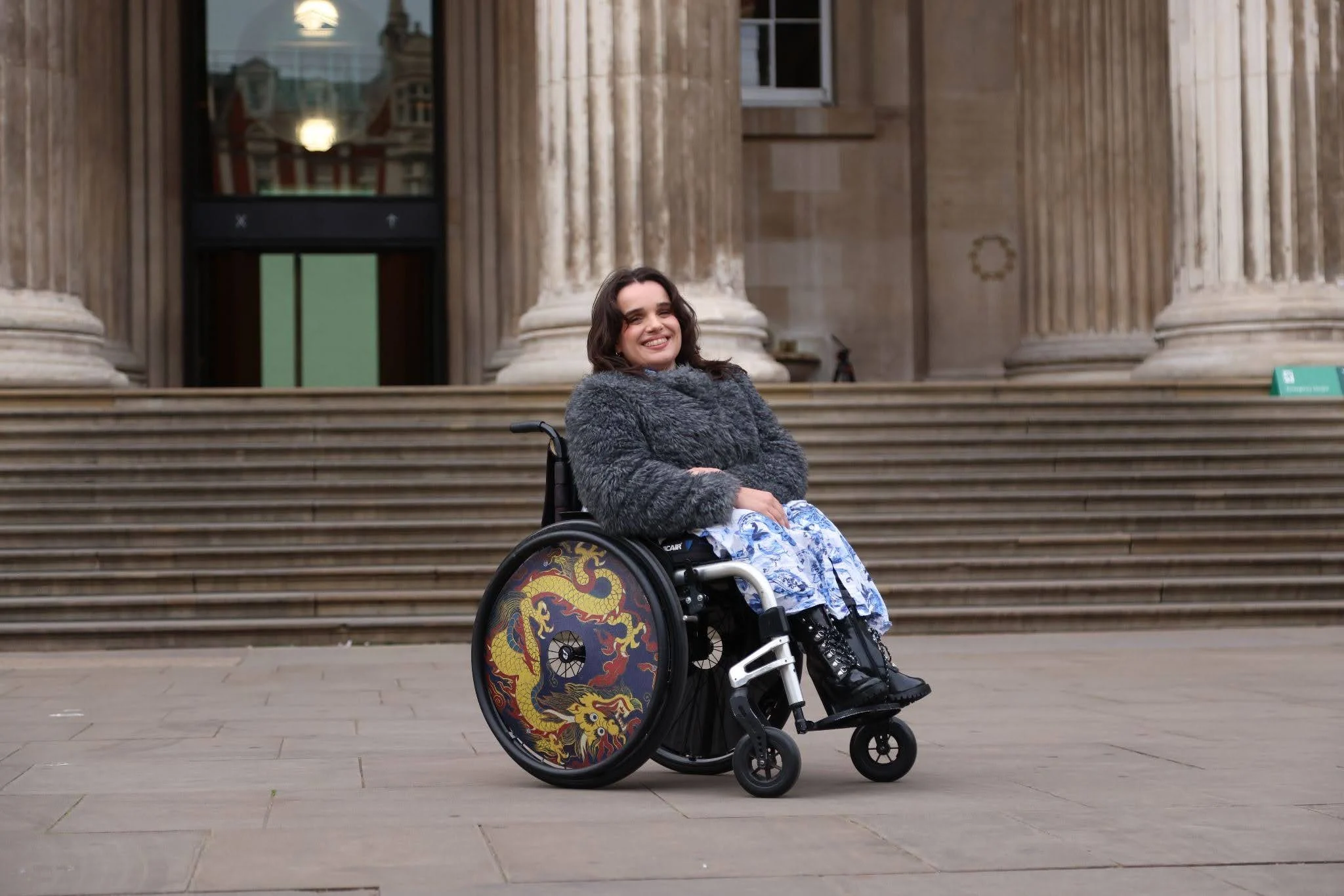
For Bergh Special Products, this collaboration continues a philosophy that began with Frank Bod’s founding vision. BSP was created to solve practical problems for wheelchair users, with a focus on safety, precision, durability, and fit. But over time, the company’s work has moved far beyond function alone.
At the heart of BSP’s approach is a simple but powerful idea: a wheelchair should not remain “just a wheelchair.” It is part of a person’s body language, public image, rhythm, and style. It is part of how someone enters a room, moves through a city, attends an event, or expresses themselves without speaking.
Spoke guards play a key role in that transformation. They are highly visible. They sit at the centre of the wheel. They are in constant motion. They can reflect taste, culture, confidence, humour, elegance and even memories.
In this sense, BSP treats mobility accessories with the seriousness usually reserved for fashion and design. Clothes, jewellery, watches, bags, and shoes are all understood as extensions of identity. BSP argues that wheelchair accessories deserve the same creative attention.
The British Museum and the Meaning of Access
The British Museum’s role in this collaboration goes beyond lending images; it contributes to a broader conversation about how cultural participation intersects with physical access.
Accessibility is often discussed in physical terms: lifts, ramps, accessible toilets, levelled routes, and sensory-friendly facilities. Those elements remain essential to everyday logistics, and like many large heritage sites, the Museum continues to work on them alongside major capital projects. Cultural participation sits alongside that work.
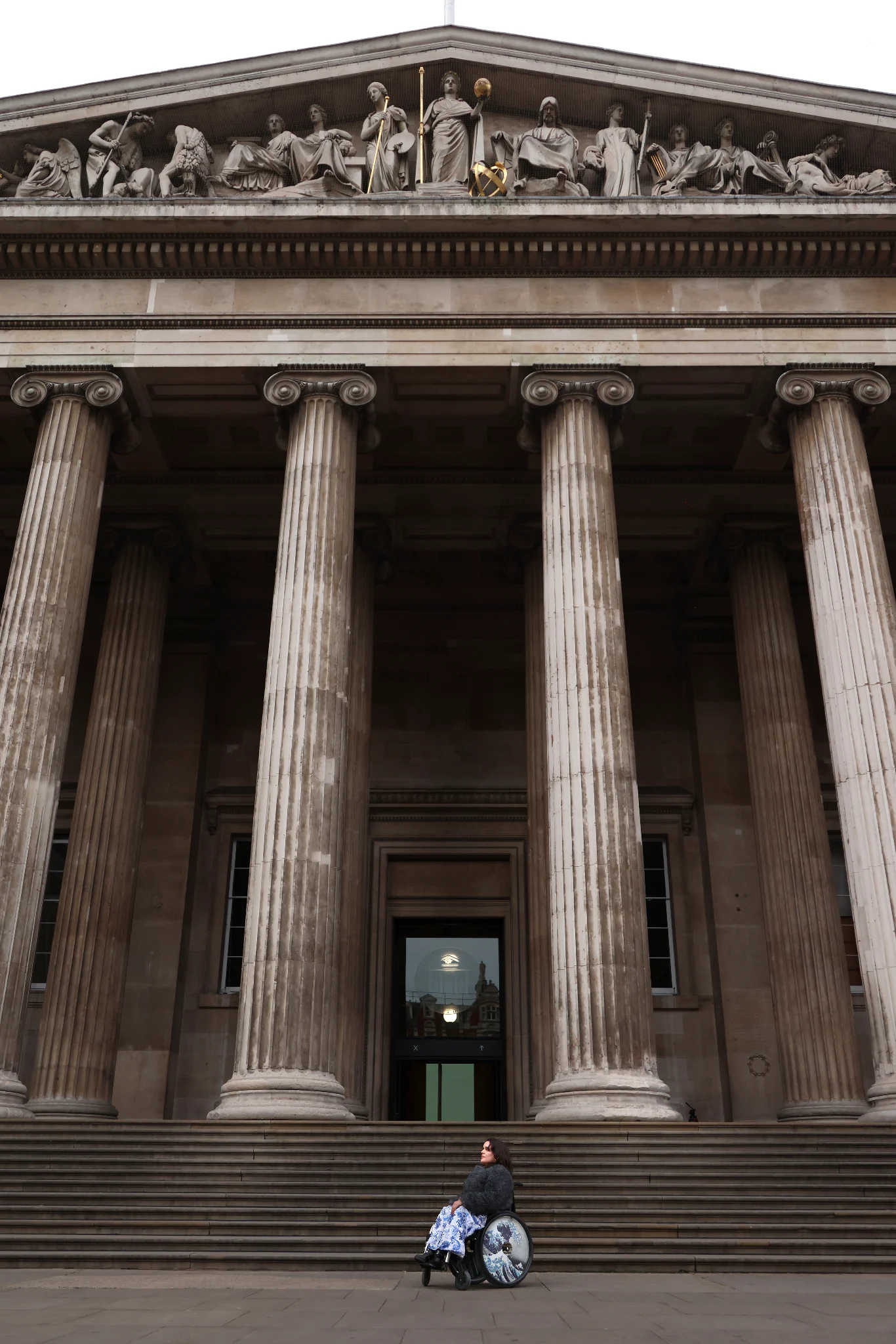
By working with Bergh Special Products, the British Museum allows parts of its collection to leave the traditional boundaries of the gallery space and enter everyday life. History is no longer something approached only through displays, labels, and glass cases. A spoke guard is a surface that moves with its owner through daily life. That act of carrying culture becomes constant and visible in a way few other objects allow.
Jaime Prada, the British Museum’s Equality, Diversity and Inclusion Manager, said:
“This collaboration creates a new way for audiences to engage with the collection beyond the gallery space. We value the role of identity, agency and self-expression in the way people engage with the Museum. The designs will also feature on wheelchairs across the Museum site, bringing the collection directly into the experience of moving through our galleries, and we hope they encourage visitors to carry those cultural connections with them long after.”
The collaboration reflects that idea in a tangible form — cultural engagement and access designed together, rather than treated as separate concerns.
A Collaboration Built on Identity
For Vladyslav Biletskyi, Chief Innovation Officer at Bergh Special Products, the project reflects the direction in which mobility design must continue to evolve.
“Accessibility should never be reduced to function alone,” says Biletskyi. “A wheelchair is part of a person’s presence in the world. With spoke guards, we are not only covering a wheel — we are creating a surface for identity. Working with the British Museum allows us to bring thousands of years of human creativity into that surface, and to let each person decide which story they want to carry.”
This idea gives the collaboration its emotional centre. The project treats the wheelchair as part of a person’s style and cultural expression — a visible part of how they move through the world, not something to be made neutral.
That is why the British Museum collection feels especially meaningful for BSP. It gives wheelchair users access to a visual language shaped across centuries. It also places personal choice at the centre of the experience: users select the design that resonates with them from a considered range, rather than receiving a single default.
History in Motion
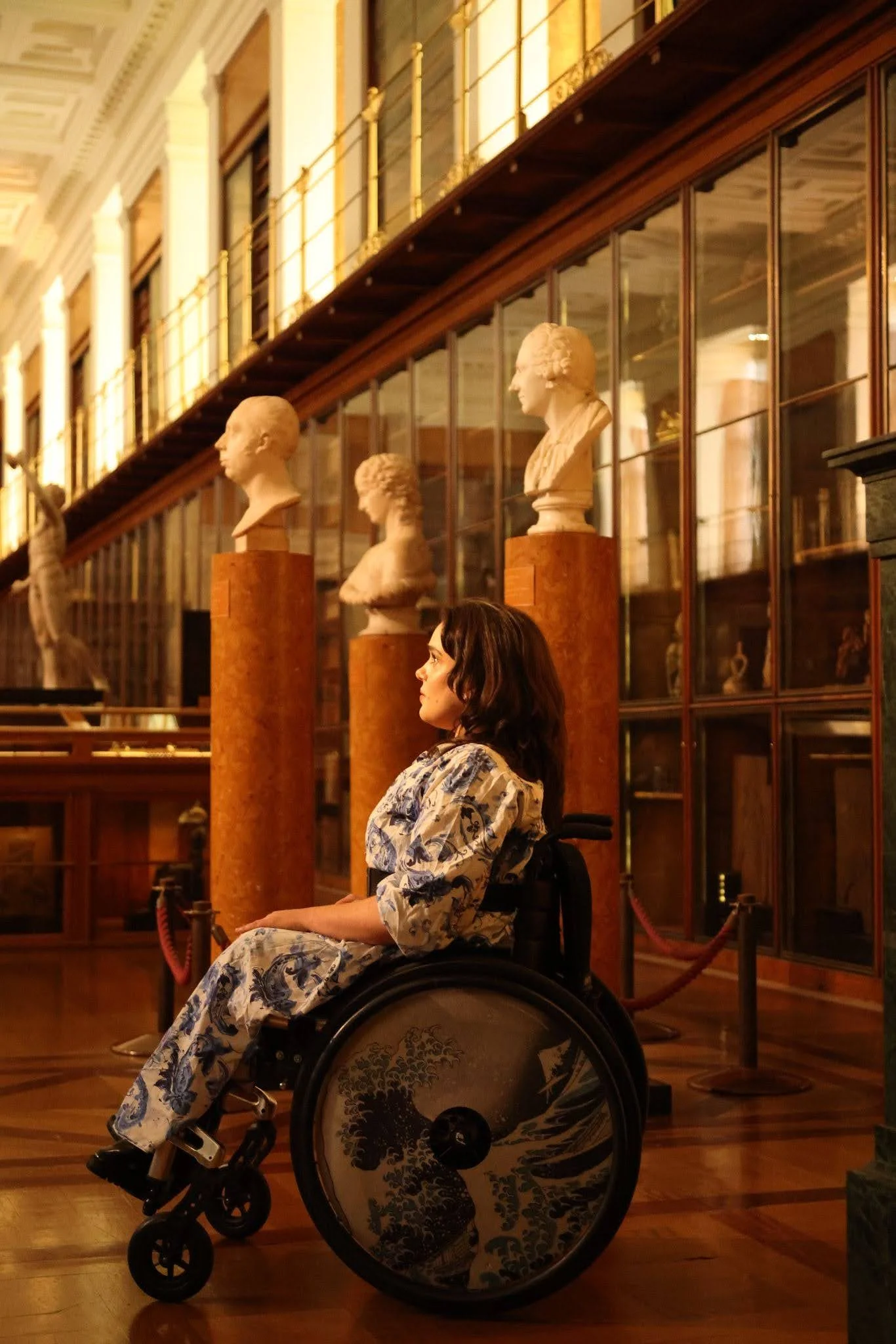
There is a quiet symbolism in placing museum imagery on the wheel. The wheel is one of humanity’s oldest inventions, a universal form of movement found across cultures and civilisations. To bring historical imagery onto this surface creates a powerful connection between past and present.
But the project is not nostalgic. It is deeply contemporary. In a museum, people usually move toward the object. Here, the object moves with the person. It travels through streets, homes, schools, airports, hospitals, museums, and public spaces. It becomes visible in places where cultural collections rarely appear.
This is what makes the collaboration between Bergh Special Products and the British Museum larger than a licensed line of prints. It opens a new surface for art and a new language for inclusion. It shows that accessibility can be practical, elegant, emotional, and culturally ambitious at the same time.
With this collection, BSP and the British Museum propose a way of thinking about mobility as presence, expression, and participation in culture.
History no longer remains. It moves.