
Perfume occupies an unusual territory in personal style: it leaves no visible trace, yet its presence can become inseparable from the person wearing it. Scent has a direct relationship with memory and emotion, allowing a single familiar note to suddenly recall a face, a city or an experience from years before. Choosing a fragrance therefore becomes highly personal, revealing preferences, character and even the mood of a particular moment.
By L’Officiel Monaco
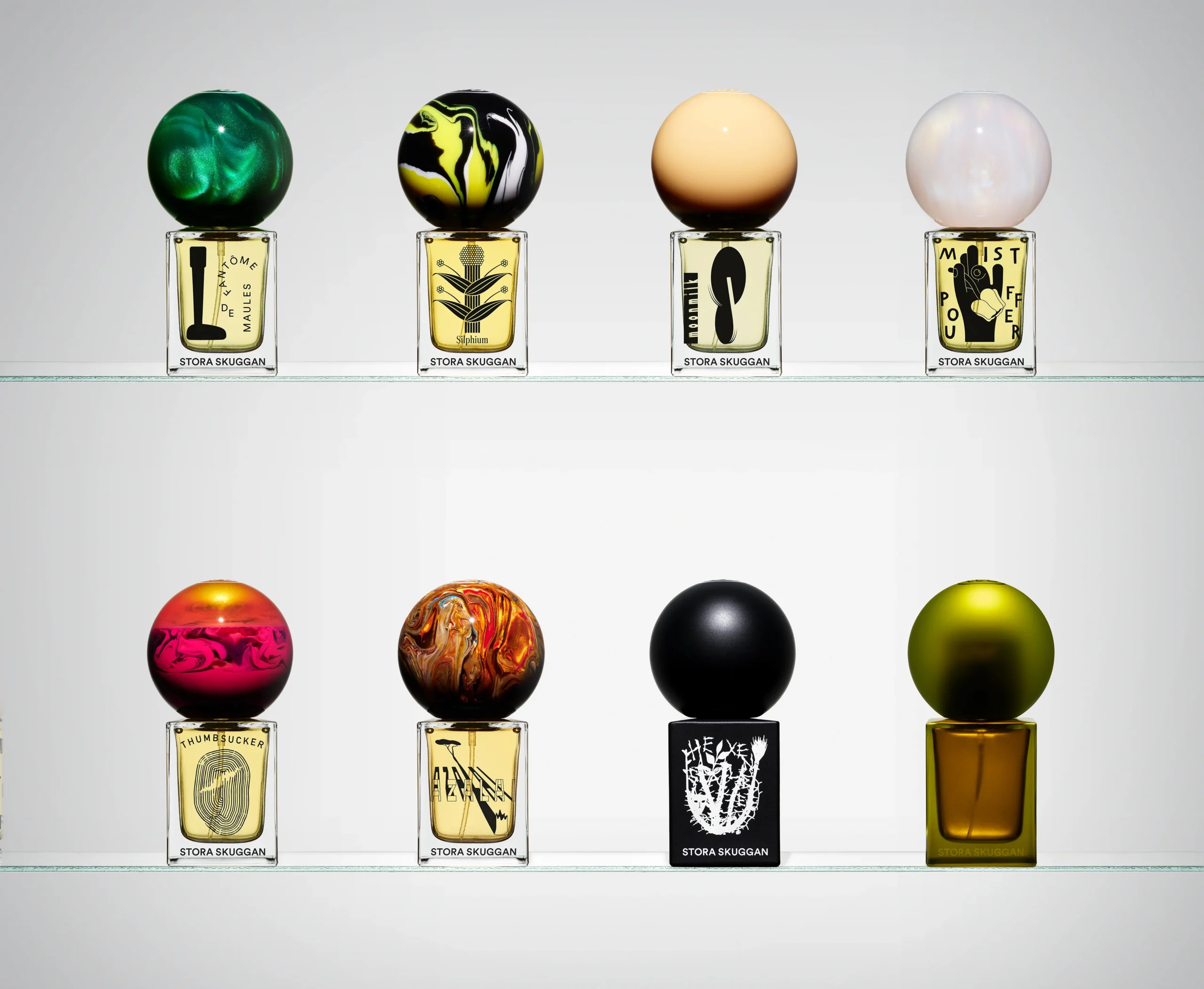
Over time, certain perfumes acquire the familiarity of a favourite jacket, a distinctive haircut or a piece of jewellery worn every day. L’Officiel Monaco examines the names shaping contemporary perfumery, from established maisons and anticipated releases to independent studios approaching fragrance from less conventional directions.
One such name is STORA SKUGGAN, the Stockholm perfume studio created by five multidisciplinary creatives. Since its debut in 2015, the collective has approached perfumery through storytelling, art and unexpected concepts, accompanied by glass bottles crowned with striking oversized spherical caps. Each fragrance receives its own visual universe, with packaging conceived as a three-dimensional extension of the story behind the scent.
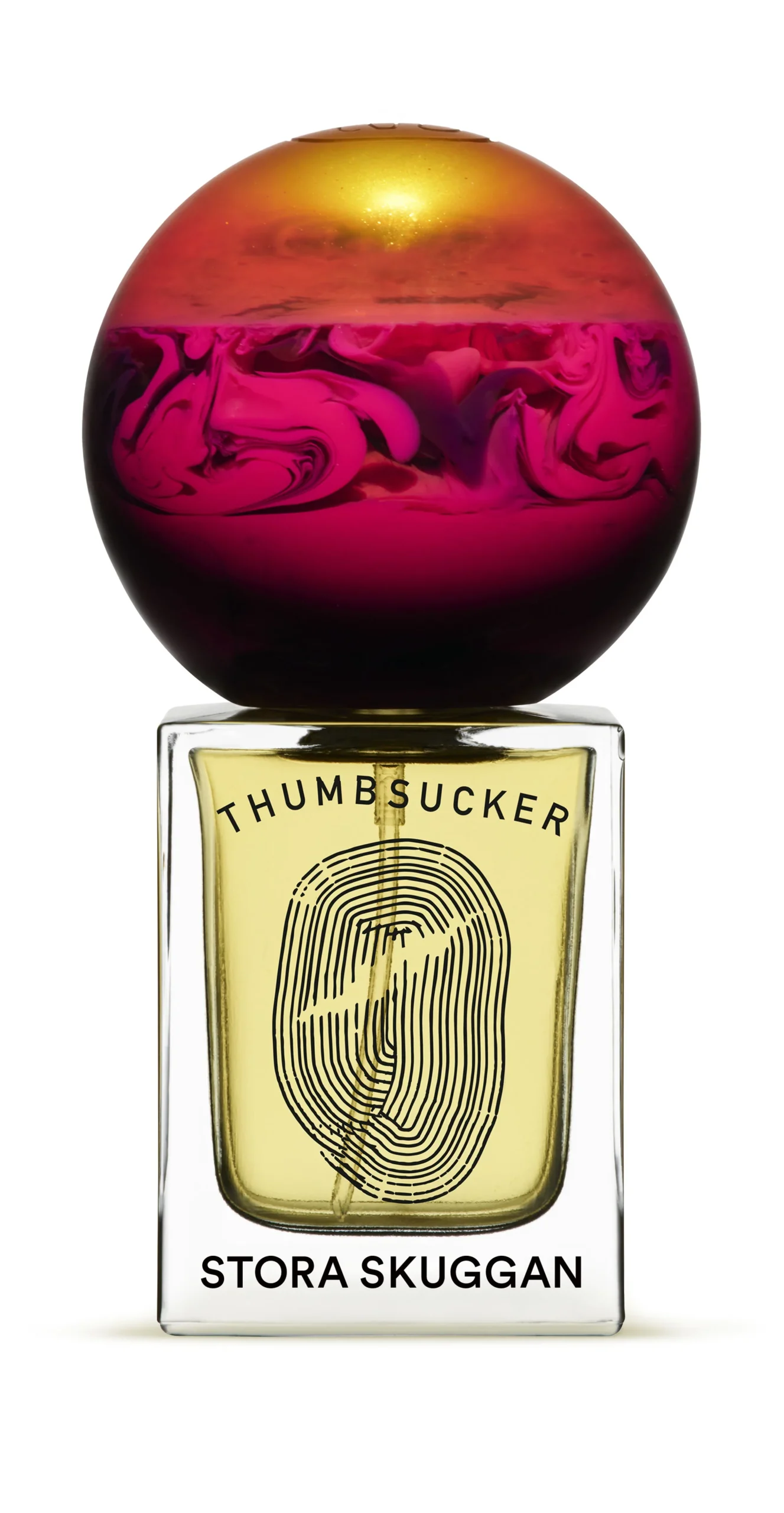
THUMBSUCKER
The inspiration behind THUMBSUCKER travels back to the ancient tale of King Yuvanaswa, a wealthy ruler whose greatest wish was to have a child. Sage Bhrigu prepared a mystical potion intended for the queen, while the king arranged an elaborate ritual to seek divine favour. Exhausted and desperately thirsty after days of ceremony, Yuvanaswa discovered a pitcher and drank from it—only to learn that it contained the potion prepared for his wife.
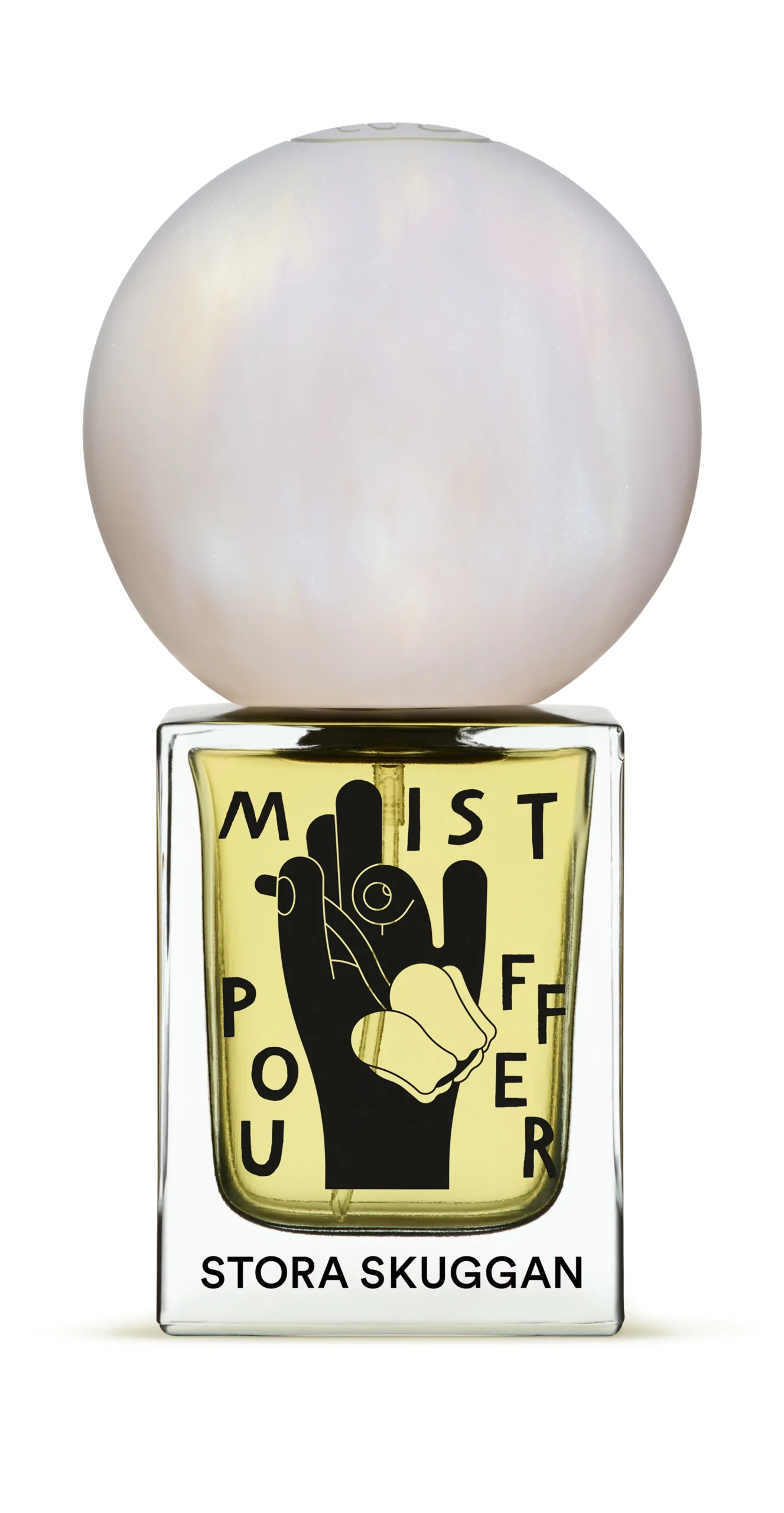
MISTPOUFFER
MISTPOUFFER takes its name from a mysterious acoustic phenomenon reported for centuries near lakes, rivers and coastal waters: unexplained booming sounds resembling distant cannon fire emerging through the fog. Different cultures developed their own interpretations, with the Japanese term uminari translating as “cries from the sea,” while Connecticut’s Machimoodus State Park takes its name from an Indigenous expression associated with strange noises in the area. With science yet to provide one universally accepted explanation for every recorded occurrence, the phenomenon has continued to generate stories, theories and local legends.
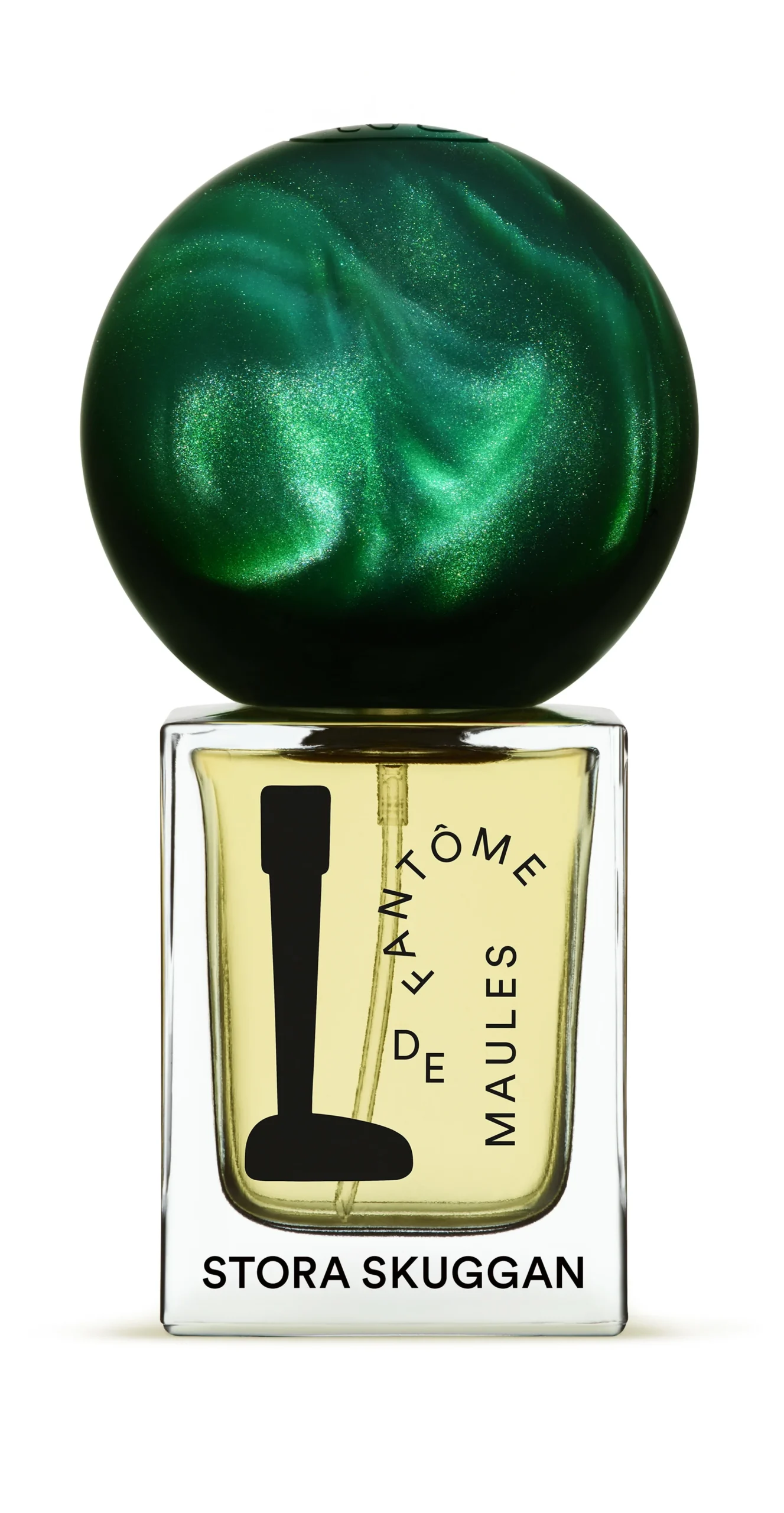
FANTÔME DE MAULES
Deep in the wooded countryside of French-speaking Switzerland, the village of Maules became associated with a peculiar figure reportedly encountered among its forests. Nearly two metres tall, concealed beneath camouflage and an outdated mask, the elusive wanderer appeared more interested in observing plants and flowers than interacting with the people who occasionally crossed his path. Known locally as Le Loyon, the mysterious character adopted another name for himself: Fantôme de Maules, the Ghost of Maules.
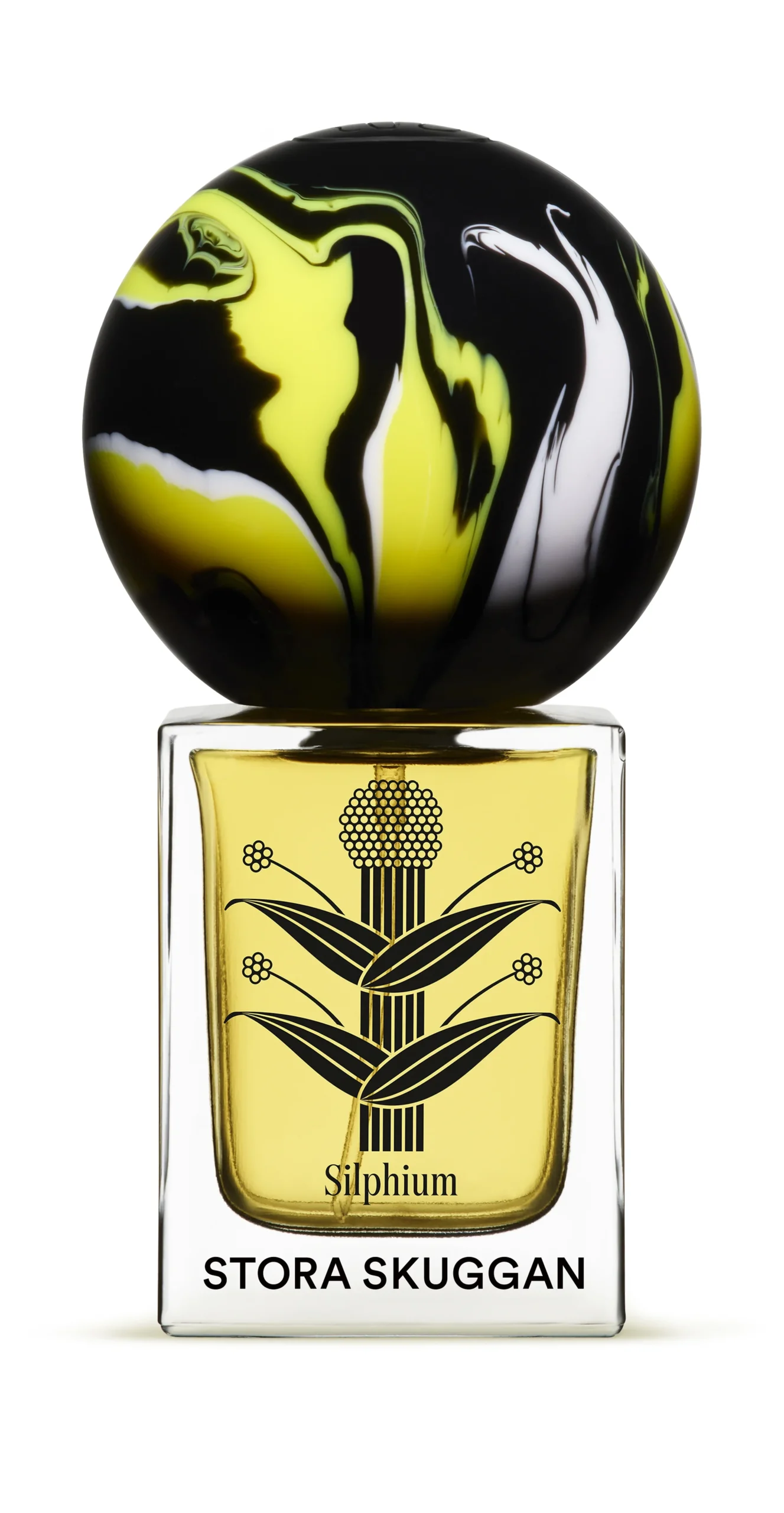
SILPHIUM
Once prized across the ancient Mediterranean, Silphium was a plant believed to belong to the Ferula genus and native to the region surrounding Cyrene in present-day Libya. Its reputation travelled far beyond its place of origin, earning attention as a spice, medicinal plant and aromatic material. Greek thinkers, Roman rulers and culinary writers all left references to a botanical ingredient that became one of antiquity’s celebrated commodities.
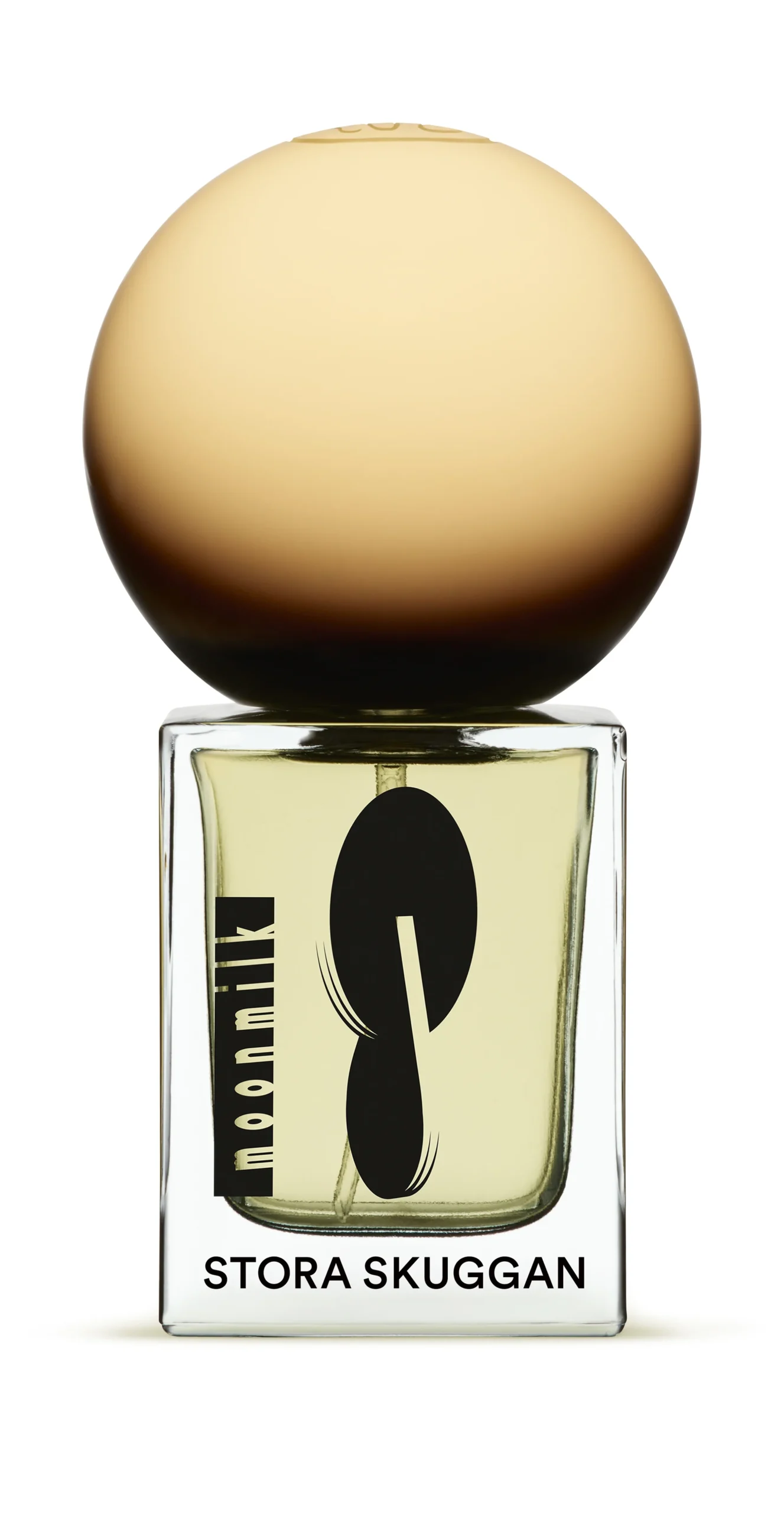
MOONMILK
Swiss naturalist Conrad Gessner approached the natural world with unusually broad curiosity, working across zoology, medicine, botany and linguistics while also exploring the Alpine terrain. His 1555 account Descriptio Montis Fracti sive Montis Pilati records an ascent of Mount Pilatus and journeys through its caves, where pale mineral formations inspired an almost otherworldly description. Moonlight, limestone and milky deposits converge in the idea of “Moonmilk,” giving the fragrance its atmospheric starting point.
Has the story sparked enough curiosity to discover what comes next? STORA SKUGGAN turns every fragrance into a new chapter, moving between mysterious figures, forgotten histories, natural phenomena and unexpected cultural references. Yet the stories are only the beginning, as each composition translates these unusual inspirations into its own olfactory character. The collection continues with five more fragrances, each distinctive enough to become a personal favourite. From intriguing concepts to surprising ingredients, the next selection offers another perspective on the creative universe of the Stockholm perfume house. Stay tuned — 4 more stories, and 4 more scents, are waiting to be discovered.
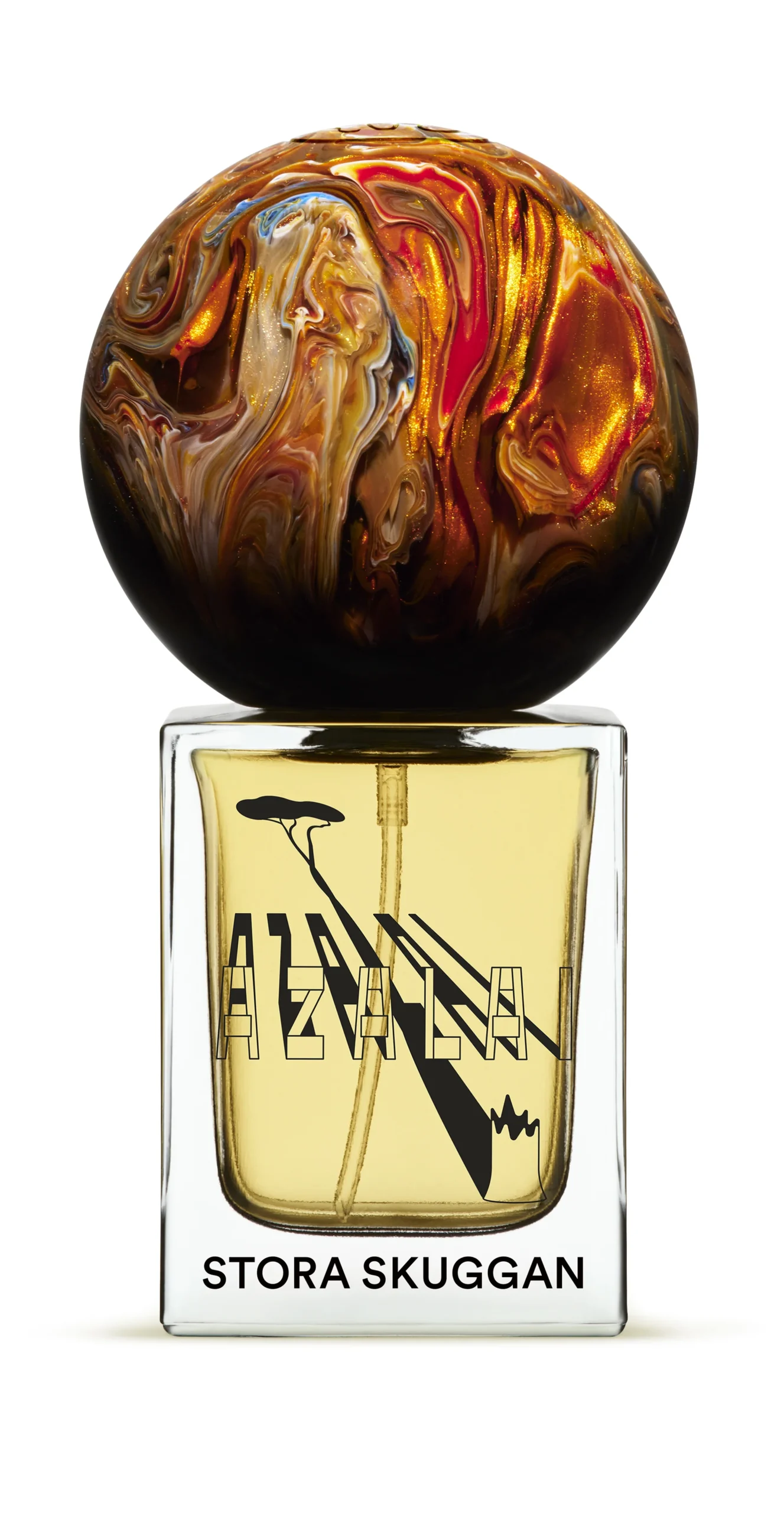
AZALAI
For centuries, the Azalai caravan routes crossed the immense Ténéré region of the Sahara, carrying valuable goods such as salt across formidable distances. Along one of these routes stood the Tree of Ténéré, an acacia famously isolated from other trees and deeply respected by the Tuareg travellers who passed it. Surviving where vegetation seemed almost impossible, it became a powerful symbol of endurance in one of the planet’s most demanding environments.
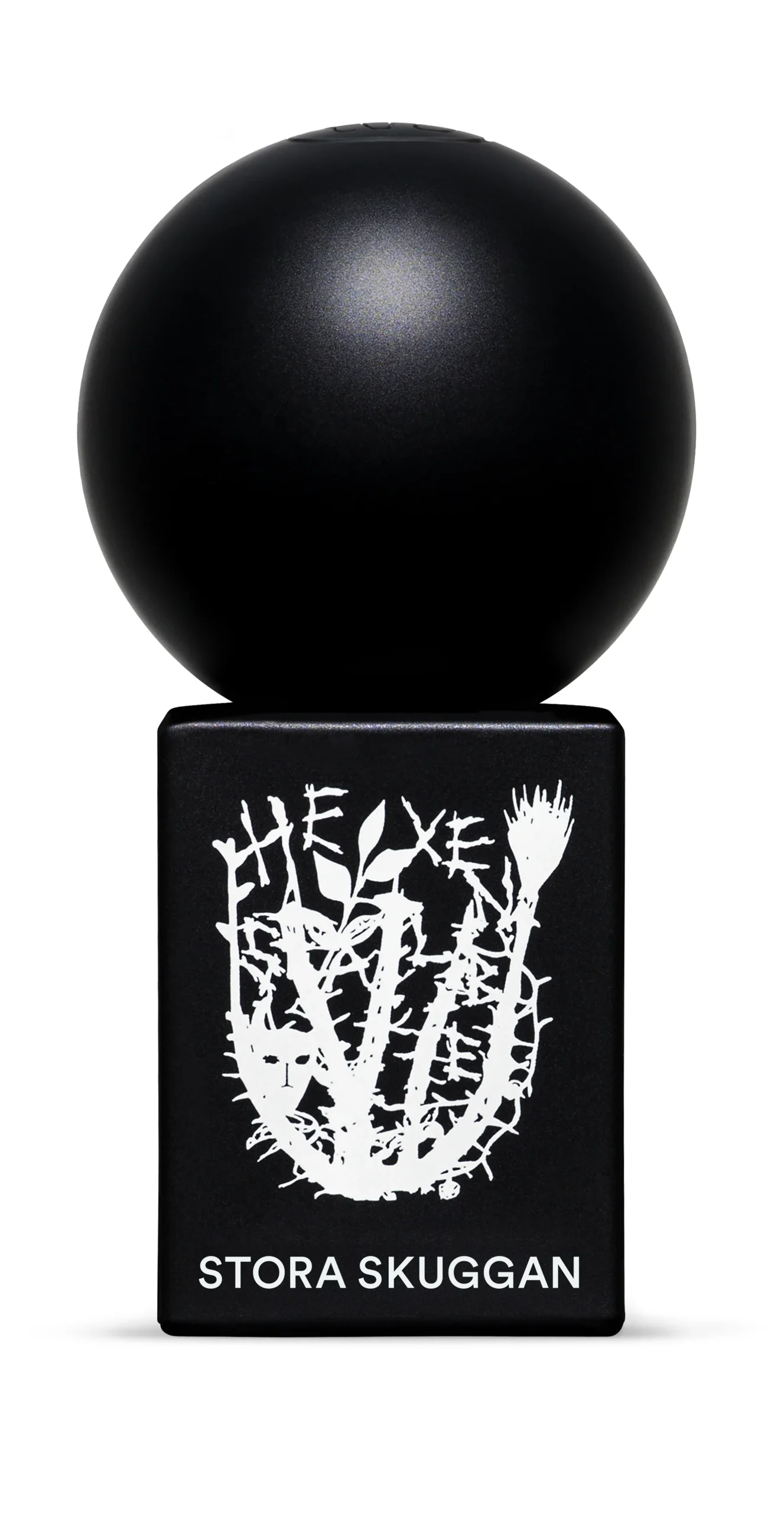
HEXENSALBE
The inspiration for HEXENSALBE comes from the medieval “flying ointments” associated with European witchcraft and made from plants capable of producing dangerous hallucinogenic effects. Historical accounts and later interpretations connected altered states, sensations of flight and extraordinary visions with some of the imagery that eventually became part of witch folklore. STORA SKUGGAN turns this unsettling chapter of cultural history into the starting point for one of the collection’s most provocative olfactory stories.
PINE
For its eighth perfume, STORA SKUGGAN leaves elaborate legends aside and directs attention toward one subject: the pine tree. Conceived in the spirit of a soliflore—a perfume traditionally centred on a single flower—PINE expands that principle to the monumental scale of a tree whose evolutionary history reaches back hundreds of millions of years. Ancient, immense and geographically widespread, the pine becomes both the material and the narrative.
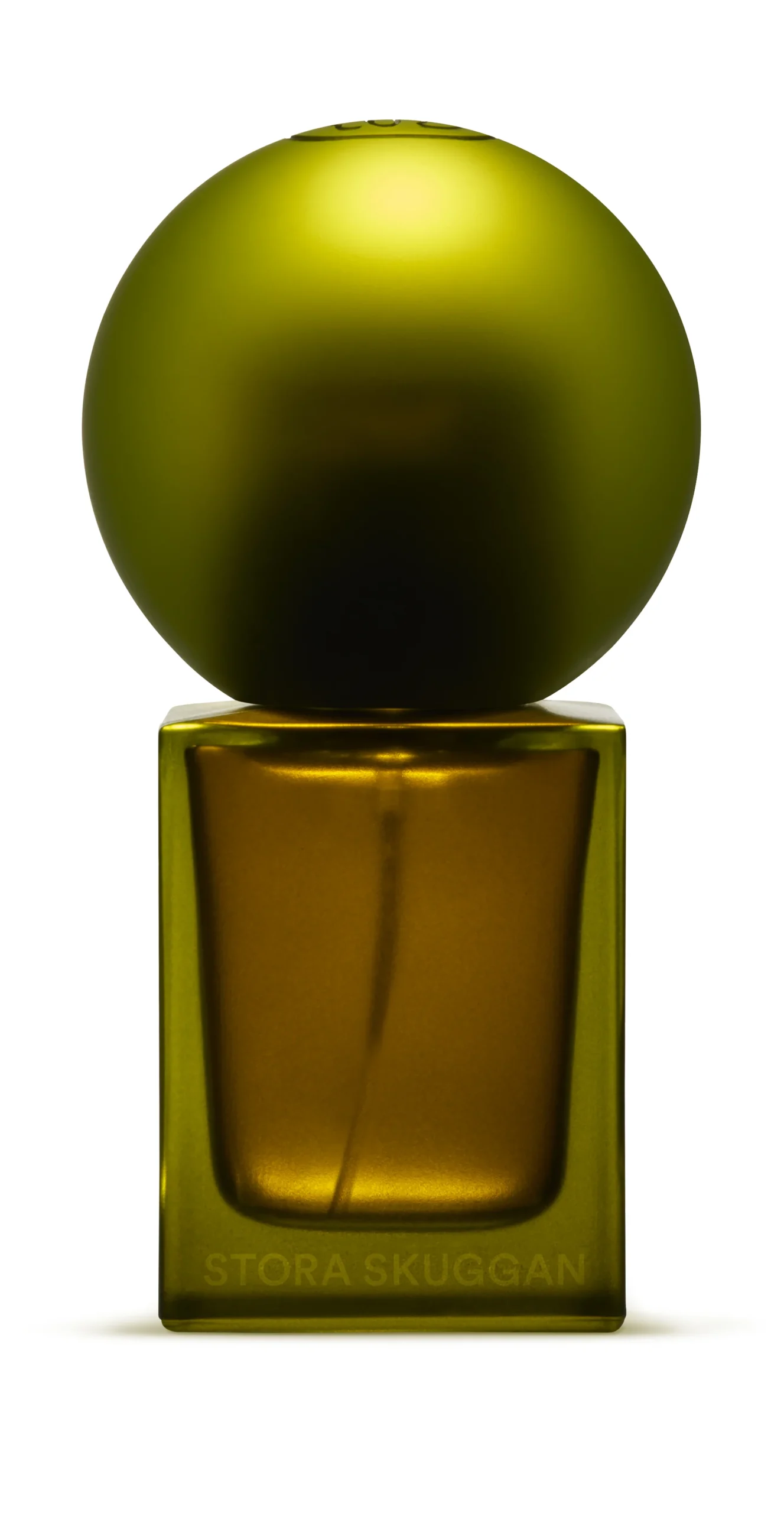
MONKEYFLOWER
With yellow blossoms and a famously musky aroma, the Monkeyflower travelled from the western regions of North America to become a botanical favourite in Victorian Britain. Its popularity eventually extended far beyond specialist collections, appearing in homes and gardens across different levels of society. Around the beginning of the twentieth century, however, observers reported a curious change: the fragrance for which the flower had become famous appeared to disappear, including among wild populations.
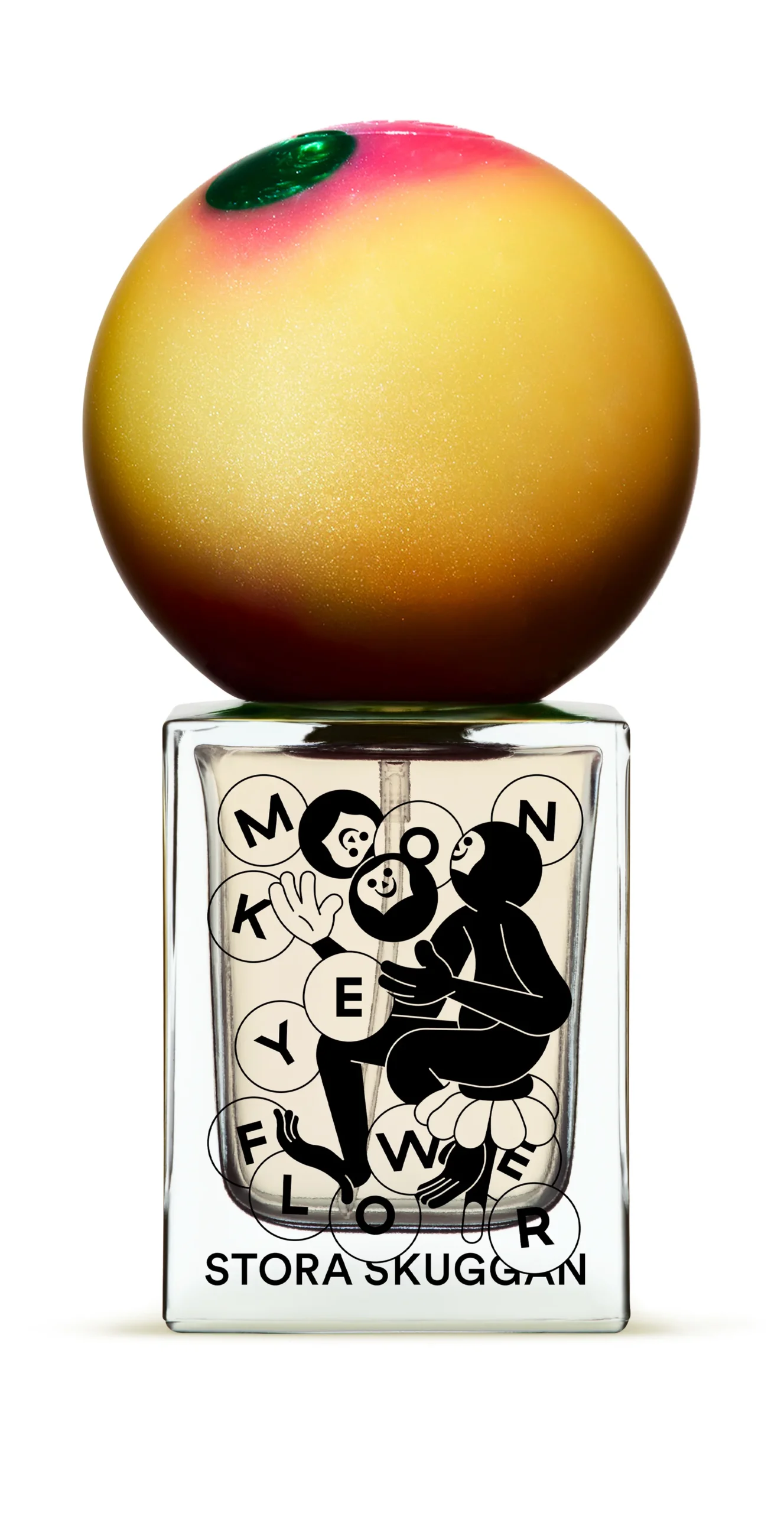
STORA SKUGGAN treats perfume as an intersection of scent, visual culture and unconventional storytelling. History, natural phenomena, mythology and curious cultural references provide material for compositions that often begin far beyond the conventional vocabulary of fragrance. The collective’s multidisciplinary origins remain central to its identity, positioning each perfume simultaneously as something to wear, contemplate and display.