
Sun-drenched yellow, intensely fragrant and surprisingly large: the Amalfi Coast lemon is far more than simply an ingredient in limoncello. This is how a small fruit became the golden emblem of an entire region.
by Lisa Ditzlmüller
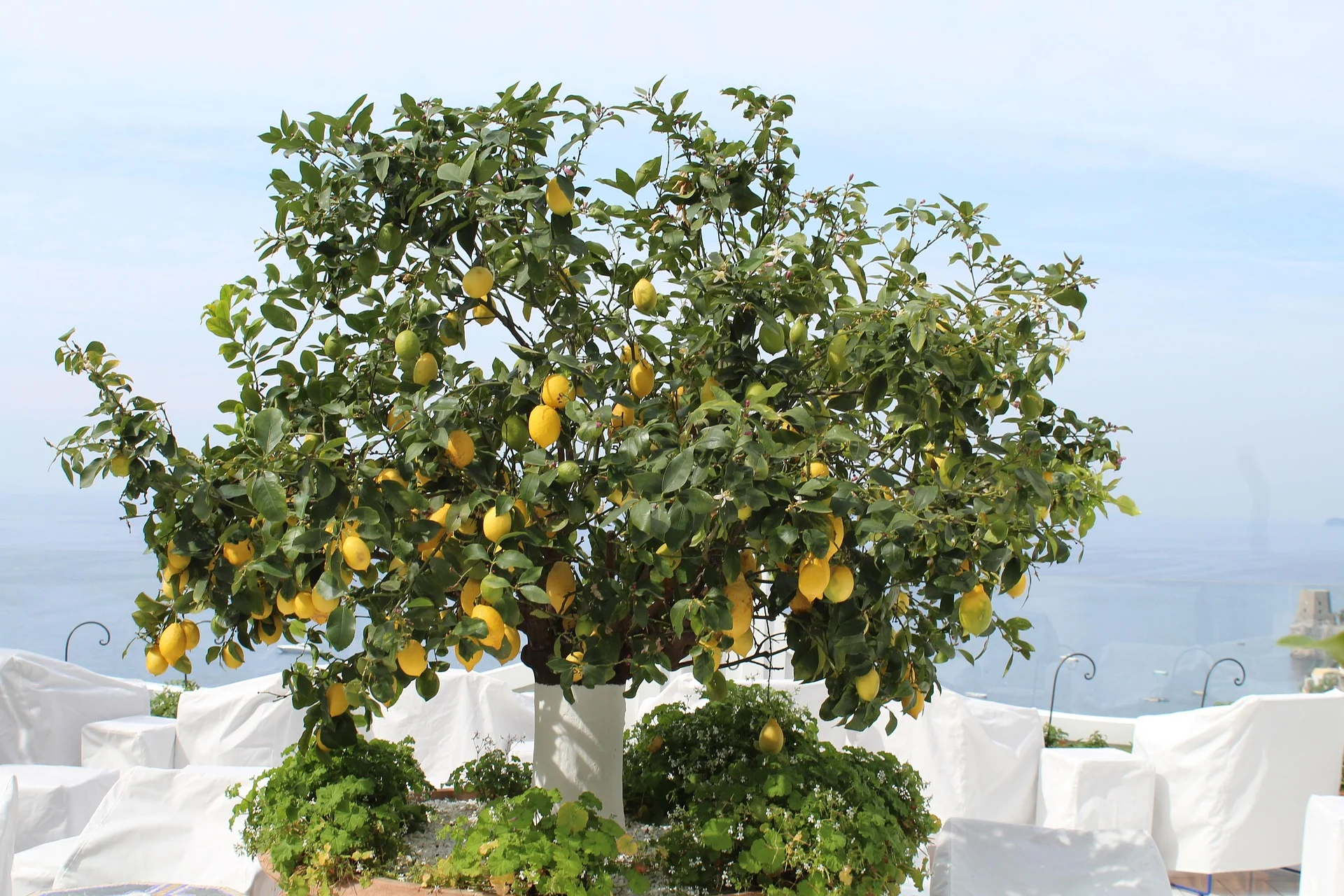
When you think of the Amalfi Coast, pastel-coloured houses clinging to dramatic cliffs, turquoise waters and lemons immediately spring to mind. They spill over terraces, glow from ceramic bowls and adorn tablecloths, tiles and souvenirs. Few foods are as closely associated with the image of a region as the Amalfi lemon.
Here, however, the lemon is far more than picturesque decoration. For centuries, it has shaped the landscape, cuisine and history of the coast. The famous Limone Costa d’Amalfi IGP, commonly known as the Sfusato Amalfitano, is distinctive in its own right: larger, more elongated and more aromatic, with a peel that is almost as precious as its juice.
A Lemon with Character
Even at first glance, the Amalfi lemon is noticeably different from the varieties typically found in supermarkets. The Sfusato Amalfitano takes its name from its distinctive elongated, tapered shape. To qualify for protected geographical status, each fruit must weigh at least 100 grams. Many specimens, however, are considerably larger and more substantial than ordinary lemons.

What makes it particularly distinctive is its comparatively thick peel. Pale yellow, aromatic and rich in essential oils, it releases an intense citrus fragrance as soon as the fruit is grated or cut. Unlike the peel of many commercially available lemons, it is therefore far from something to be discarded without a second thought. Instead, it is one of the fruit’s most valuable components and plays a crucial role in the production of limoncello.
The differences continue on the inside: the flesh is exceptionally juicy and contains relatively few seeds. The official product specification requires a juice yield of at least 25 per cent. A small botanical luxury, then, growing along the picturesque coast between steep cliffs and traditional wooden supports.
How the Lemon Came to the Amalfi Coast
The history of the Amalfi lemon stretches back many centuries. According to historical accounts, it was the Arabs who first introduced lemon cultivation to Spain and Sicily, before it eventually reached Campania. By the Middle Ages at the latest, the fruit had become firmly established along the Amalfi Coast. Written records document lemon cultivation in the region as early as the beginning of the 12th century.
Its rise, however, initially had little to do with the dolce vita. Amalfi was once an important maritime republic, whose merchants and sailors travelled considerable distances. Thanks to their vitamin C content, lemons became valuable provisions in the fight against scurvy, a deficiency disease greatly feared among seafarers. As early as the 11th century, ships from Amalfi are said to have been required to carry supplies of the fruit on board.

What began as a practical necessity soon developed into a flourishing trade. Between the 15th and 19th centuries, international demand for Amalfi lemons rose significantly, particularly in Northern Europe.
The Lemon Gardens Above the Sea
Perhaps the true luxury of the Amalfi lemon lies less in its rarity than in the way it is cultivated. Along this coastline, flat land is scarce. Over generations, farmers transformed the steep slopes into narrow terraces – the famous “giardini di limoni”, or lemon gardens, which today seem to float above the Mediterranean like yellow-green balconies.
Traditionally, the trees grow beneath structures made from chestnut wood, which protect them from wind and adverse weather. Much of the work is still carried out by hand, often on plots that can only be reached via narrow stairways and paths. The lemon groves are therefore not merely agricultural land, but an essential part of the region’s cultural landscape. The terraces also help to stabilise the steep terrain and reduce erosion.
From Limoncello to Lemon Sorbet: The Flavour of the Amalfi Coast
It is hardly surprising that a lemon with such an aromatic peel should play a prominent role in the local cuisine. Along the Amalfi Coast, the Sfusato appears everywhere: in granita, sorbet, lemon cake, pasta and risotto, alongside fish dishes or, of course, in the form of limoncello.
For the famous liqueur in particular, the oil-rich peel is essential. When infused in alcohol, it releases its essential oils, colour and intense aroma. The result tastes of lemon groves and summer evenings all at once.

By now, the lemon has long since transcended the kitchen. It appears time and again as a decorative motif on Vietri ceramics, linen fabrics, plates, clothing and accessories. What began as an agricultural product has become a visual signature: yellow against blue has become the defining colour code of the Amalfi Coast.
And so, today, the Sfusato Amalfitano is far more than simply an exceptional lemon. It is landscape, history and a way of life distilled into a single fruit. Quite simply: La Dolce Vita.