
Renée Elizabeth Blythewood has done Venice enough times now to skip the nerves and go straight to the dinners. This year she arrived on the Lido in a powder-blue Zuhair Murad gown, the maison she’s returned to for consecutive editions of the festival.
by L’Officiel Monaco
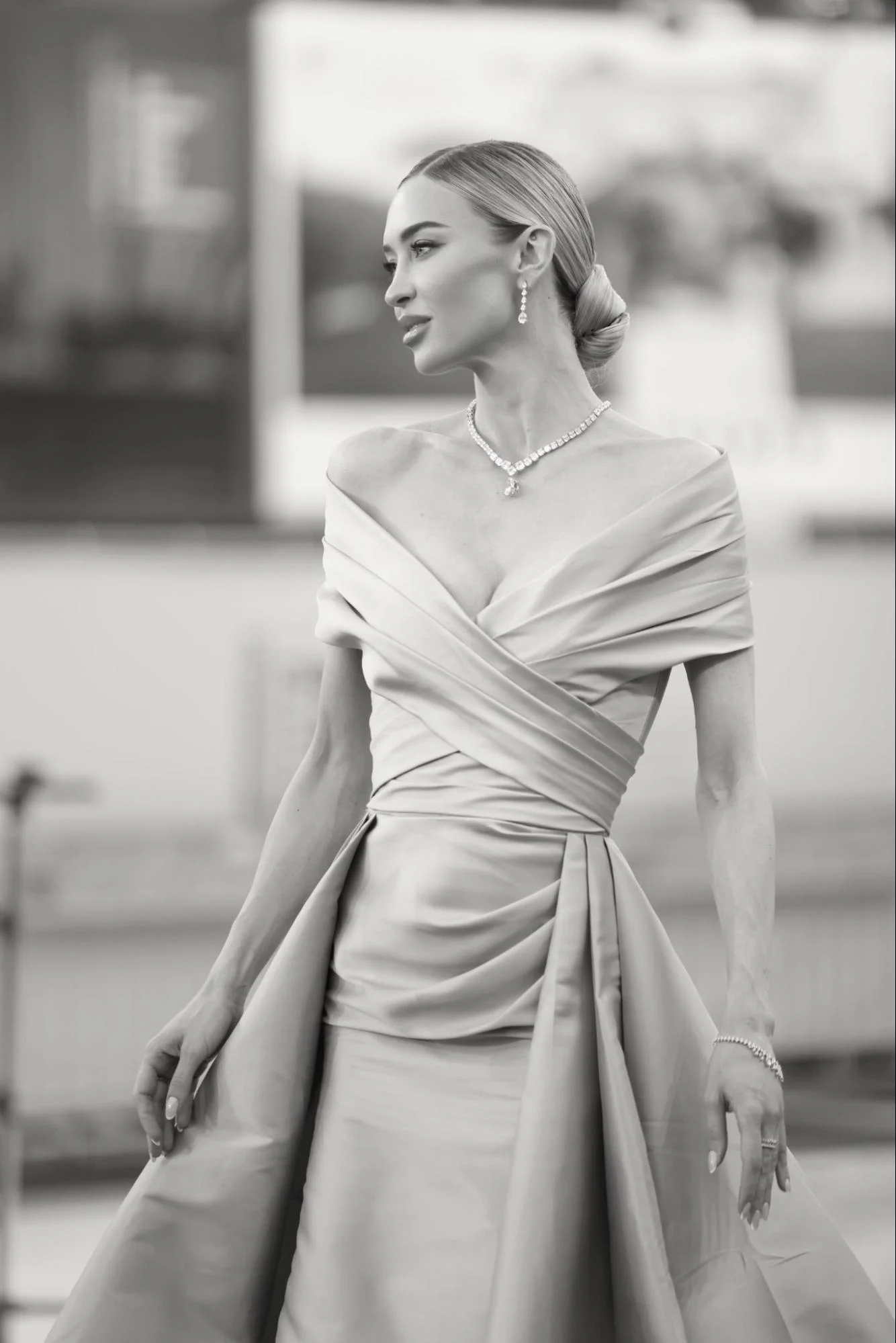
Image by: Monaco Photographer
“I felt less concerned with the idea of being at Venice and more interested in actually experiencing it,” she says. There were long dinners, films worth watching for their own sake, the pleasure of getting lost in a city built to encourage it. “I’m becoming less interested in collecting moments,” she says, “and much more interested in living them.”
It’s a distinction that shapes how she talks about the festival at large. “Storytelling is one of the ways we make sense of being human,” she says. “Venice almost conspires with it, the history, the architecture, arriving everywhere by boat. Reality already feels slightly suspended here.” She doesn’t pretend to be above the spectacle of it, either. “Of course I adore the fashion and the glamour. I would be lying terribly if I pretended otherwise. But the substance is what makes the glamour interesting.”
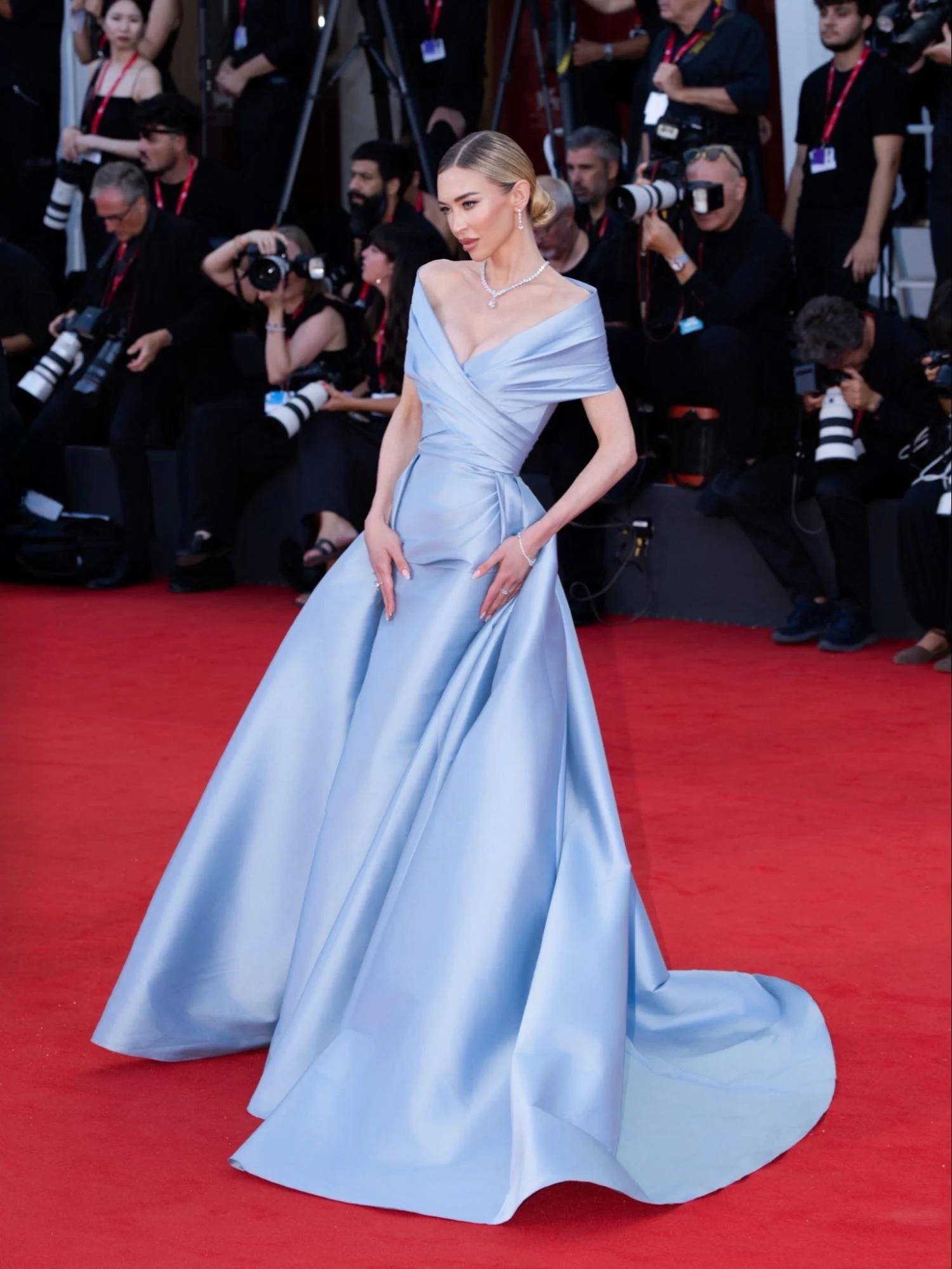
Image by: Valeriia Arii
That same instinct extends to her choice of designer. “There’s an extraordinary romanticism to his work. His clothes celebrate femininity without apologizing for it,” she says of Murad, “and in Venice, of all places, a little drama is practically a civic duty.” But she clearly separates loyalty from repetition. “I never want to repeat a look simply because something worked before. Last year belonged to who I was in that moment. This year I wanted something that reflected where I am now.”
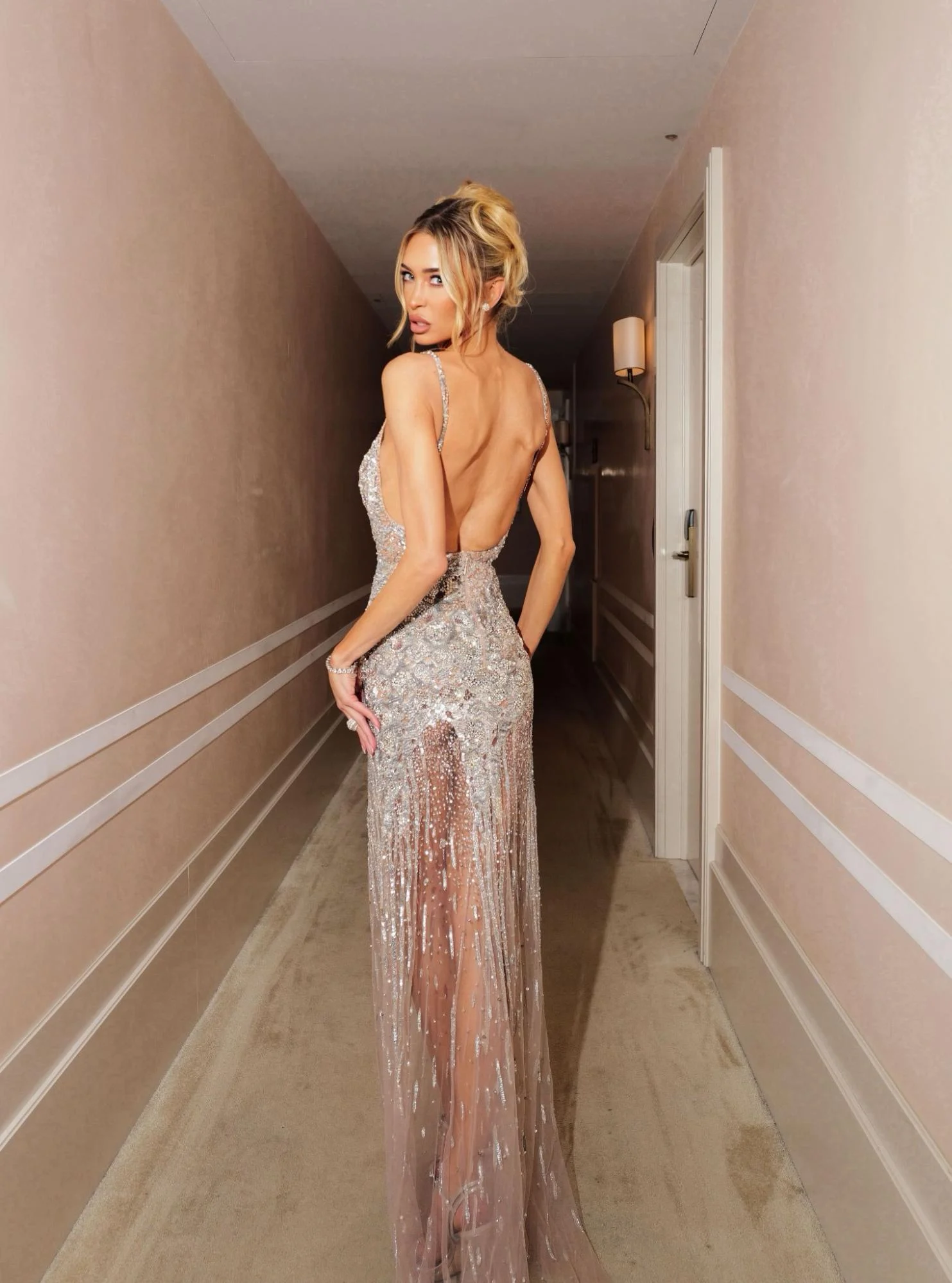
Image by: Marco Bahler
A history like that changes the process, she explains. “The best collaborations develop their own shorthand. They understand what makes you feel beautiful, and also when to show you something you’d never have chosen yourself.”
Control gives way to trust and she laughs at the one rule that never holds: “the dress you say you absolutely won’t wear is, of course, the one you end up wearing.” Beauty followed the same trust this year, with hair by Dan, makeup by Jayden Ho Pham, and styling once again by longtime collaborator Siân Gabari. “I love skin that looks like skin, hair that can actually move, something slightly undone somewhere. I’d rather look like a woman who’s been out living her life than someone who’s spent six hours trying not to move.” A pause, then the honest concession: “Although, admittedly, sometimes both things are true.”
Underneath it sits a conviction Blythewood has held long enough: that fashion and purpose were never meant to compete. “We sometimes create unnecessary rules about what a serious woman is supposed to look like,” she says. “You can love couture and still care deeply about education, children, health, whatever moves you. One doesn’t invalidate the other.” Visibility, to her, only matters once it’s spent. “If a beautiful dress makes someone stop on a photograph for five seconds, and somewhere in that moment they discover a cause they might otherwise never have encountered, then glamour has become a doorway.”
That doorway currently opens, most consistently, onto children. Through the Blythewood Future Visions Foundation, her focus remains on Rwanda as much on education as on the full infrastructure around it: nutrition, sanitation, healthcare, properly supported teachers. Her work with the Children’s Oncology Support Fund runs in parallel. “Philanthropy isn’t about arriving somewhere believing you have all the answers,” she says. “It’s about listening first, finding people already doing meaningful work, and asking what you can genuinely do to make it better.”
The same instinct shapes how she wants to be understood beyond the festival’s carefully composed frame. “My life is much less composed than the photographs suggest,” she says, laughing. “A photograph gives you one beautiful fraction of a second. It doesn’t show motherhood, worry, heartbreak, faith, work, jet lag, the people you love, the things you’re trying to build.” She calls herself more sentimental than the pictures let on; someone who cares, by her own admission, “probably too deeply, sometimes.” “People are always more complicated than the version of them that fits inside a photograph,” she says. “I certainly hope I am.”