
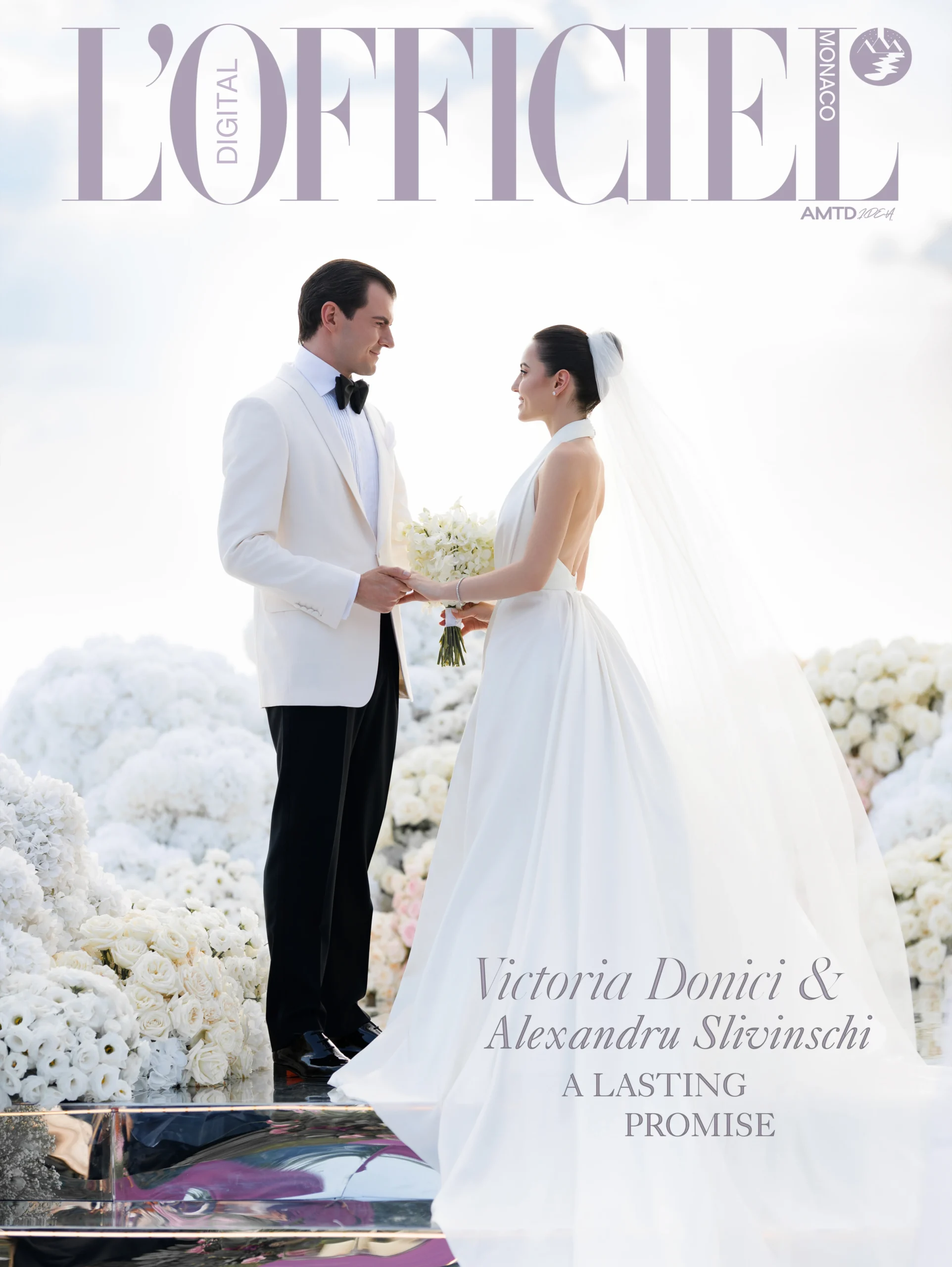
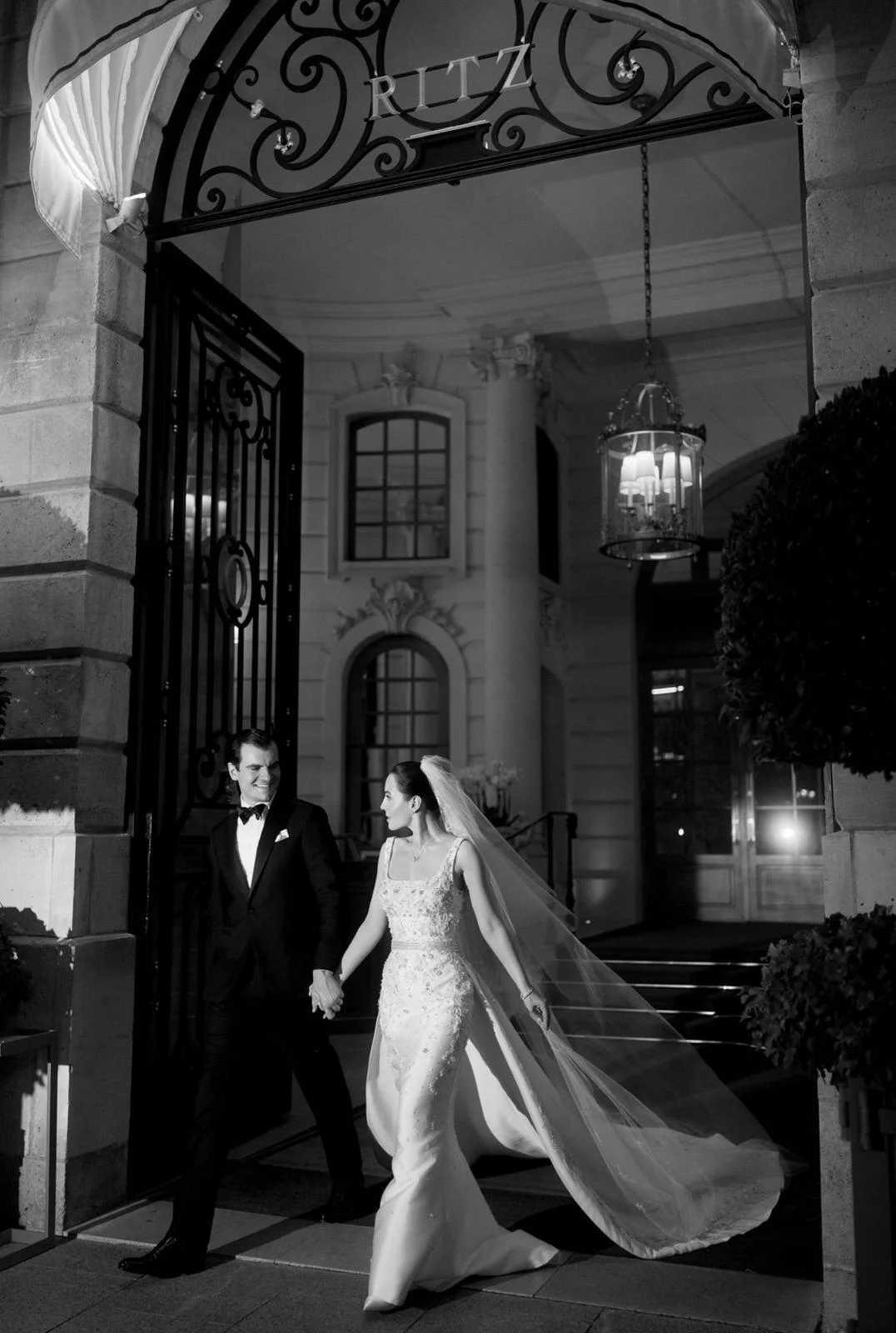
After almost 14 years together, entrepreneurs Victoria Donici and Alexandru Slivinschi celebrated their marriage in two places that shaped their lives: Paris, where they married privately at the Ritz Paris, and Moldova, where they gathered family and friends for three days of celebration. Set among vineyards and open sky, the celebration brought together contemporary scenography, fashion, live music and family traditions. In this interview, Victoria reflects on the choices behind the wedding and the unexpected moments that made it deeply personal.
By Kinsley Ah-Chion
1. You have known each other since school. Was there a particular moment when this long-shared history suddenly became the beginning of a new chapter?
Our relationship has always been built over time rather than around one dramatic turning point. We met very young, during our final years at school, through mutual friends and while studying French together. Since then, we have grown up alongside one another, through distance, studies, professional growth and all the changes that come with that.
Last summer, Alexandru proposed to me in Capri, and that moment naturally marked the beginning of a new chapter for us. What made it special was not only the setting, but the history behind it – almost 14 years together, and the feeling that we were consciously moving towards creating a family.
We officially married in Paris in June 2026, with an intimate civil ceremony in the 16th arrondissement, followed by a private celebration with our families at the Ritz Paris. In August, we brought together the people we love for a larger celebration, creating something that reflected our history, our roots and who we are today.
2. After many years of living in France, between Paris and the Côte d’Azur, what ultimately led you to choose Moldova for the larger celebration?
We considered several destinations across Europe. There are extraordinary places, but many already have such a strong identity that inevitably your wedding becomes part of their story.
We wanted something more personal — a place that could become part of ours. That is what drew us to Epicrama Wine Estate. Its open landscape, vineyards, hills and wide horizon gave us the freedom to imagine the celebration almost from the ground up, while keeping nature very present throughout.
Our lives today are very international, but I think that has made us appreciate our cultural heritage even more. There is something very grounding about knowing the traditions, references and values that shaped your family, while building a life that extends far beyond them.
Choosing Moldova also gave us the opportunity to bring our families together and to share some of that heritage with friends coming from different parts of the world. We wanted to do that in a way that felt contemporary and natural to us.
3. Your celebration spanned several days. How did you approach the concept for each day?
We wanted the three days to feel connected, while allowing each one to have its own atmosphere and rhythm.
The first day was the main celebration and the most elaborate. It unfolded as a narrative, beginning with the ceremony at sunset and moving through live music, opera and contemporary performances, alongside family traditions and more intimate moments throughout the evening.
The second day was intentionally much more relaxed — a festive post-wedding brunch centred around local food, live music and dancing. We served traditional dishes, including zeamă, a much-loved local soup, and the atmosphere felt more like a large family gathering.
The third day had an entirely different character. We held our religious ceremony at Curchi Monastery, an 18th-century monastic ensemble. It was a quiet and deeply spiritual way to conclude the celebrations, bringing us back to the meaning of the commitment we had made.
4. The main celebration felt less like a decorated venue and more like a temporary world. What was the creative idea behind it?
The central idea was quite simple: not to decorate a space, but to create one.
The concept evolved over several months. We wanted something architectural, but still very connected to the surrounding nature. The entire celebration was open to the sky, so the landscape and the changing light became part of the scenography.
At one end was a long, three-level stage, followed by a large mirrored dance floor, with our guests seated along both sides.
The reflective surfaces changed throughout the day. They mirrored the landscape and the sky, then the colours of the sunset, and later the candlelight and evening illumination. The whole atmosphere seemed to evolve naturally from day into night.
The scenography was ambitious in scale and took several days to build, but the moments we remember most were very intimate: walking down the aisle, our first dance, listening to our parents speak…
5. Every detail looked incredibly considered – the flowers, the decor, the gowns. How involved were you personally in each decision?
We were both very involved throughout the process, working closely with the creative team on the overall concept and the details that mattered most to us.
For us, it was important that the different elements felt connected rather than simply beautiful on their own — from the scenography and flowers to the music, performances and some of the smaller details on the tables, including the embroidered monogram we designed ourselves for the celebration.
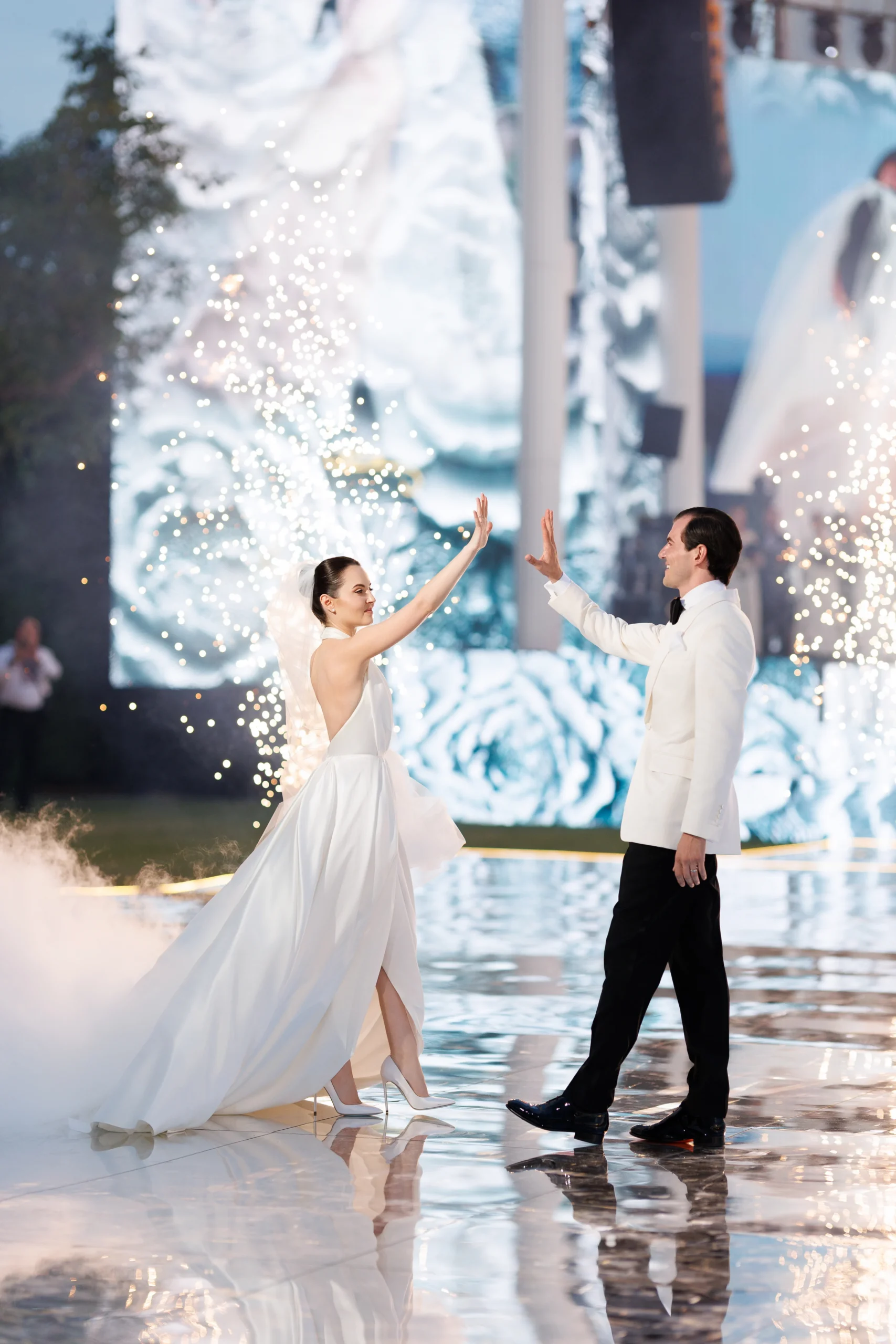
Music was especially personal. From very early on, we knew that we wanted Hymne à l’amour by Édith Piaf for our first dance. At sunset, soprano Valentina Nafornița performed it live as we danced. This song had always felt very personal to us, and for those few minutes, everything around us seemed to disappear.
6. You have very different professional backgrounds. Did those differences influence the way you created the wedding together?
Definitely. We are both very structured and detail-oriented, but we tend to look at things from slightly different angles. I usually start by defining the overall vision and experience and then work quite systematically towards it, while Alexandru often brings another perspective — questioning ideas, looking at them strategically and helping us arrive at the right decision.
Our professional backgrounds probably reinforce that. My work is entrepreneurial, currently largely within health and longevity, while Alexandru’s background is legal and strategic.
The wedding brought those different perspectives together. It required creativity, but also an enormous amount of planning, coordination and decision-making. In that sense, the process felt quite representative of how we work together: we challenge each other’s thinking, but once we agree on the direction, we are both very focused on making it happen.
7. Opera, contemporary artists and Moldovan traditions existed side by side throughout the evening. How did you make those different worlds feel coherent?
We never really saw them as different worlds. Our lives today are very cosmopolitan, so different cultural influences coexist quite naturally for us. At the same time, there are traditions that are part of our family and cultural heritage, and we wanted to give them a place in the celebration.
We had colacul miresei, traditional dances and the removal of the bride’s veil. For the veil ritual, we chose Până când nu te iubeam by Maria Tănase, one of the most iconic Romanian voices of the 20th century. The ritual marks, very simply, the transition from bride to wife, and it became much more emotional than I had expected.
We had friends joining us from almost 15 countries, many of whom had never experienced these traditions before. Afterwards, several told us they were among the moments they remembered most.
I loved that something so familiar to us could resonate with people from completely different backgrounds. Perhaps that is what I value most about cultural heritage: it can remain deeply personal while still being understood far beyond where it began.
8. Victoria, your bridal looks were very different from one another. How did you approach fashion throughout the celebrations?
For me, each dress had to belong to a particular moment and reflect a different emotion of the celebration.
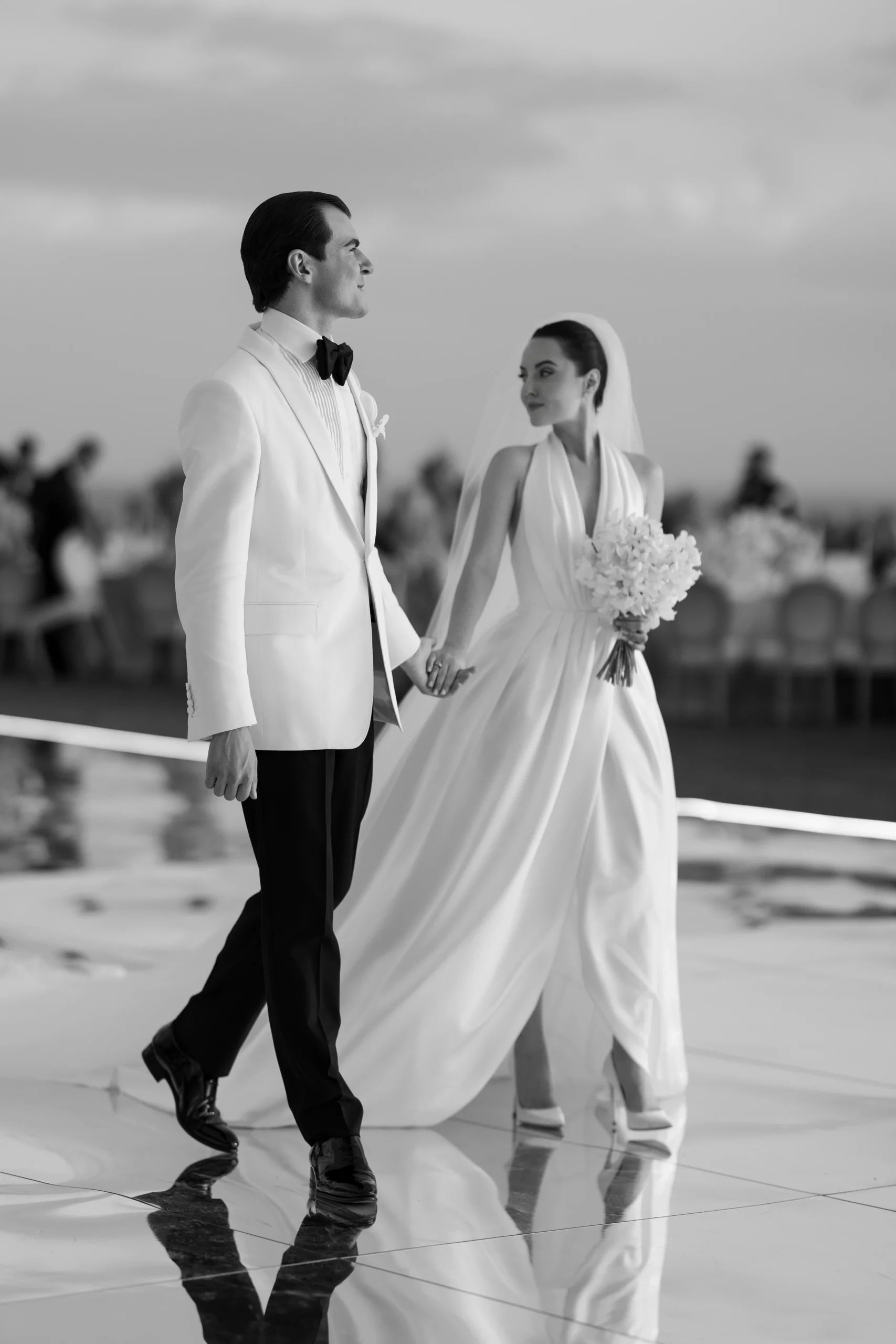
For the main ceremony, I wore a custom Privato Dress gown made entirely from silk, with an open back and a long train. The silhouette was very pure and almost architectural, but what I loved most was the movement. The skirt opened subtly at the front and the silk panels moved almost like petals as I walked. I paired it with a long, very light veil.
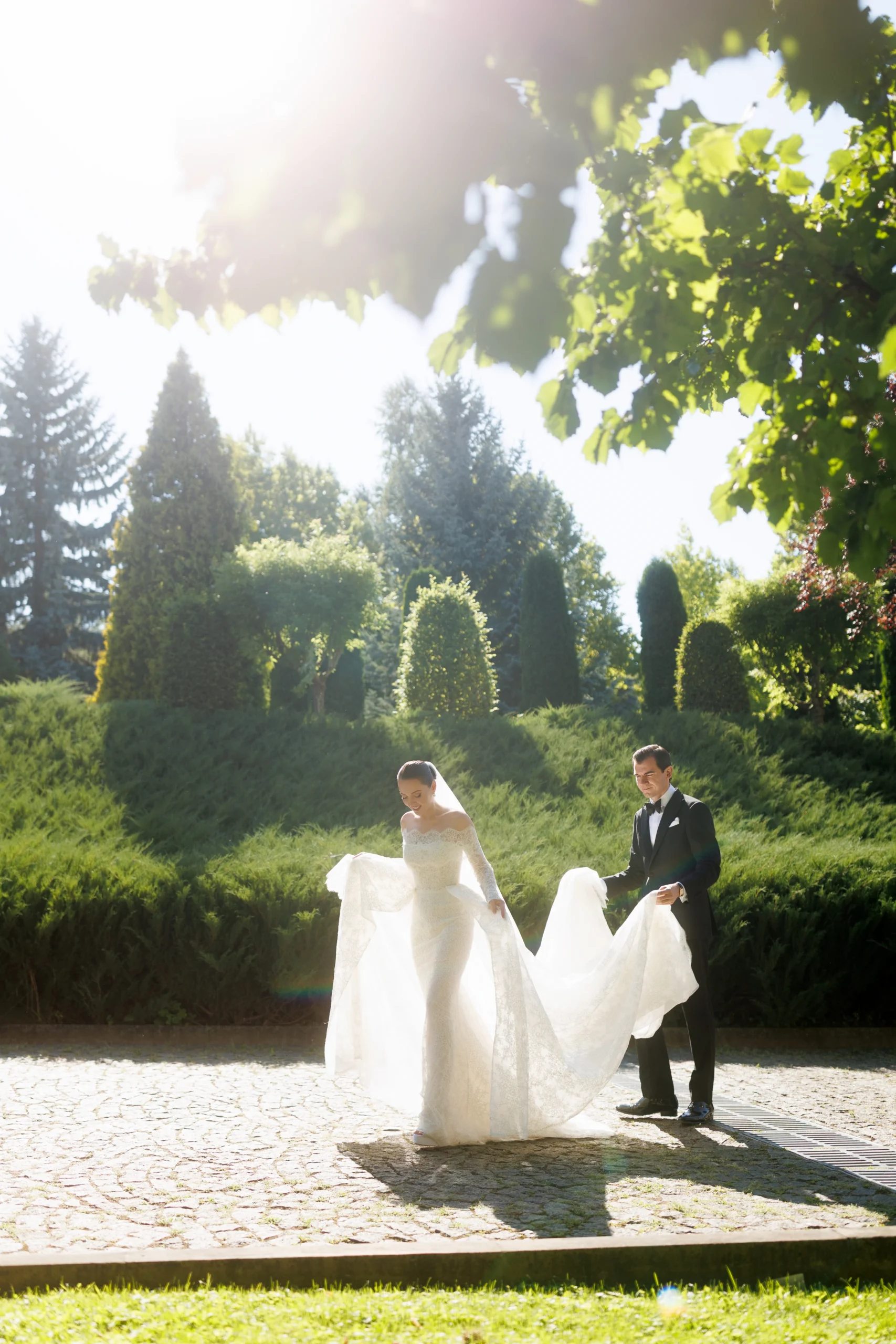
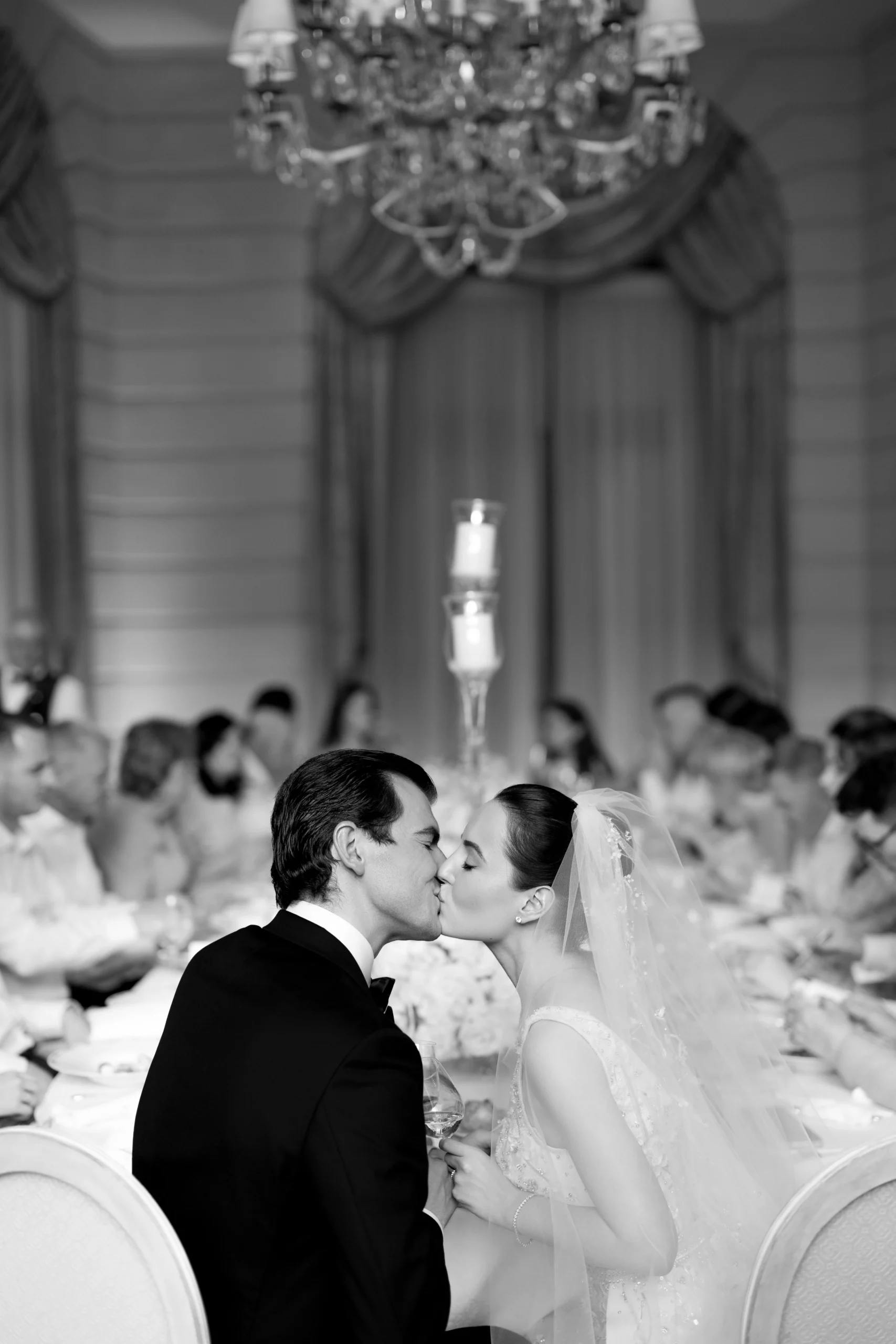
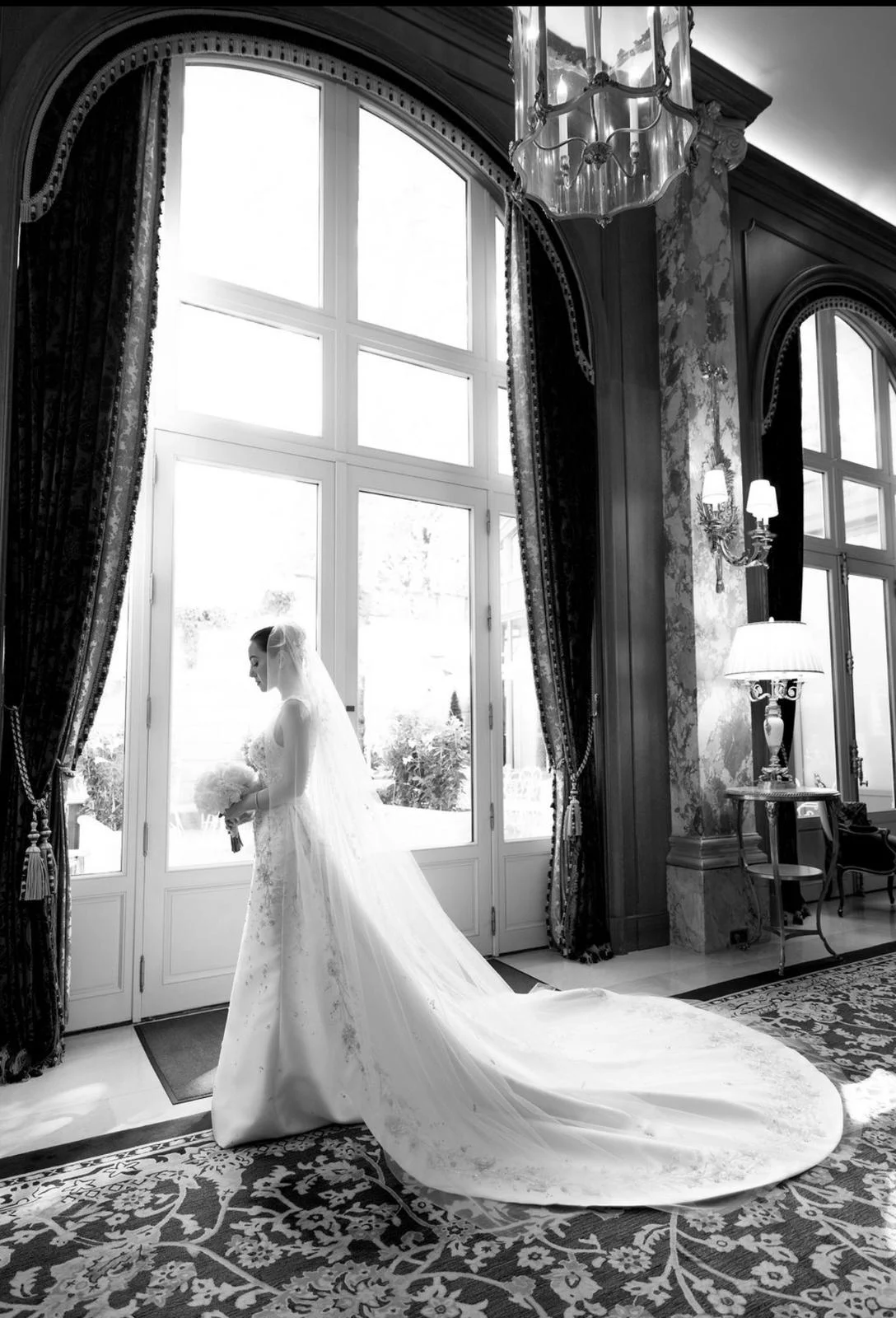
Later in the evening, I changed into an Elie Saab mermaid gown with delicate hand embroidery. It was more romantic and sensual, and also very personal to me: I had first worn the dress for our civil wedding in Paris with its long train and a veil both embroidered with flowers.
My third look had a more intricate character — embroidered lace, long sleeves, clean V-shaped lines and a jewelled hairpiece.
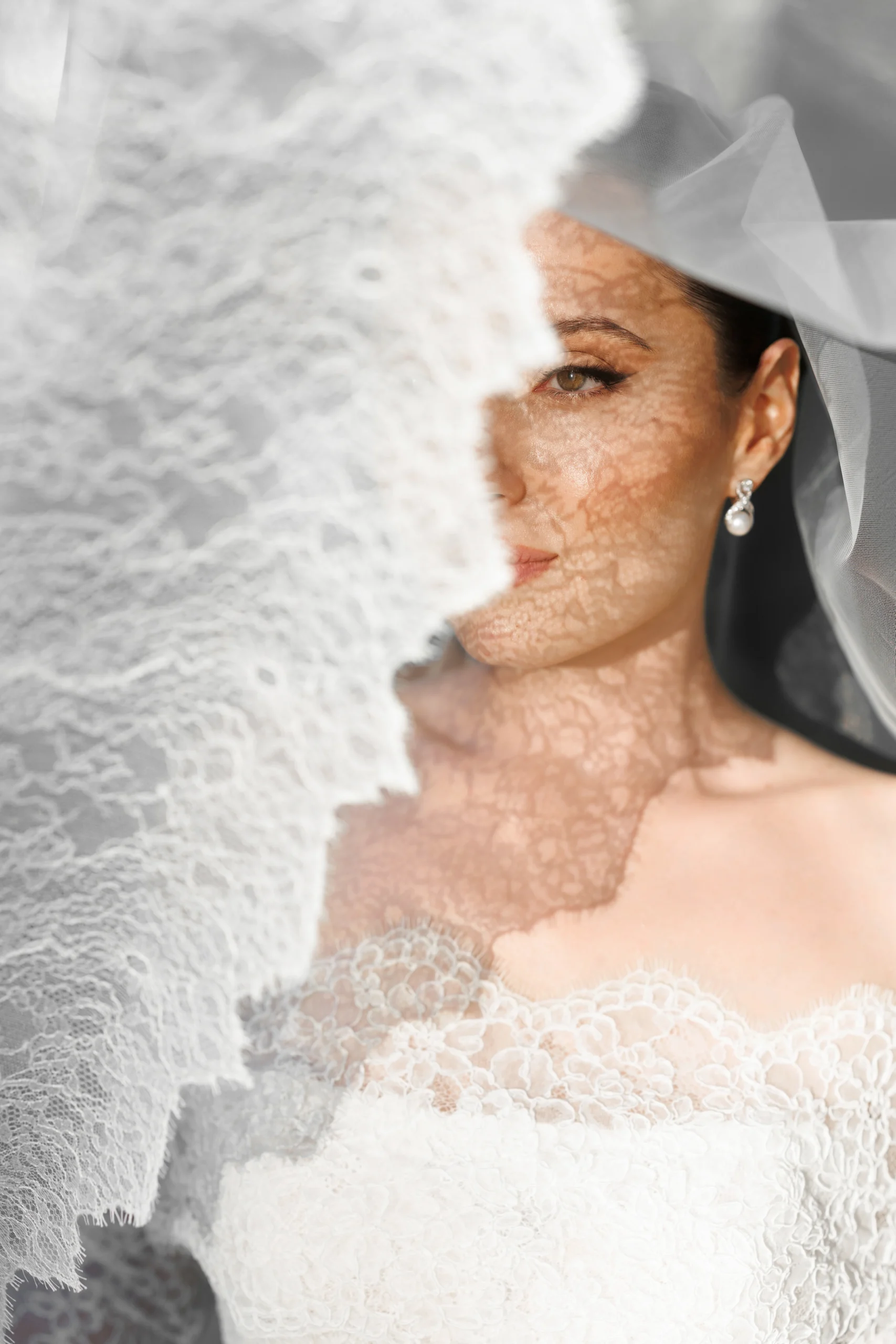
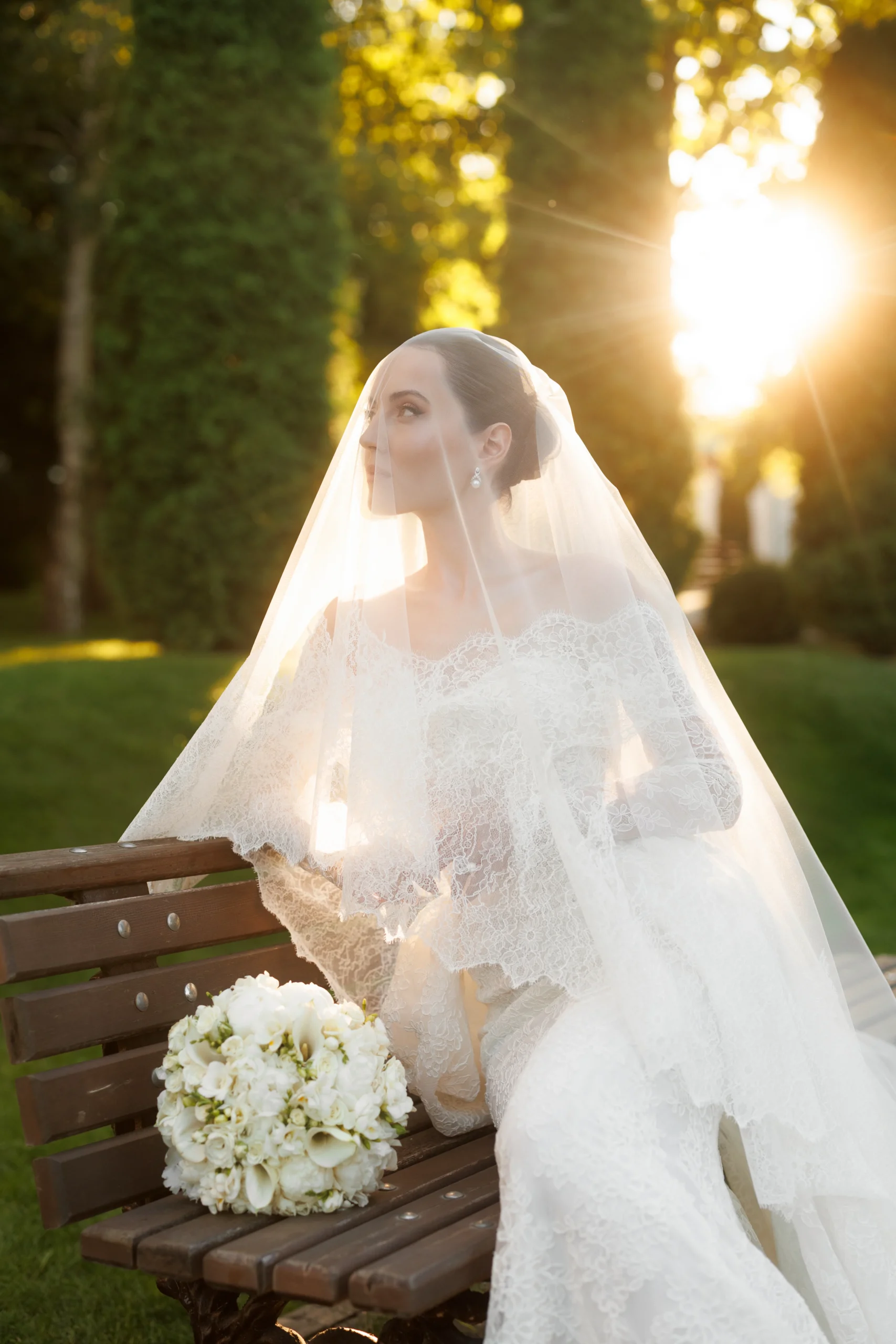
For our religious ceremony, I wore another custom Privato Dress creation in lace with an embroidered Chantilly-lace veil. The brunch called for something completely different: a long white silk-chiffon dress with a feather bolero.
Alexandru kept his looks very classic: a black-tie look with a white dinner jacket for the main celebration, and an all-black tuxedo for the civil and religious ceremonies.
9. Your professional life has given you considerable exposure to the worlds of health, longevity and medical innovation. Did that influence the way you approached beauty before the wedding?
Yes, although probably in a simpler way than people might imagine.
I no longer see appearance as something separate from health, energy or emotional balance. For me, beauty is much more about coherence — how you sleep, how you manage stress, how you nourish yourself, how much energy you have, and ultimately how present you feel in your own life.
So before the wedding, I was not interested in radically changing myself or following an extreme bridal routine. Quite the opposite. I focused on the fundamentals: my routine, sleep, nutrition, movement and overall wellbeing. I wanted to arrive feeling strong, clear-minded and recognisably myself.
There is a lot of pressure around becoming the “perfect bride”. I wasn’t trying to become someone else for one day. I wanted to feel like myself on a very important one.
10. Was there a moment during the wedding that could not have been planned, but turned out to be one of your most treasured memories?
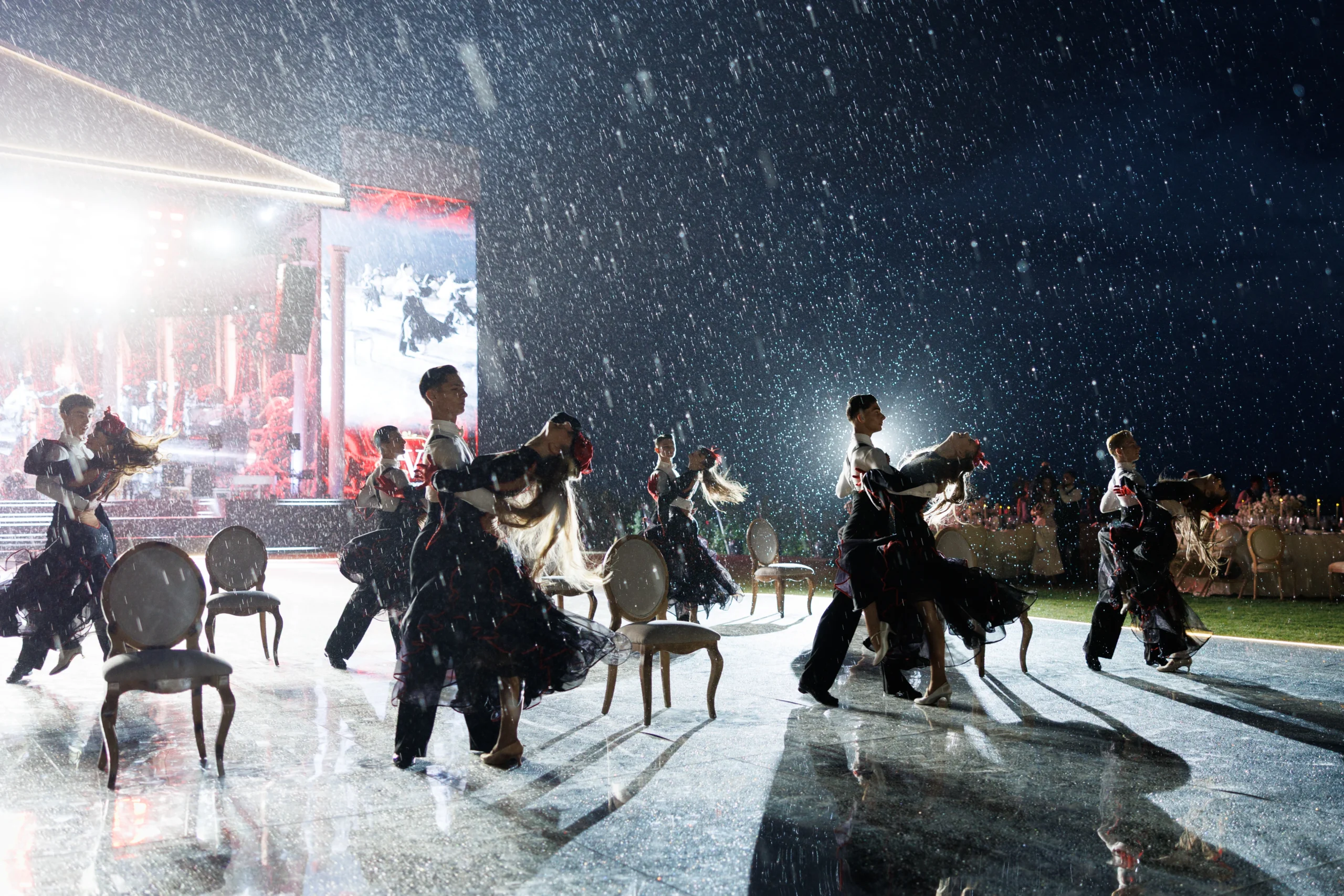
During the evening, there was a tango performance by European ballroom dance champions from Codreanca Professional Dance Club. My cousin was among them, which had been kept as a surprise from me.
Just as the performance came to an end, a brief summer rain began. Against the lights and the music, it created an almost cinematic scene.
For a while, we gathered in the covered lounge area, where the live music continued. Everyone was suddenly closer together, singing along, dancing and simply enjoying the moment. There was something wonderfully spontaneous about it — the atmosphere became warm, intimate and even more joyful.
The rain passed quickly, and we returned to the main dance floor, where the celebration continued until morning.
Looking back, I love that something entirely unplanned brought everyone together in such a natural way. It gave us one of those rare moments that no amount of planning could ever create.
11. With so much happening over those three days, what do you remember most clearly now?
Not necessarily the things I expected to remember.
I remember the moment Alexandru saw me in my wedding gown for the first time. Walking down the aisle. Our vows, with the choir singing the Love Theme from Romeo and Juliet. Our first dance at sunset. Our parents’ speeches. Everyone suddenly gathering together when it started to rain.
And I remember arriving at our religious wedding on the third day. After all the music, people and intensity of the previous days, everything suddenly became very quiet. Those contrasts stayed with me.
We put enormous thought into what the wedding would look like, and of course those details mattered to us. But memory works differently.
It keeps faces, gestures, voices and moments that lasted only a few seconds.
12. After almost 14 years together, did the wedding feel like a conclusion or a beginning?
Definitely a beginning.
For many years, we were building our lives alongside one another — each with our own ambitions, projects and direction. Marriage changed the perspective slightly. Not because everything suddenly changes after one day, but because the questions change. It becomes less about “where am I going?” and more about “where are we going?”
And I think that is what makes it so exciting. We have shared so much of our past, but there is still so much of our future left to discover together.
Credits
Talents: Victoria Donici @victoria.donici & Alexandru Slivinschi @alex.slivinschi
Wedding Planner & Decoration: Lara Deco Event @lara_deco_event
Creative Director: Daniela Burlaca @danielaburlacaofficial
Venue: Epicrama Wine Estate @epicrama.winery
Technical Production: DVV Show @dvv_show | Sonaris @sonaris.com_md
Gastronomy: Queen Residence @queenresidence.md
Cake: Pastrylab by Irina Popovici @pastrylab_iri_popovici
Photography: Alex Iordache @alex_iordache_
Videography: Adrian Barda @adrian.barda
Fashion: Elie Saab @eliessabbridal | Privato Dress @privato.dress | Tom Ford
Entertainment: Valentina Nafornița, Camerata Chişinău Municipal Orchestra conducted by Cristian Spătaru, Advahov Folk Music Orchestra, Vlad Fotescu & Orchestra Avanti, Cristina Scarlat, Andra, Zdob şi Zdub, National Academic Folk Dance Ensemble “JOC”, DanceSport Club “Codreanca”, Da Production, DJ Softbeat, Eugen Butnaru, Iurie Gologan, Nicu Turcan etc.