
With a deep-rooted passion that bridges diplomacy, design, and drama, Ira Langevin is not merely a designer — she is a storyteller of elegance. From childhood sketches to theatrical scripts, from MGIMO’s corridors to the ateliers of fashion, her path is anything but conventional. Fueled by a love for travel and discovery, she has woven together her diverse experiences into a singular creative vision that celebrates individuality and inner strength.

Dress: Namelazz; Jewelry: Antonio Robles
In each dress she designs, there is a whisper of her journey — refined, expressive, and profoundly personal. In an exclusive interview for L’Officiel Monaco, Ira Langevin shares her insights, inspirations, and the philosophy behind her approach to timeless, authentic beauty.
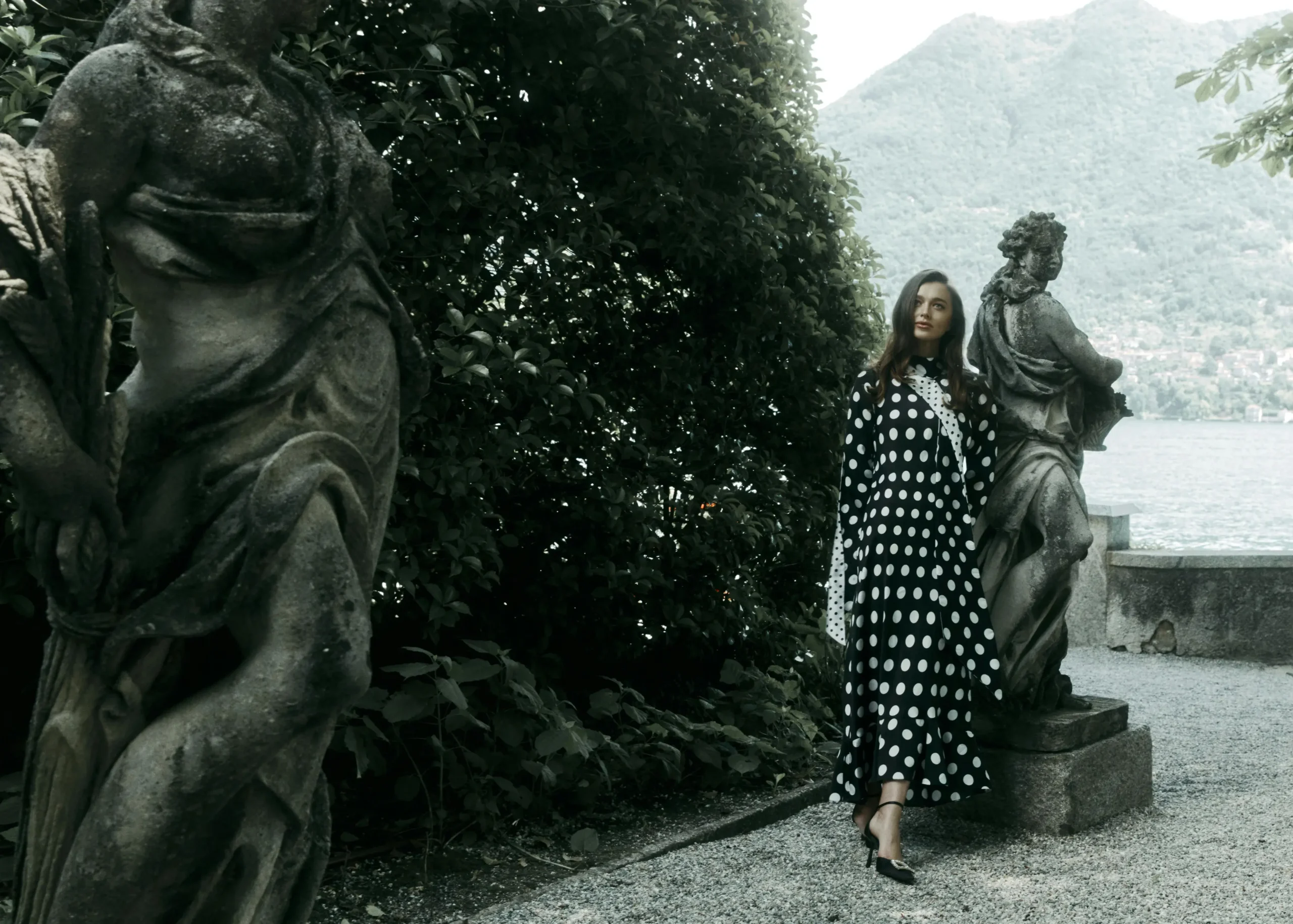
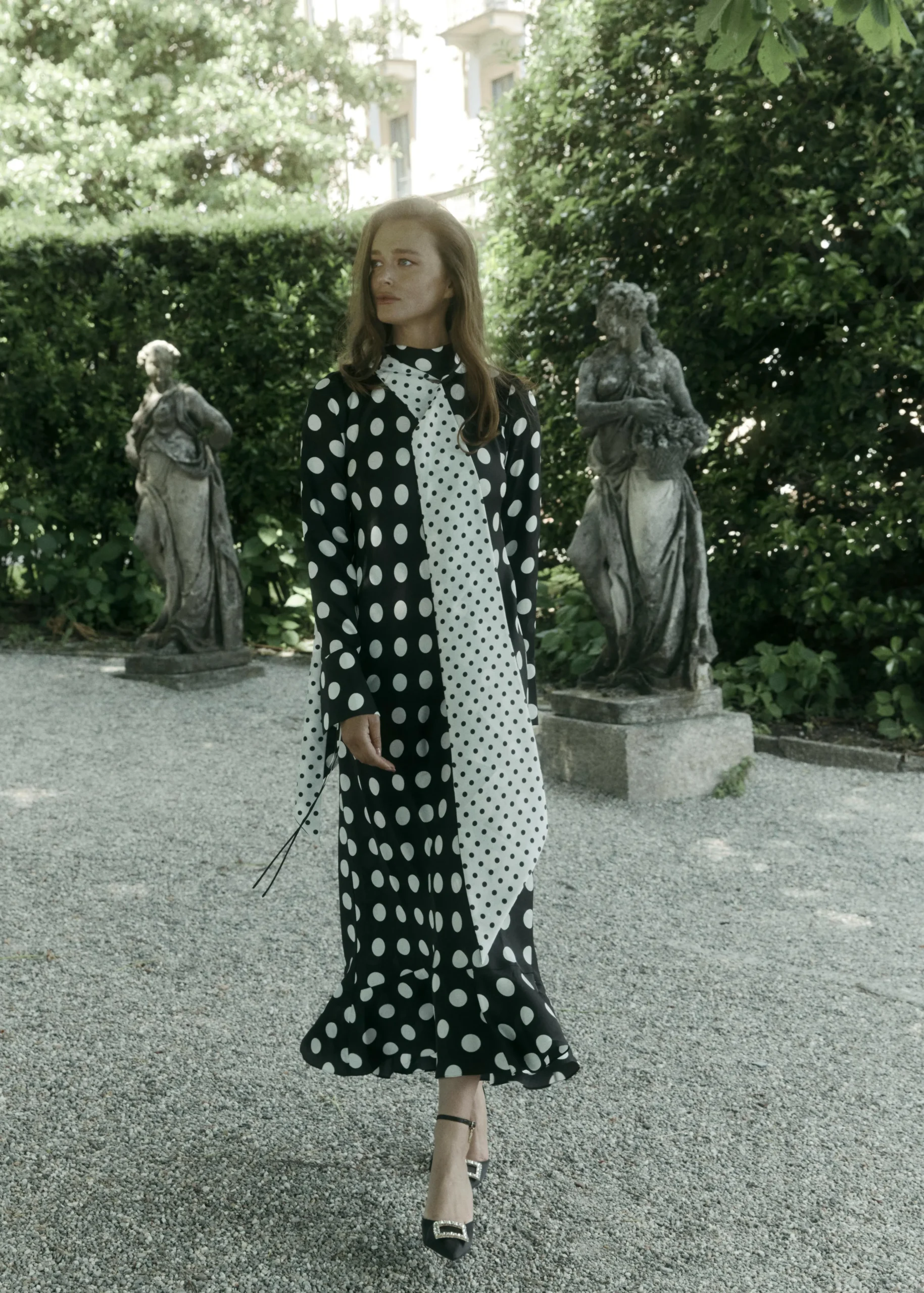
Dress: IRA LANGEVIN; Shoes: Steve Madden
Your journey spans international relations, theatre, and fashion. How did these seemingly different paths come together in your work as a designer?
At first glance, diplomacy, playwriting, and design might seem worlds apart, but perhaps only now do I truly understand how elegantly they complement each other, enriching my art while lending it deeper meaning and a unique style. International relations taught me to respect and comprehend our world as a whole, while theater showed me how to express the ineffable, give shape to feelings and emotions. Fashion became where both converged: a visual and tactile diplomacy, where every silhouette represents quiet negotiations between
power and vulnerability, strength and elegance.
And all of this incredibly complements the fashion artistry I pursue. Through these insights, I am able to create dresses for women from entirely different cultures that dignifiedly reveal their individuality.
Do you remember the first dress you ever sketched as a child — and how does it compare to the creations you design today?
Being a 3 years old child, even back then, I was poring over drawing and reading, and although I don’t recall my first dress, I do indeed remember my first sketch I have I made when I was five, it was for a dress for my doll models. Later on I got quite a scolding from my mother since the entire thing was made out of our window tulle. It was a down to the floor, multi-layered gown resembling a peony bud. During this period, I passionately adored flowers and depicted them in every way possible. Of course, this first dress was a long way to go, but I’m certain it contained the same aspiration I experience today—to passionately create garments that cater to the soul, not just the eyes. Today my dresses are more architectural, more refined, but that initial emotion, the desire to make beauty a form of self-expression, remains unchanged.


Cape: Jeanvie Paris; Shoes: Saint Laurent
How has your experience at MGIMO and your background in diplomacy influenced your creative voice in fashion?
Diplomacy teaches you to see the complex nature of the world, reading between the lines, understanding intentions history, and silence. Reading the air. This experience has made me sensitive to the undertones of elegance. I create designs not merely for the body, but for genuine self-expression, thereby emphasizing each woman’s authenticity. I consider each dress a form of soft power—it doesn’t cry for attention, but starts shaping the atmosphere as soon as it enters a room.
Travel plays a central role in your story. Is there a place that has shaped your aesthetic the most?
Travel is an integral part of my life, through which I discover myself and find inspiration for my art. It’s extremely difficult to select one country from all the places I’ve visited—each location leaves a unique mark on my work. Although now that I think about it, Venice and Monaco have influenced me most profoundly. Venice—a city of illusions and truth, shadows and reflections. It has literally changed my life: somehow all my pivotal decisions were made there. Then Monaco, where I consistently get a myriad of interesting ideas; I frequently review Monaco’s chronicles, archival photographs, and marvel at authentic history of
splendor. It no doubt strongly influences my creativity: drawing upon aristocratic elements and genuine elegance.
You also studied at the Academy of Drama. How does storytelling find its way into your collections?
Each collection begins with a story. Sometimes I envision a woman walking her walk. Sometimes it’s silence or the beautiful shades of dusk. My theatrical education taught me to create emotions through gestures, light, and stillness. I perceive a dress as a monologue framed in fabric.


Dress: Jeanvie Paris; Shoes: Chantal 1962
What does ‘authentic beauty’ mean to you, and how do you bring that to life through your designs?
True beauty isn’t perfection or the final destination. Rather, it’s the presence of harmony and balance. It’s the beauty that emerges from recognizing who you are and having the courage to show it. In my designs, I avoid trends. Instead, I focus on lines, proportions, texture—elements that highlight a woman’s true essence rather than conceal it. Each piece feels essential, as though it always belonged to her.
In your opinion, what makes a piece of clothing not just beautiful, but meaningful?
On one hand its it’s silence and on the other it’s the memories it brings. A meaningful outfit doesn’t merely adorn—it captures a moment of change and becomes part of the woman’s own history. The significance lies in what you feel, not just what you see.
What message do you hope each woman carries when she wears a piece created by you?
I want her to feel strong in her gentleness, invincible in her vulnerability. I want her stride to be like poetry—gracious, uncompromising, unforgettable. My message is simple: you are here to shine. You are here to be beautiful, strong, and belong to yourself completely.

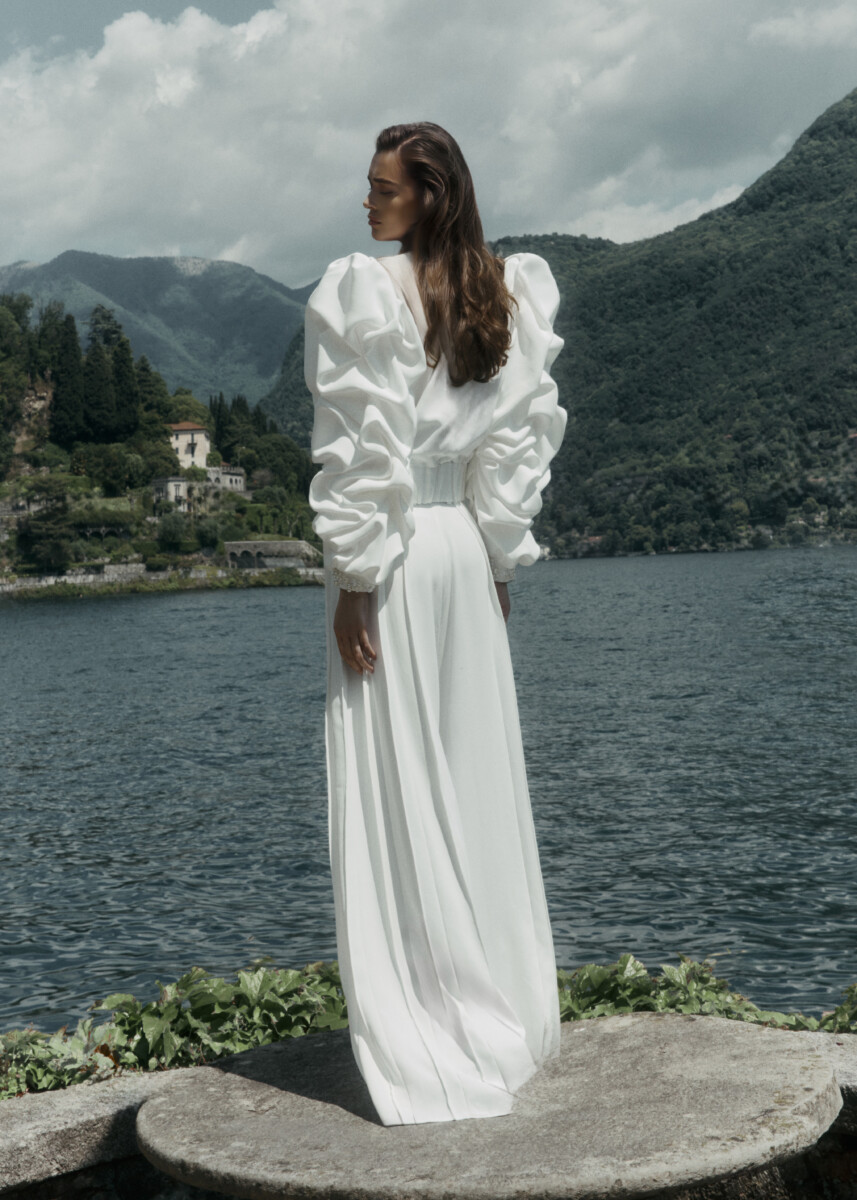
Suit: IRA LANGEVIN; Shoes: Jimmy Choo
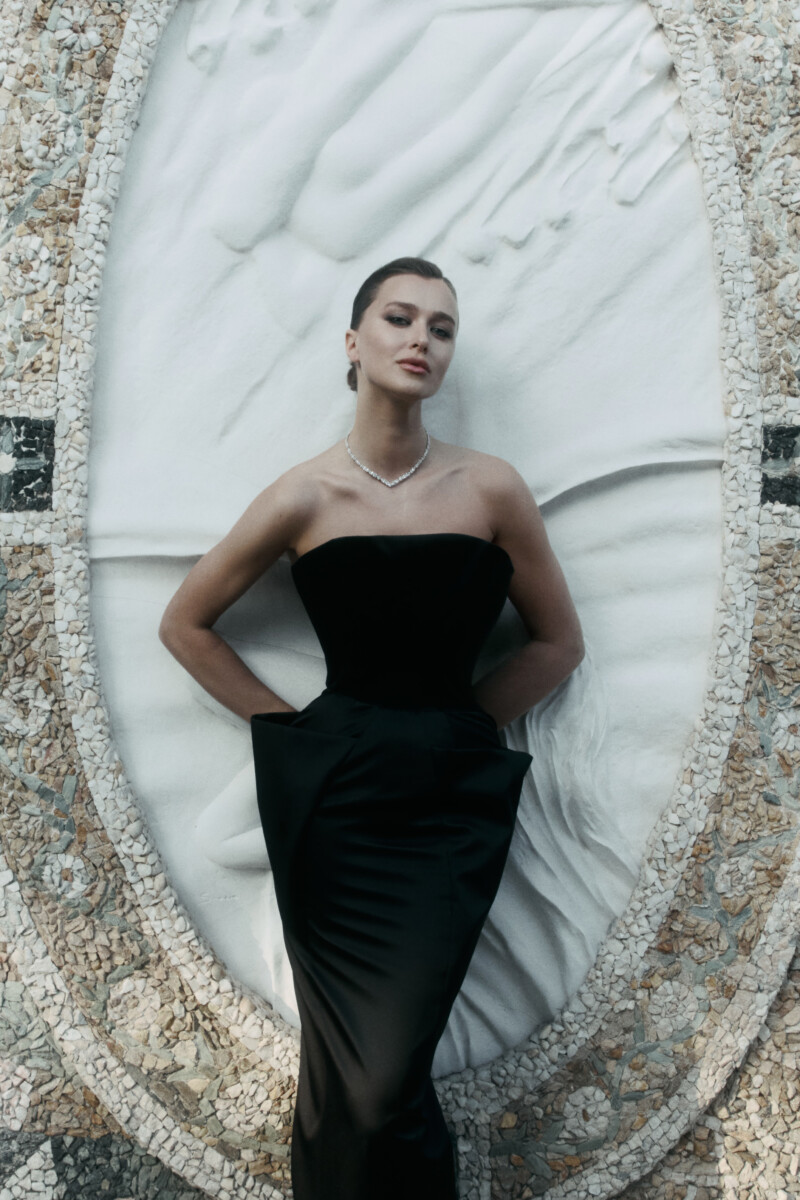
Dress: THE AME ATELIER; Jewelry: ANTONIO ROBLES
Team Credits:
Model Ira Langevin
Photography Elena Belousova
Fashion Stylist Ekaterina Dmitrieva
Muah Lizaveta Lazovskaya
Videographer Julia Gincu
Project Manager: Olga Ivanova