
In this interview, Anna Chernitskaya — writer, mentor, mother, and creator of the Siberian Resilience philosophy and method — reflects on resilience, personal growth, motherhood, femininity, and what it means to build a truly fulfilling life.
By Kinsley Ah-Chion

Dress: The New Arrivals by Ilkyaz Ozel; Shoes: Christian Louboutin
1. You created the philosophy and method of Siberian Resilience. What does this concept mean to you personally, and which experiences inspired you to develop it?
Siberian Resilience is very personal to me because, before it became a method, it was simply the way I learned to live.
I was born and raised in Siberia and lived there until I was twenty-one. Growing up, I never thought of our environment as particularly difficult because it was simply normal to me. The winters were severe, and my parents raised me with a great deal of discipline. From a young age, I had responsibilities: helping to take care of our home, cooking, working in our large garden, studying, reading and playing chess. There was structure, there were expectations, and there was work.
As a child, I didn’t always appreciate it. Looking back today, I see it as one of the greatest gifts my parents gave me. They taught me that effort is not something to fear and that discomfort doesn’t necessarily mean something is wrong. You can be uncomfortable and still move forward.
When I later moved to America, I began to understand how deeply that upbringing had shaped me. I also became fascinated by the way we relate to problems. Sometimes the problem itself causes less damage than the fear, stress, and decisions we make while believing that life isn’t supposed to be difficult.
That realization became central to Siberian Resilience.
I don’t believe the objective of life is to eliminate every difficulty. I believe we can learn to relate to difficulty differently.
This is why the central metaphor of my philosophy is a trampoline. Sometimes the very thing that seems to pull you down can become the force that propels you upward. Almost like a slingshot, the tension that pulls you backward can create the momentum that sends you forward. I have seen that principle repeatedly in my own life.
I sometimes think of problems as catalysts as well. In chemistry, a catalyst can initiate or accelerate a reaction that might otherwise never take place. In life, a difficulty can sometimes become the catalyst for transformation — the moment that forces us to change, adapt, or become someone we might never have become without it.
Today, I consider myself a genuinely happy person, not because my life has always been easy, but because I trust my ability to meet life as it comes. I know that whatever the situation, I can adapt, find a solution, and continue moving forward and upward.
In many ways, Siberian Resilience is my attempt to bring together the best of the two cultures that shaped me: the resilience, discipline, and adaptability I learned growing up in Siberia, together with the possibility, optimism, and freedom to reinvent yourself that I discovered in America.
For me, resilience isn’t simply the ability to survive difficult circumstances. It is the ability to use them as a catalyst for transformation — to turn a problem into a trampoline and allow it to take you somewhere you might never have reached without it.
Another metaphor I sometimes use is that of a chemical catalyst. In chemistry, a catalyst accelerates a reaction and allows transformation to happen more efficiently. I think certain difficulties can play a similar role in our lives. They can accelerate change, reveal strengths and capacities we might never have discovered otherwise, and shape us into a version of ourselves that may never have emerged without that experience. The problem itself is not the transformation — but it can become the catalyst for it.
2. Modern women are often expected to succeed professionally, maintain relationships, care for their families, and still find space for themselves. What advice would you give to women seeking strength without losing their sense of self?
Becoming a mother completely changed my understanding of female strength. Before I had my son, I don’t think I fully understood how much women can carry — physically, emotionally, and mentally. It gave me an entirely new respect for women.
At the same time, motherhood taught me something that initially felt almost contradictory: taking care of yourself isn’t selfish. It is part of taking care of the people you love.
There is a reason the safety instructions on an airplane tell you to put on your own oxygen mask before helping your child. You cannot take care of someone else properly if you have completely depleted yourself first. I think the same principle applies to life.
I want my child to grow up surrounded by love, warmth, and happiness. But I cannot create that environment if I am constantly depleted, unhappy, or disconnected from myself. The emotional state we bring into our homes matters.
I also don’t believe there is one correct definition of what a modern woman should be. One woman may dream of building a company; another may find enormous fulfillment in raising a family; many of us want some combination of love, motherhood, creativity, work, friendship, and personal growth.
Strength isn’t proving that you can do everything. Strength is knowing what actually matters to you and having the courage to build your life around it.
For me, the practical foundation is discipline of attention. We live in a world constantly competing for it. We can lose hours comparing ourselves with carefully edited versions of people we don’t actually know.
So I try to be very deliberate about where I place my attention, because where attention goes, results tend to follow.
I direct mine toward what makes my real life richer: my health, my child, meaningful work, learning, and relationships that bring love and energy into my life.
And I think the people we choose to share our lives with matter enormously. The right relationship shouldn’t require you to become smaller in order to maintain it. It should give both people more strength to become who they are.
So when women ask me about balance, I don’t think the answer is necessarily balancing everything.
Protect your health. Protect your attention. Love your family. Choose your relationships carefully. Stay curious. And don’t build your life around somebody else’s definition of what a successful woman is supposed to look like.
3. As a writer and mentor, you spend considerable time observing and understanding people. What have you learned about the qualities that allow a person to remain emotionally strong during periods of uncertainty or change?
I think emotional strength begins with discipline — especially discipline of the mind.
When we face uncertainty, our minds can create endless stories about everything that might go wrong. I try to separate what is actually happening from what my mind is predicting might happen.
There is an expression I grew up with: “Man proposes, God disposes.” We can prepare, make intelligent decisions, and do everything within our control, but ultimately we cannot control every outcome.
When fear takes over, we can become so focused on what might go wrong that we stop seeing the situation clearly.
So I come back to three questions:
What is actually happening? What is within my control? And what is the most constructive next step I can take?
That is one of the foundations of Siberian Resilience. It isn’t about pretending that something painful is wonderful or denying the reality of a difficult situation. It is about refusing to let fear make your decisions for you.
I believe this can be practiced. Every time you choose clarity over panic and constructive action over endless overthinking, you become better equipped to meet the next challenge.
Physical well-being matters too. I take sleep, movement, nutrition, and taking care of my body seriously. It is much harder to manage uncertainty intelligently when you’re exhausted.
And strength doesn’t mean handling everything alone. Sometimes resilience means having enough self-awareness to ask for another perspective from someone you trust.
Ultimately, I think emotionally strong people share one quality: they don’t need to know exactly how the story ends in order to take the next right step.
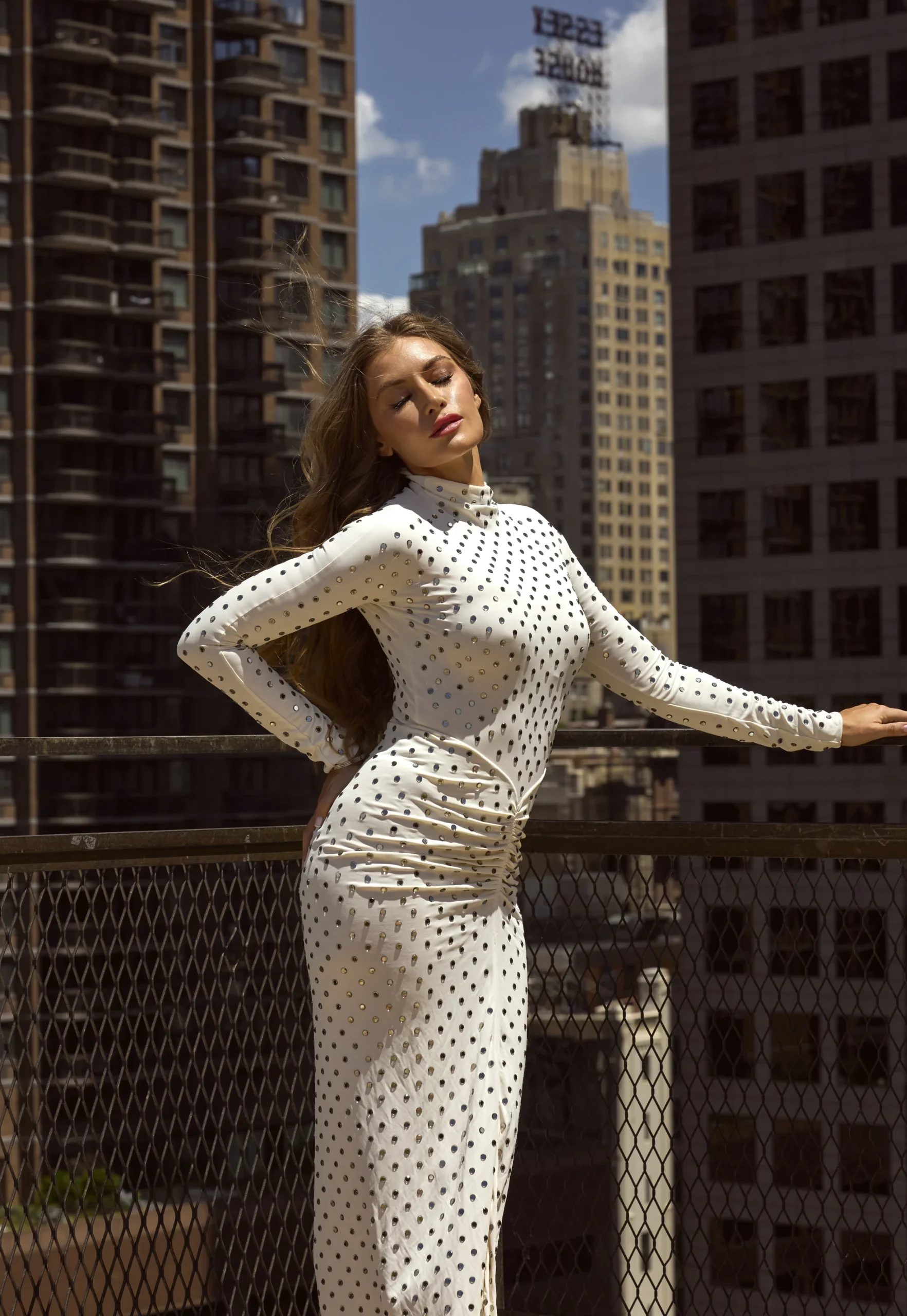
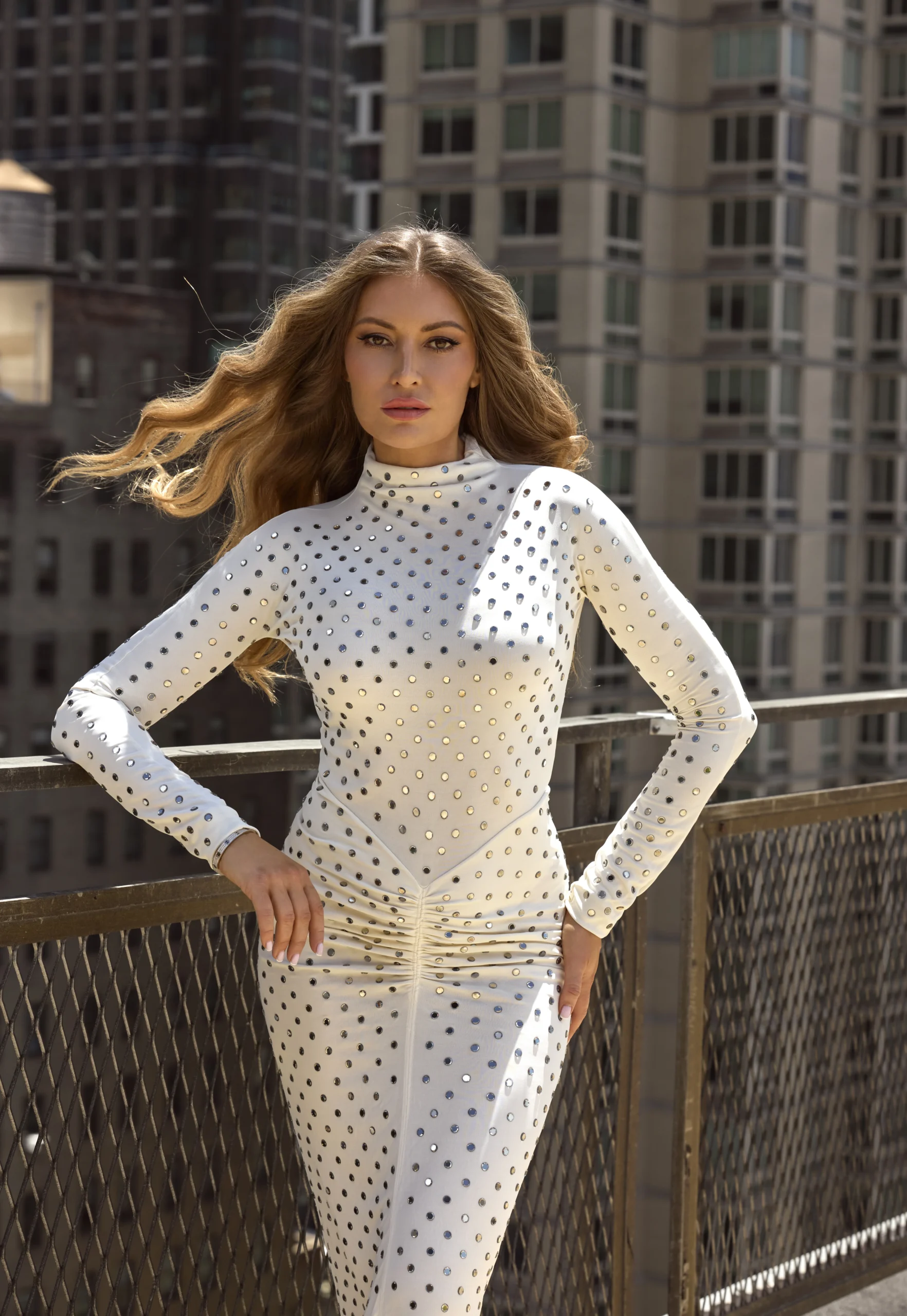
Dress: ALAÏA; Shoes: Christian Louboutin; Jewelry: Messika
4. How has motherhood influenced your understanding of resilience, femininity, and personal priorities?
Motherhood changed me more profoundly than anything else in my life.
It is the most beautiful and, at the same time, one of the most demanding experiences I have ever had. Before I had my son, I don’t think I could have understood the depth of love a mother can feel for her child. It is almost impossible to put into words. I love my son so deeply that today I simply cannot imagine my life without him.
Becoming a mother also made me understand my own mother differently. Things I once saw simply as rules or discipline, I can now recognize as the enormous amount of thought, responsibility for a child’s future well-being, and love that goes into raising a child. Motherhood made me appreciate my own parents on a completely different level.
It also changed my priorities.
For me, one of the greatest measures of success will be raising a child who is happy, healthy, loving, confident, and eventually capable of standing on his own two feet.
I want my son to always know that I am there for him, while also developing an inner confidence that says: “I can handle this. I can figure things out. I trust myself.”
I don’t want to remove every difficulty from his path. I want to give him enormous love and security while also giving him, in age-appropriate ways, challenges that require him to make an effort, responsibilities he can learn from, moments of disappointment, opportunities to solve problems, and the satisfaction of discovering: “I did this myself.”
I don’t want my child to inherit the hardships that made me strong. I want him to inherit the strength I built from them.
Children today are growing up in an environment completely different from the one I knew. Technology, constant information, and instant access to entertainment have created extraordinary possibilities, but also new challenges.
I don’t think the answer is to recreate the hardships of our childhoods. The question that interests me is: How do we raise resilient children in a world where the challenges have changed?
I certainly don’t have every answer. I am learning alongside my son.
But I know what I eventually want him to feel when he enters the world independently: not that his mother will solve every problem for him, but that he has the inner resources to meet life himself — and that he will always have a loving home to return to.
Motherhood has also changed my understanding of femininity. I think there is enormous strength in nurturing, loving, and creating warmth around the people you care about.
Strength doesn’t always have to look hard.
Sometimes the strongest thing in the room is love.
5. Your work encourages people to develop inner strength. Are there particular daily practices, habits, or principles from the Siberian Resilience method that you personally follow?
Absolutely. For me, resilience is built much more through small daily practices than through dramatic moments.
I wake up early and try to begin the day before the outside world has had a chance to enter my mind. I move, stretch, breathe, and I am very protective of those quiet morning hours.
I am also conscious of how much information I consume. If I feel mentally overwhelmed, one of the first things I do is step away from social media and unnecessary noise. Attention is one of our most valuable resources, and I don’t want to give all of mine away.
Writing is another important practice for me. If something is worrying me, I put it on paper. It helps me distinguish what is actually happening from the story I may be creating around it.
And every evening, I think about what was good about my day and write it down. Even on a difficult day, I deliberately look for something I can be grateful for.
I love this practice because resilience isn’t only about becoming better at handling what is wrong. It is also about becoming better at noticing what is already right.
I take care of the physical foundations too — sleep, movement, nutrition, and time outside. None of these things is particularly complicated. Their power is in consistency.
And perhaps my most important practice is presence.
If I’m with my child, I want to be with my child. If I’m walking, I walk. If I’m working, I work. And if there is a problem I need to solve, I give my attention to the actual problem rather than creating ten imaginary ones around it.
Siberian Resilience isn’t something you suddenly discover when life becomes difficult. It is something you quietly practice every day.
6. You are also a Kiton Brand Ambassador. What does personal style mean to you, and how does the way a woman dresses influence her confidence and presence?
I would describe my personal style as classic femininity with a playful edge.
I have always loved looking at beautifully dressed women. I notice proportions, fabrics, colors, and the little details that make someone look effortlessly put together. For me, fashion is a visual language.
At heart, I’m very classic. I love timeless silhouettes, beautiful tailoring, monochromatic looks, and exceptional fabrics. I have always loved Chanel — I am absolutely a Chanel girl — and I also have a very special appreciation for Kiton.
What I particularly love about Kiton is the extraordinary craftsmanship and quality, but also the femininity and elegance of the women’s collections. Their tailoring can be incredibly sophisticated without taking away from the woman wearing it.
But I don’t want fashion to become too serious. I love mixing things. I can be very classic and polished, but I also love something sexy, unexpected, or with a little sparkle. During the day, you may find me in beautiful sportswear, and in the evening I can be completely dressed up. Both feel equally like me.
I also believe in buying fewer things and buying them well. I would rather invest in a beautifully constructed jacket, suit, or dress that I can wear for years than fill my wardrobe with things I’ll forget next season.
I think clothing can communicate quite a lot before a woman says a word — her taste, her individuality, perhaps even something about the way she sees herself.
But the best clothes shouldn’t compete with the woman wearing them. They should reveal her.
For me, that is timeless style.
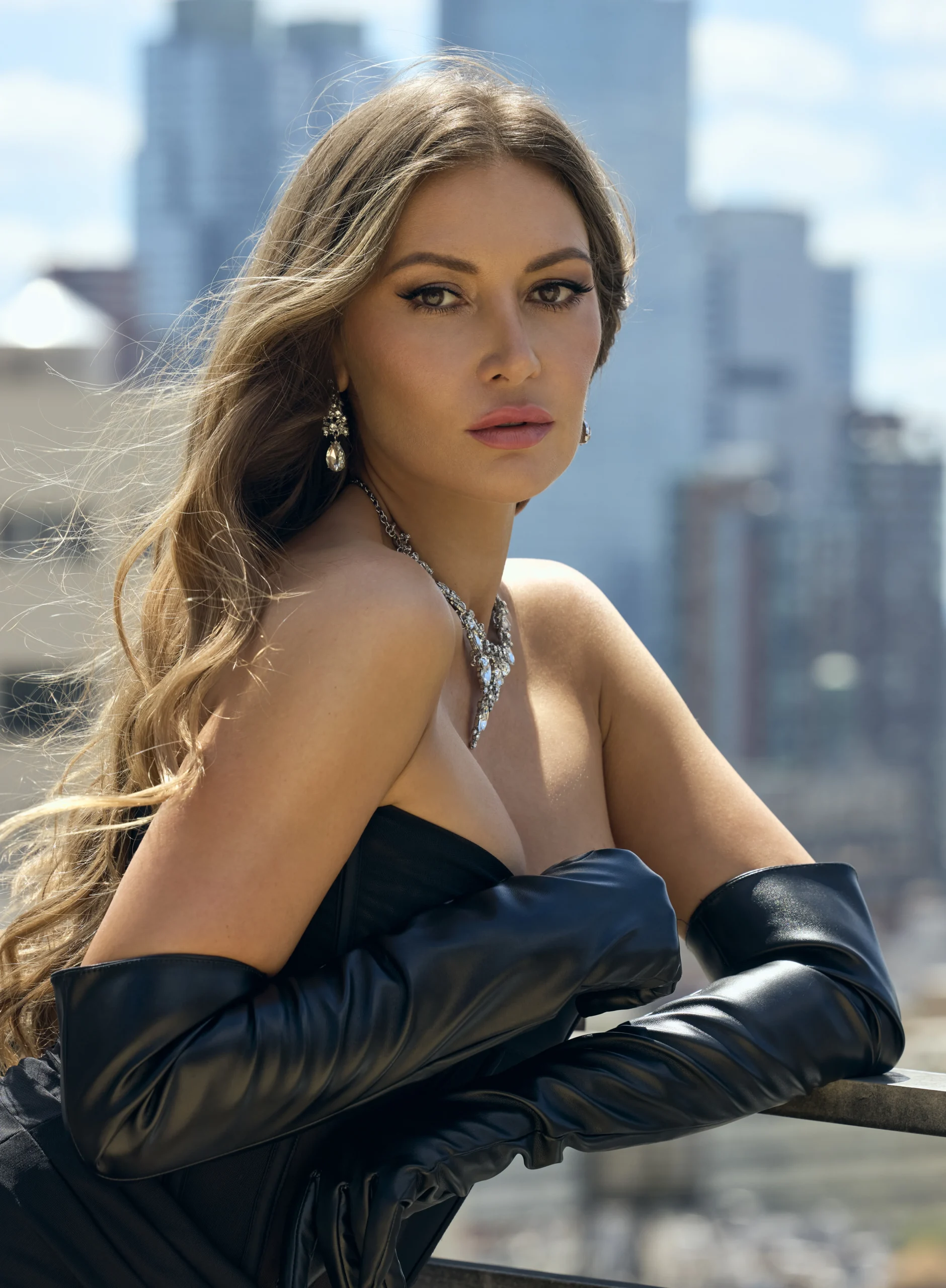
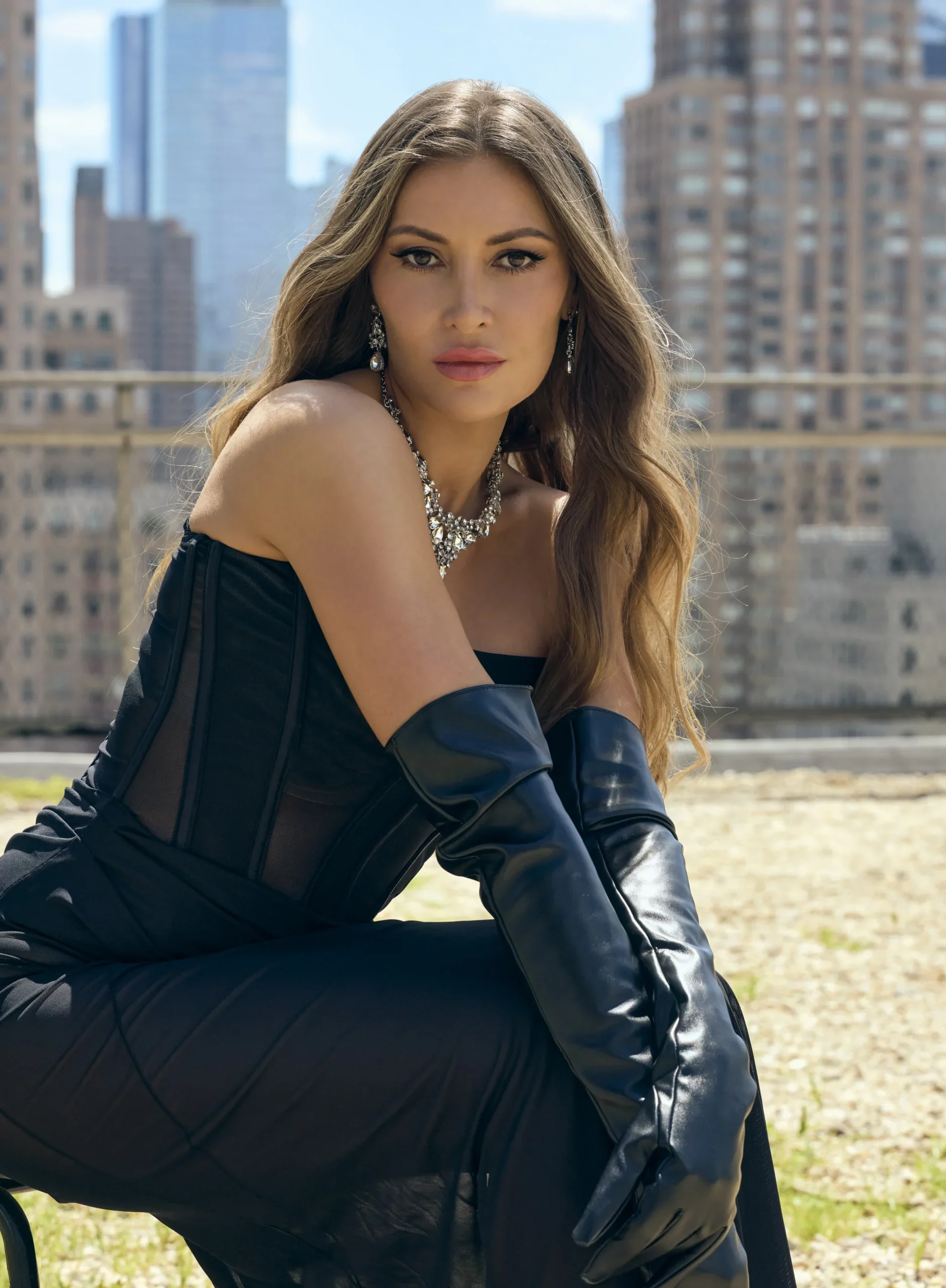
Dress: Alex Perry; Shoes: Christian Louboutin; Jewelry: Alessandra Rich; Gloves: Paula Rowan
7. Your skin looks exceptionally healthy and radiant. What does your beauty and skincare routine look like, and are there any treatments, products, or habits that you consider particularly important for maintaining your complexion?
I think beautiful skin begins much earlier than skincare. For me, it begins with the way I live.
Sleep is probably one of the most important things. I usually go to bed around 10 p.m. and wake around 5:30 or 6 a.m., and I have become very protective of my sleep.
Nutrition is another important part of my routine. I eat very little sugar, rarely have desserts or bread, and generally follow a low-carbohydrate way of eating with plenty of protein, healthy fats, vegetables, and green smoothies. I also eat organ meats regularly and cook a great deal of my food myself.
I stopped drinking coffee as well. If I want caffeine, I usually have green tea.
Of course, I love skincare and treatments too. I’m not going to pretend my skin is simply the result of green smoothies! I love good facials and modern laser treatments, and I am consistent about taking care of my skin.
I also love the Russian banya. For me, it is as much a ritual of relaxation and well-being as it is a beauty ritual.
And I am almost obsessive about protecting my face from the sun. When I go for long walks, I wear a very serious UV-protective hat. It isn’t particularly glamorous — I joke that I look like a beekeeper in it — but I wear it anyway.
But if you ask me about the real glow, I think there is something visible about a woman who is rested, taking care of herself, enjoying her life, and not living in a constant state of stress.
I am at a point in my life where I feel genuinely happy, grateful, and very much in love with life.
You can do every treatment in the world, but there is a particular kind of glow that comes from being happy with your life.
8. You also maintain a very fit physique. What does your fitness routine involve, and how do movement, nutrition, and lifestyle contribute to keeping your body strong and in shape?
My relationship with my body changed enormously through pregnancy and motherhood.
I gained around 35 kilograms during my pregnancy, and I had a very big — and thankfully incredibly healthy — baby. Returning to my pre-pregnancy weight and physical strength afterward was a journey.
I eventually lost all of the pregnancy weight without weight-loss medication or injections. For me, it came through lifestyle, consistency, and time.
I was also incredibly fortunate with how my body recovered. I didn’t develop stretch marks, and over time most of my skin returned very close to how it was before. I don’t take that for granted.
Interestingly, I love my body even more now than I did before pregnancy.
Once you look at your body and realize that it created, carried, and brought this beautiful little human being into the world, you see it differently.
Today, health has become one of my greatest interests. I don’t exercise simply because I want to be thin. I genuinely love feeling strong, flexible, energetic, and capable.
I usually do strength training with a personal trainer twice a week and Pilates with a trainer twice a week. I also walk a tremendous amount and sometimes run.
My favorite routine is actually the simplest. I wake very early and begin my morning with around forty minutes of breathing exercises and stretching. Flexibility is important to me — I can still do the splits.
Then I often go into Central Park with my son in his stroller. Sometimes I walk, sometimes I run.
That combination — waking up early, breathing, stretching, and then moving outside through the park with my child — is probably my favorite way to begin the day.
With nutrition, I roughly follow an 80/20 philosophy. Most of the time I eat in a way that makes my body feel its best, and sometimes I simply allow myself to enjoy life.
For me, being in shape is no longer about fighting my body or chasing a particular number on the scale.
I take care of my body because I am grateful for everything it allows me to do — especially bringing my son into the world.
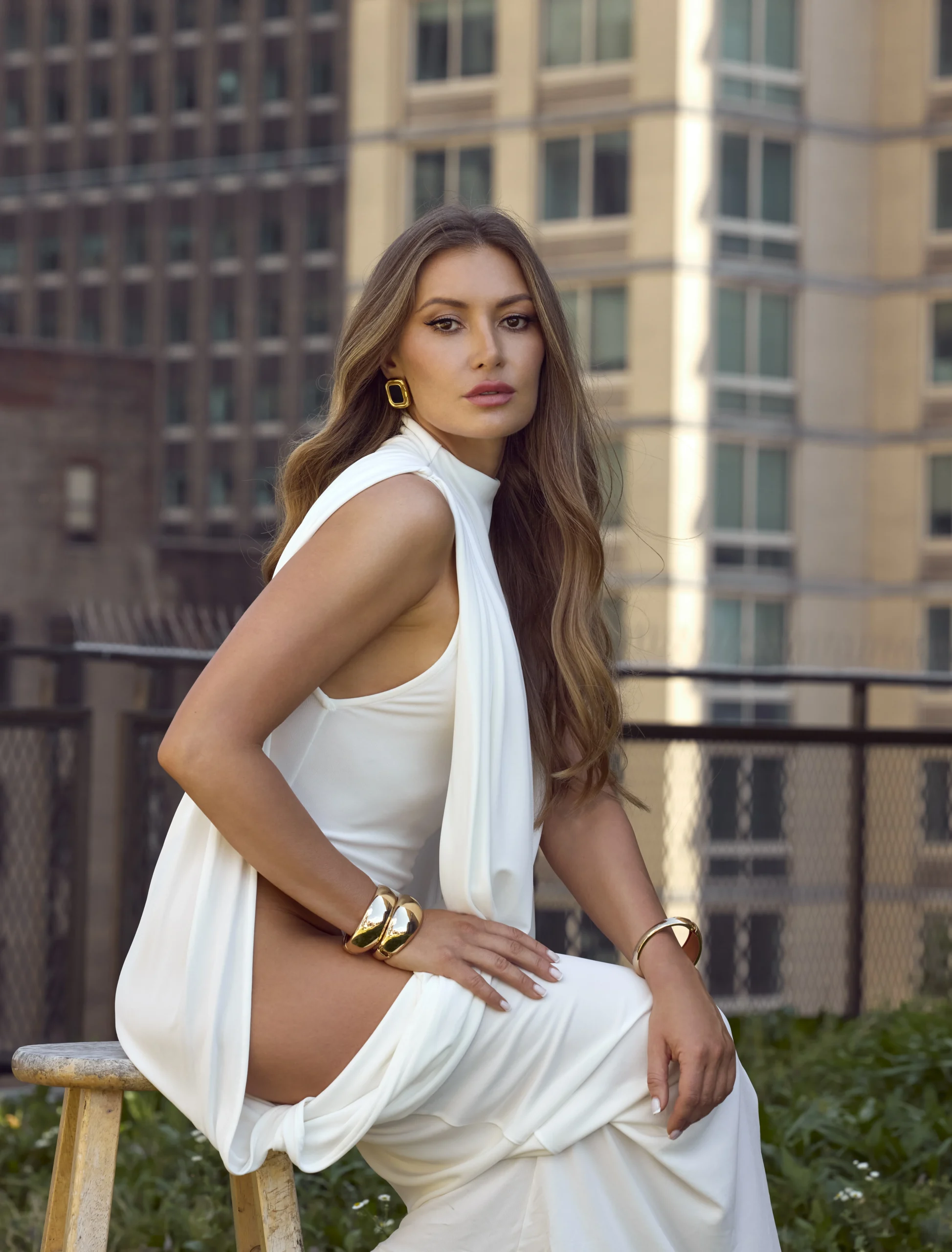


Dress: Helsa; Shoes: Christian Louboutin; Jewelry: Saint Laurent
9. With so much emphasis today placed on achievement and constant productivity, how do you personally define a successful and fulfilling life?
For me, the simplest definition of a successful life is a life in which you are genuinely happy.
I have met people who have achieved extraordinary things professionally and are still deeply unhappy. That taught me that achievement and fulfillment are not necessarily the same thing.
I love ambition. I love creating, learning, and accomplishing things. But I don’t want to spend my entire life collecting achievements only to discover that I wasn’t present enough to enjoy the life I was building.
For me, fulfillment comes from meaning. It comes from doing work that interests you, having people you genuinely love, feeling loved in return, taking care of your health, continuing to grow, and knowing that some part of your life is useful beyond yourself.
Charity has quietly been part of my life for many years.
Since 2019, I have been supporting a family in Siberia with children with disabilities. A former university classmate of mine travels to small villages, finds families who genuinely need help, and connects me with them so I can support them directly. I have also spent time helping children in Mexico.
I rarely speak about it because I don’t think generosity needs an audience.
In Siberia, people who have heard about some of the assistance don’t even know my name. They simply know that there is a woman living in New York who helps.
And I have discovered that some of the things I have done that nobody knows about have given me more fulfillment than things the world could applaud.
I still have dreams. I want to write, create, learn, and build meaningful things.
But I also want a loving home. I want to be deeply present with my child. I want love and partnership in my life. I want to laugh, travel, stay curious, take care of my body, help people when I can, and wake up excited to be alive.
To me, that is abundance.
Success isn’t how impressive your life looks from the outside.
It is how deeply you want to be inside the life you have created.
10. Looking at everything you have learned as a woman, mother, writer, and mentor, what philosophy or piece of advice would you most like to pass on to other women?
I would tell women that taking care of yourself and deeply loving other people are not opposing ideas. I actually think one makes the other possible.
Women receive so many instructions about who we are supposed to be. Be successful, but not intimidating. Be beautiful, but don’t care too much about beauty. Be a wonderful mother, partner, and friend, build something of your own — and somehow make all of it look effortless.
I don’t think women need another instruction.
I think we need to become much better at listening to ourselves.
Take care of your health. Protect your mind. Stay curious. Keep something in your life that belongs to you and makes you feel alive. Don’t neglect yourself while trying to love everybody around you.
Because I have discovered that when I feel healthy, peaceful, and connected to myself, I have so much more to give to the people I love.
And I love giving. I love creating warmth. I love taking care of the people who matter to me. Motherhood has made that part of me even stronger.
But I don’t believe a woman has to disappear in order to love her family beautifully.
You can be nurturing and ambitious. Feminine and strong. Soft and resilient. You don’t have to sacrifice one part of yourself to deserve another.
And life has taught me something else that matters deeply to me:
I never want a difficult experience to make my heart harder. Whatever happens, I want to continue making my choices from love rather than bitterness.
And perhaps one of the most important lessons I have learned is not to postpone happiness until your life becomes perfect.
There will always be another goal, another problem to solve, another version of yourself you could become.
Love the people you have now. Take care of yourself now. Wear the beautiful dress. Call your mother. Play with your child. Do meaningful work. Help someone when you can. Laugh more.
And don’t become so busy building your future that you miss your life while it is happening.
A beautiful life is not a life in which everything went according to plan. It is a life you were present enough to love.
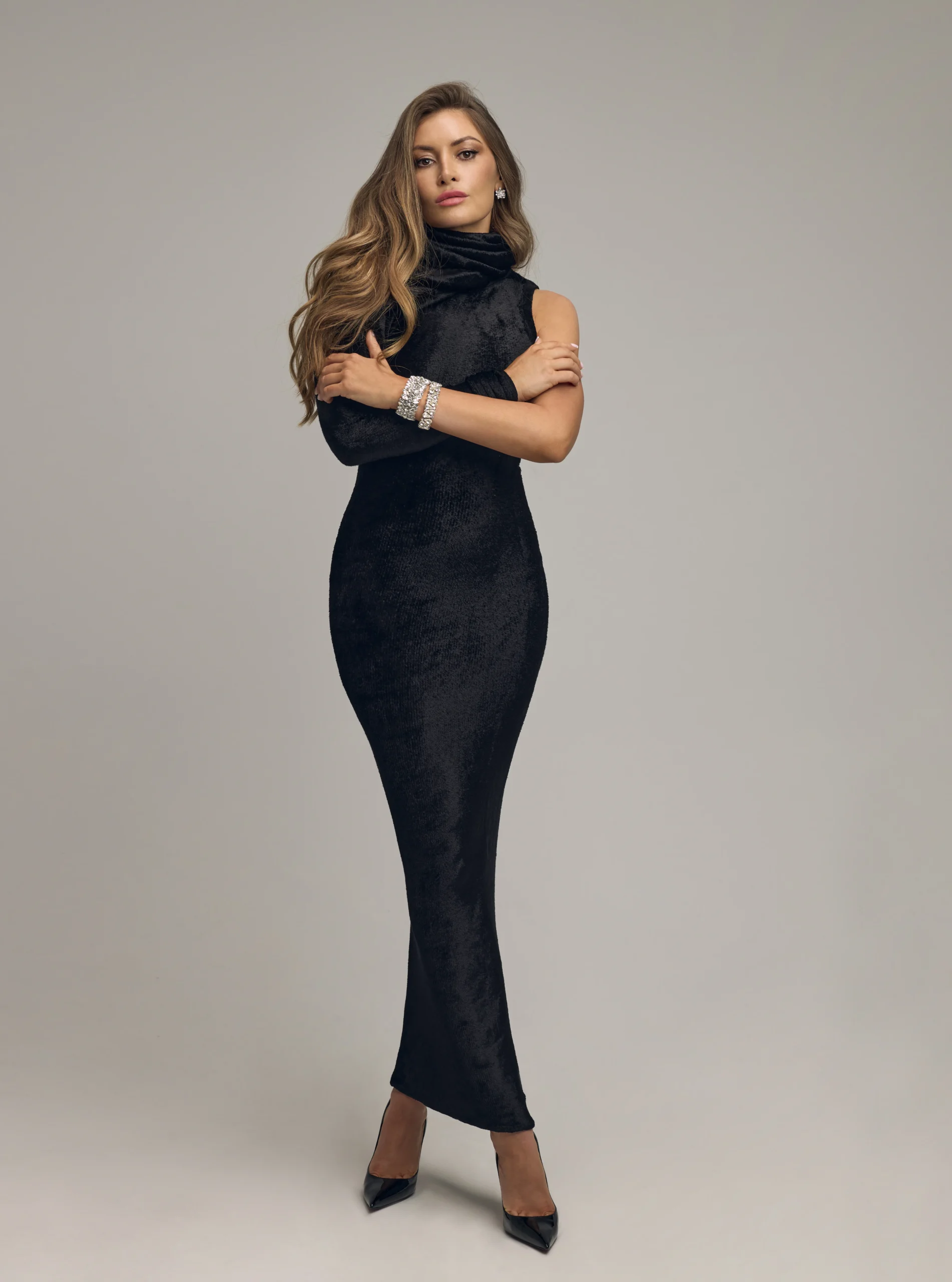
Dress: ALAÏA; Shoes: Christian Louboutin; Jewelry: Swarovski
Team Credits
Model @anna.chernitskaya888
Photographer @gladkova_ph_
Makeup & Hair @makeupbyanastasia
Style @arlynstyling_
Fashion Agency: Marc Juan Comunicación