
From Beirut’s couture ateliers to Riyadh’s runways, a new generation of designers is reshaping what Middle Eastern fashion looks like, on its own terms.
By Mayudi Patel
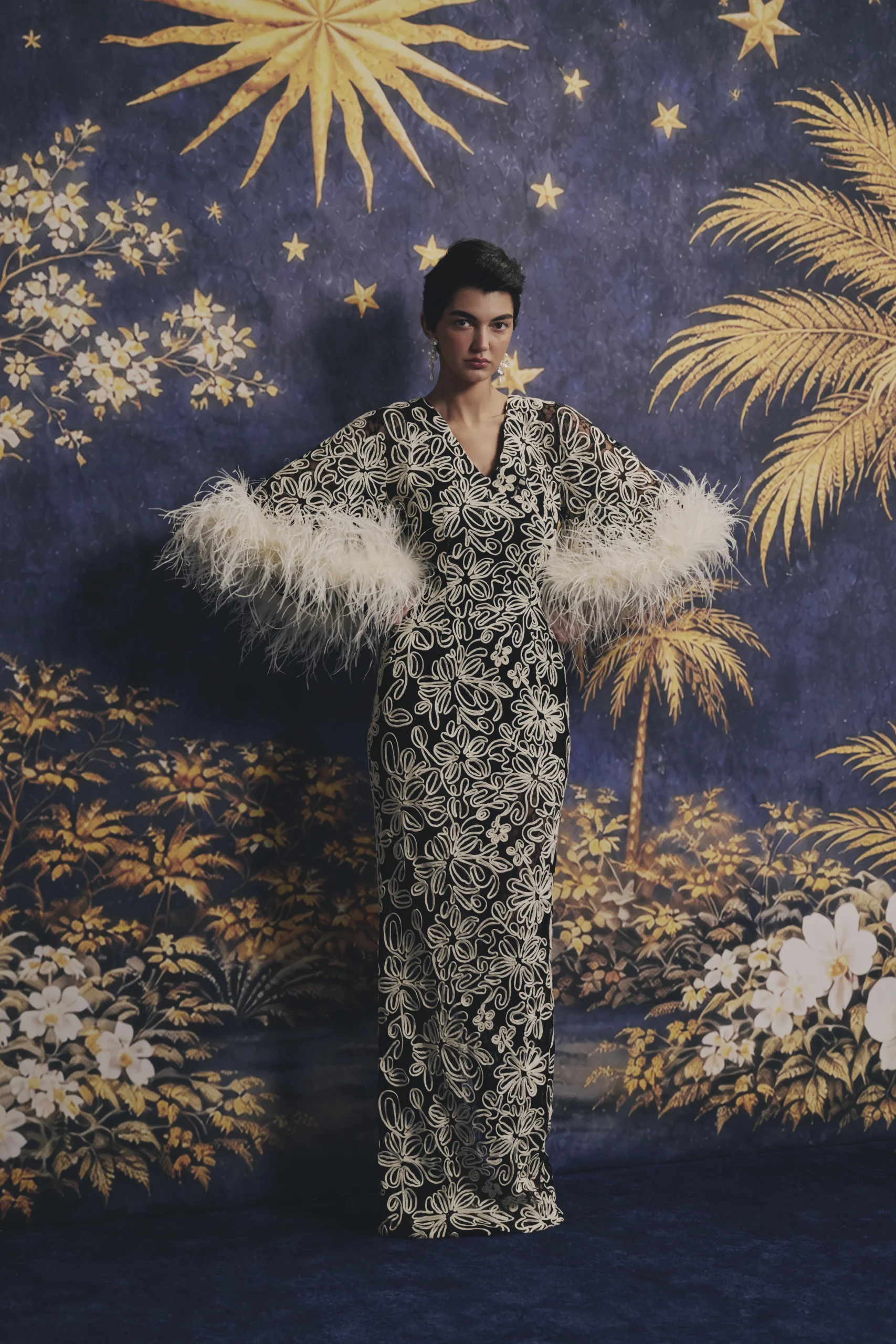
The clothes tell their own story. Heritage gets reinterpreted rather than preserved behind glass; modest dressing becomes an exercise in architectural proportion; streetwear turns into a form of cultural storytelling; couture keeps evolving through craftsmanship and real experimentation. From established houses such as Elie Saab and Zuhair Murad to a new generation including Ziyad Albuainain, Sylwia Nazzal and Zeid Hijazi, Middle Eastern designers are building a vocabulary that is rooted and forward-looking at once.
The New Geometry of Modesty
One of the clearest signs of that shift is the transformation of modest fashion.
Rather than treating coverage as a limitation, contemporary Middle Eastern designers are using it as an opportunity to experiment with volume, proportion and structure. The result is clothing that feels polished and powerful without relying on conventional ideas of sensuality.
Dubai-based Bouguessa, founded in 2014 by French-Algerian designer Faiza Bouguessa, has become synonymous with this approach, working from a studio in Dubai Design District to produce three collections a year that have shown at Milan and Paris Fashion Weeks and dressed Beyoncé, Queen Rania of Jordan and Jessica Alba. The brand’s reworked abayas and tailored outerwear have also featured in a landmark exhibition at San Francisco’s de Young Museum. Clean lines, sculptural tailoring and sophisticated outerwear form the foundation of the label, while familiar silhouettes, from trench coats and blazers to the abaya itself, are reworked with an architectural sensibility.
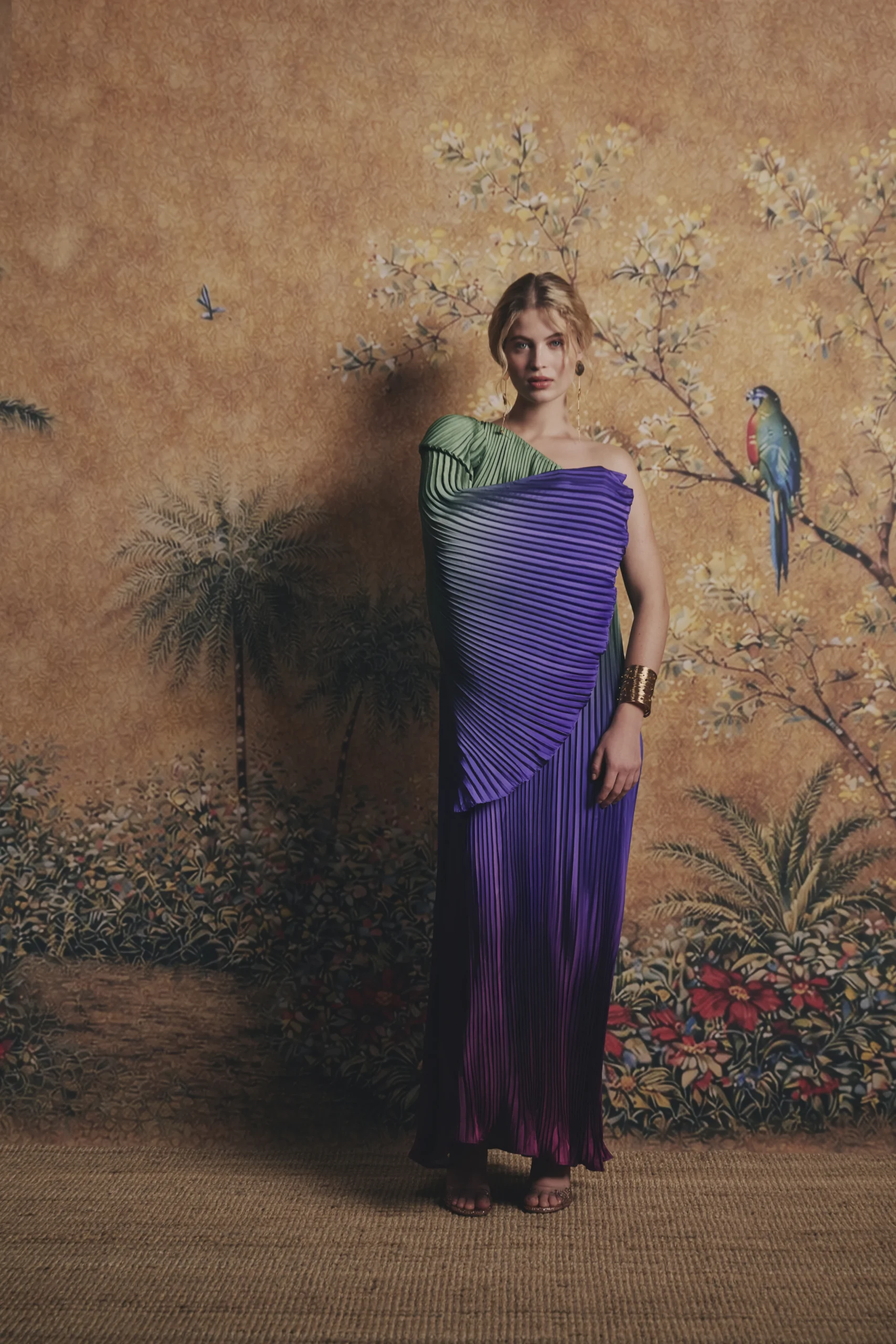
A similar instinct runs through Dubai-based, Lebanese-born Dima Ayad, who founded her namesake label in 2010 and has built a reputation for fluid draping and metallic fabrics that move easily between day and evening, winning Grazia’s Best Regional Designer award and collaborating with Malone Souliers in 2022. Doha-based Wadha Al Hajri, who launched her own label that same year, does the opposite work with the same underlying language: her restrained, architectural geometry made her the first Qatari designer to present a collection at Doha’s Mathaf: Arab Museum of Modern Art, an appearance that caught the attention of Italian Vogue’s Franca Sozzani and led to a showcase at Milan’s Palazzo Morando. Both designers were named to Forbes Middle East’s inaugural “Fashion Innovators” list in 2024. What connects them isn’t a house style so much as a shared bet: that modest dressing, treated as architecture rather than concealment, has become one of the industry’s more persuasive design ideas.
Heritage, Recut
If one side of the region’s fashion scene is defined by precision, another is driven by cultural expression.
Saudi designer Arwa Al Banawi, a former investment banker turned London College of Fashion graduate, launched her Dubai-based namesake label in 2015 around the idea of The Suitable Woman, combining sharp tailoring with graphic language, matching sets and streetwear references. She has since collaborated with Levi’s, Pepsi and Adidas Originals, and won the 2019 Grazia Style Award for Designer of the Year, placing questions of identity, gender and cultural heritage directly into the wardrobe.
The same instinct plays out differently elsewhere. Istanbul’s Les Benjamins, founded by Bünyamin Aydın, folds traditional Eastern motifs and tapestry-inspired patterns into tracksuits, denim and outerwear, and has become established enough on the regional runway circuit to close recent editions of Dubai Fashion Week. Saudi label Hindamme, founded by Mohammed Khoja, takes a more retro-futuristic route through Arab art and cultural milestones and has become a fixture of the Riyadh Fashion Week schedule, while Reemami, founded by Palestinian designer Reema Al Banna in 2010 after she left a graphic design career to enter a local dress competition, turns illustration and symbolism into pieces that read as wearable artworks. One of the first contemporary ready-to-wear labels to come out of the UAE, Reemami has since dressed Queen Rania of Jordan, Bella Hadid and Kelly Rowland.
None of this adds up to a shared aesthetic. It’s a generation using fashion the way earlier ones used music or film, to narrate identity on its own terms.
The Houses That Changed the Conversation
Alongside this younger, more experimental generation sits a group of designers who have already established Middle Eastern fashion as a force within global luxury.
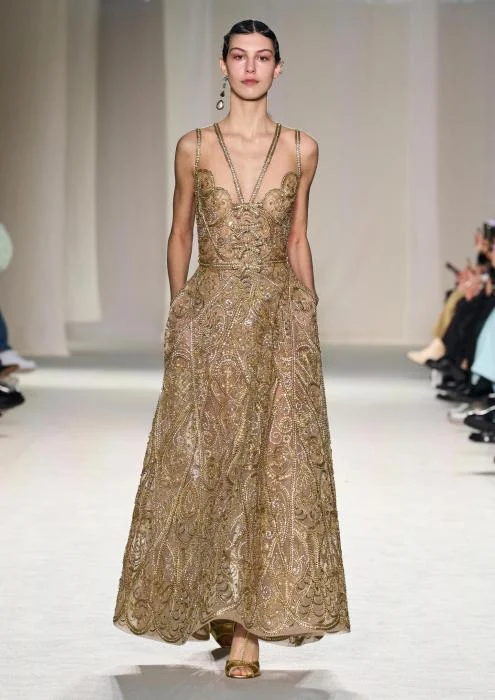
Few names are more recognisable than Elie Saab. The Lebanese designer opened his first atelier in Beirut in 1982 at just 18 years old, and the house, now estimated to employ several hundred people across ateliers in Beirut, Paris and London, has become synonymous with romantic couture, intricate embroidery and extraordinary evening gowns. Saab made history in 2002 as the first Lebanese designer to dress an Academy Award winner, when Halle Berry wore one of his burgundy gowns to collect her Best Actress Oscar. Since then, the house has expanded well beyond the runway, into fragrance, eyewear, bridal and, most recently, a foray into real estate: a licensing partnership announced in January 2026 with Indian developer M3M on ultra-luxury branded residences in Gurugram and Noida, including the M3M Elie Saab project in Sector 111, and a capsule collaboration with H&M spanning womenswear, menswear and accessories, confirmed for a Fall 2026 launch on October 22, evidence of a brand that has learned to extend its couture codes into ready-to-wear and lifestyle categories without diluting them.
Fellow Lebanese designer Zuhair Murad approaches glamour with a similarly theatrical sensibility. Murad, who started sketching dresses at age ten in his hometown of Ras Baalbek, opened his first Beirut atelier in 1997 and made his Paris Haute Couture Week debut in 2001; the house was later elected guest member of the official Haute Couture calendar in 2012. Intricate beadwork, sculptural silhouettes and sweeping gowns create collections that sit somewhere between couture and fantasy, and have made him, alongside Saab, one of the most consistently red-carpet-dressed names to emerge from the region.
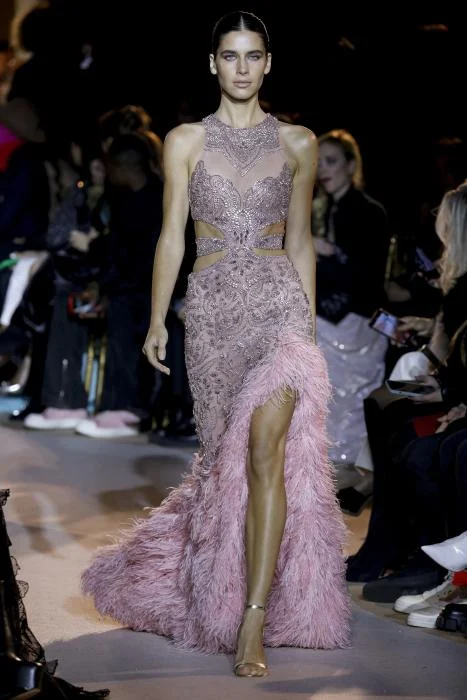
Then there is Ashi Studio, founded in Beirut in 2007 by Saudi designer Mohammed Ashi, who trained at Esmod in Paris and cut his teeth at Givenchy and under Elie Saab before striking out on his own. The house occupies more conceptual territory, favouring sculptural silhouettes, restrained palettes and dramatic proportions. In 2023, Ashi made history as the first designer from the Gulf region invited to show on the official Paris Haute Couture Week calendar as a guest member of the Fédération de la Haute Couture et de la Mode, admitted for the Fall/Winter 2023/2024 season and joining a roster that season which also included fellow Lebanese couturiers Georges Hobeika, Zuhair Murad and Elie Saab. His designs have since dressed Beyoncé, Lady Gaga, Jennifer Hudson, Penélope Cruz, Deepika Padukone and Queen Rania of Jordan, and he opened his first flagship store in Riyadh in 2023, describing the Kingdom’s fashion scene as “thriving.” What Ashi’s guest membership shows, beyond his own career, is that Gulf designers are increasingly participating in the institutions that define global luxury, not simply borrowing their format from outside.
These houses represent one side of Middle Eastern fashion’s global influence, a sophisticated tradition of craftsmanship, glamour and couture that has become recognisable far beyond the region.
Honayda, founded by Saudi designer Honayda Serafi in 2016, works a similar seam: historical reference, poetry, embroidery, for a modern international woman, each collection built around the story of a woman who marked history. In 2022, the label became the first Saudi fashion brand stocked at Harrods; two years later, Serafi became the first Saudi woman designer to debut at Saks Fifth Avenue in New York, with a spring/summer collection inspired by the astronomer Maryam Al-Astrulabi.
The Future Takes Shape
But perhaps the more interesting story is what is happening next.
A growing number of emerging designers are approaching fashion through sustainability, cultural preservation, politics and experimentation. Many have been identified and funded through Fashion Trust Arabia (FTA), the Doha-based non-profit whose annual prizes and mentorship have become the clearest route from recognition to a sustainable label in the region (see our companion feature on the fashion infrastructure making that possible).
Saudi designer Ziyad Albuainain, who founded his eponymous, London-based label in 2021, won FTA’s 2025 Evening Wear award for an approach to conscious luxury built on upcycled, deadstock and responsibly sourced fabrics, shaped by a life lived between Al Khobar, Tokyo, New York, Milan and London. His work is a useful corrective to the idea that sustainability and polish sit in tension.
For Palestinian-Jordanian designer Sylwia Nazzal, fashion becomes a form of cultural preservation and protest. Founded in 2022 while she was studying at Parsons Paris, her label Nazzal Studio produces oversized, cocooning silhouettes, voluminous puffer coats with hoods and draped lengths that reference traditional Palestinian dress, built around her graduate collection “What Should Have Been Home,” which gained international attention after October 2023. Nazzal won FTA’s Franca Sozzani Debut Talent Award in 2024 and works with refugee women rather than mass production, transforming garments into vehicles for memory and displacement.
Renaissance Renaissance, founded in Beirut in 2016 by Cynthia Merhej, takes a distinctly romantic approach to contemporary womenswear. Merhej is a third-generation couturier: her great-grandmother ran an atelier in Jaffa, Palestine, in the 1930s, and her mother continued the tradition in Beirut. In 2021, Merhej became the first Arab woman ever shortlisted for the LVMH Prize, a distinction she repeated with a second shortlisting in 2025. The label made global headlines again in January 2026 when New York City’s newly inaugurated First Lady, Rama Duwaji, wore a fur-trimmed coat from Merhej’s Autumn/Winter 2023 collection to the inauguration, putting Beirut craftsmanship in front of American cameras. Merhej continues to work with local artisans and family-owned factories in Lebanon, exploring corsetry, ruched tulle and dramatic volume to create clothing that feels both intellectual and cinematic.
And in Amman, Central Saint Martins graduate Zeid Hijazi is pushing fashion into darker, more futuristic territory. Hijazi launched his eponymous label in 2019 and won FTA’s Franca Sozzani Debut Talent Award in 2020, using the prize money to fund his debut Spring/Summer 2022 collection. His work, heritage references fused with exaggerated shoulders, asymmetry and experimental tailoring, was selected for the 2025 exhibition “Thread Memory: Embroidery from Palestine” at V&A Dundee and the accompanying Tatreez display at London’s V&A, and he showed at London Fashion Week that same year. Hijazi also entered the American political spotlight when Duwaji wore one of his pieces on election night in November 2025.

A Language of Their Own
What makes the Middle East particularly compelling today is not simply the number of designers emerging from the region. It is the breadth of ideas: couture and streetwear, minimalism and maximalism, heritage and futurism, modesty and glamour, sitting alongside each other as designers look beyond the region without abandoning what makes their work distinctive.
That range, not any single show or headline, is the real story here.