
“Fortunately, most of us, whether adults or not (and who among us is really?) are incapable of fully understanding what is happening to us: it is a benevolent provision of nature to keep the average human mind alert enough to function in this world.”
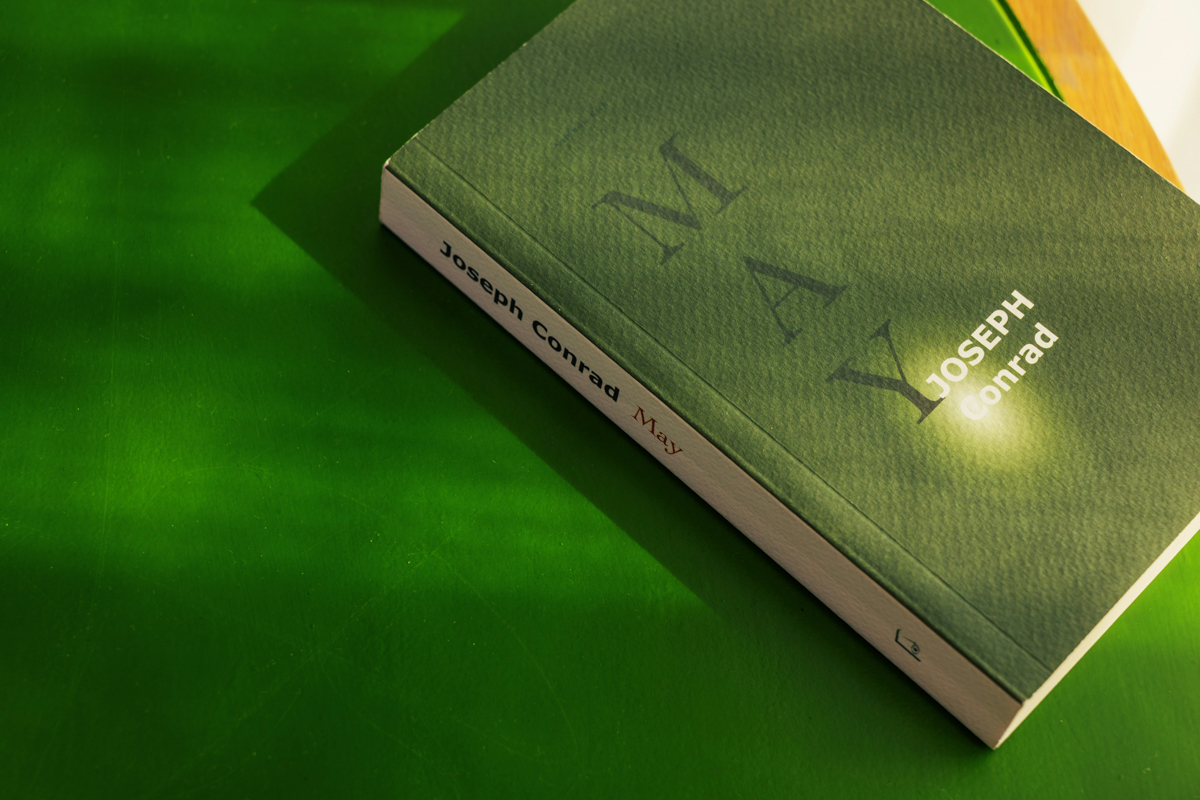
Reading May is a magical and strange experience. The details are laid out as clearly as the sea, without concealment or concealment. A sea that Conrad described as “the thought of being completely separated from land for the coming months made me quiet and calm, as if something deep had already decided it” ; in Powell’s words. Yet the reader still feels like he is standing in a fog, unable to see clearly what will, is, and will happen, such as how chance approaches each person’s fate and how they affect each other.
The story in May can be summarized in one sentence; the escape of a young girl who lived a tragic life with the captain who saved her life by chance. That chance, if considered in its origin, is as difficult as wondering where the origin of existence, of events, of the universe comes from. The chance sometimes comes from something as simple as because they passed that way at the same time, or were extremely close together under the same roof. The chance can even take us further to the point of talking about the coincidence of the blood relationship between the highly-rewarded captain and the woman named Fyne. If we go further, we must go deeper into Mrs. Fyne’s life, if she had a different fate, would the escape of the young couple have turned into a perfect wedding? And if Captain Anthony had not met Flora, would his ship have taken a different route? And the character Powell too,… Like a maze, even the entrance is a mystery. A tortuous topic was expressed by Conrad in a multi-layered narrative (we can roughly call it “oral tradition”).
It is a very Conradian narrative style, narration on narration, event on event, with the familiar character Marlow, meeting Powell and talking in front of a witness of an “I” character, playing the role of narrator (also another mark of Conrad). But the “I” telling the story here is just a background for Marlow and Powell to cling to and continue to paint the lines of the picture. They tell stories to each other, Marlow tells the story to “I”, then Marlow tells what Powell told. A magnificent and complex narrative style, but because it is Conrad, the confusion has no place in the work! The details, the words and the dialogue; they are handled gently, rhythmically, synchronously, and incredibly easy to follow. The beauty of May in particular or of Conrad’s literature in general is that he always clearly presents us with a context, an atmosphere. This method is not only successfully applied in novels but also in short stories, such as Between Earth and Water is an example. In the context of May, where people who always have reasons for all their actions are controlled by a power greater than all, it is encapsulated in just one word and that is also the title of the work; May;
May – simply May, no exclamation mark, no question mark, no emotional nuance to express, no suggestion or image, simply May. A very strange way of reading it because we are used to “so lucky!”, “how lucky”, “really lucky!”. May itself when read aloud sounds like an illusion, something that does not exist, an indefinable ‘matter’, but it is there, it exists, it creates everything, it makes Anthony and Flora’s escape reasonable, it gives young Powell an ending that could not be more strange. It is noble and cruel at the same time. It is simply May; a noun, without nuance. A concept; right there; but extremely elusive.
So is there any way we can grasp the nature of “luck”?
Before we get to the answer to that question, it is worth noting that May’s story takes place more on land than at sea. Even Marlow (the familiar) is now a man who has chosen to live a life rooted in the ground, a “bird who has secretly lost faith in the nobility of flight.” Once we realize this, it suddenly seems that if luck had an organic body, the ground would be the place where it thrives.
Young Powell’s luck also took place on land, and the misfortune of others that created his good fortune was also an accident on land.
The Fyne family is also an element designed to be firmly grounded. A husband who is passionate about walking and a wife who is as hard as wood and stone, she frames herself so firmly that her younger brother; also the main character; Captain Anthony, the son of a poet but a spirit nourished by the sea; cannot come close, even though he himself needs a soft touch of femininity in his life.
And of course we cannot ignore Flora, she is a fragile thread that connects all the events. A unique feminine symbol, a wonderful female creation of Conrad. Although in Marlow’s narration, we see somewhere the shadow of feminist resistance, Flora herself gives us a clear sense of what “feminism” is, even though she is described as living a life made up of a series of emotions . Emotions; what could be more womanly than those two words! And certainly two other words, used by Conrad in May, are “elastic”. The elasticity of femininity in Conrad’s perspective and in Flora herself creates a series of coincidences and events. Even though at that moment of maximum stretch, with just one release, the fragile string named Flora would become tangled with countless knots, but in the end she would return to her old state and continue to receive the stretching from the hands of fate.
It seems that luck and misfortune are things that only happen on land. But is it really luck? Is it the random things that life throws into the fate of each living being? Or is it all just the result of outbursts and biases coming from the echoes of the “land community”, from stereotypes as rigid as the way the land creates borders. It confuses us, it makes us think that everything is random. But in essence, when we stand on land, that is when we are most uncertain about the situations that happen to us.
At sea it is different.
“At sea, you know, there is no audience. You do not hear the echoes that wound your self-esteem there, where only the great voice of nature roars under the sky, or the mysterious silence that pervades as part of the infinite silence of the universe.”
Anthony had such a life at sea, but because he had brought Flora with him to that vast free world of his. He lifted Flora off the ground but forgot that she was a string, her fate was linked to the terrible experiences in the land where she was born and raised and that string also began to wrap around Anthony’s ankle, her luck and his were merged into one, but they did not merge but rather piled up, oppressed. It made
“Anthony discovered that he was not the arrogant master but the frustrated prisoner of generosity.”
But the ship has sailed and “fortune” has bound two people, and other destinies, together to form a strange, uncertain whole, as it is when we talk about life.
May – simply May, no exclamation mark, no question mark, no nuance, no suggestion, simply May. It is noble and cruel at the same time. It is simply May; a noun, a concept; right there; but infinitely elusive.
Back to the question. So what is it that makes up the essence of sewing?
I think that is Flora; or rather, the thread of chance that she is. We want to reach out and grasp the thread that holds the fortunes that have happened together; the way Anthony held Flora’s elbow and pulled her away from the pin of ‘fate’. We want to hold it, examine it, to understand its core principle, how it works and what its true mechanism is. If Anthony has the mentality of someone who wants to test his nobility in this game of chance, Powell is the most “true” embodiment of chance. It is a mentality of ignorance and blindness to everything. Powell has no specific intention before Flora and the rumors, he only has for himself a youth and a sincere love for Anthony. With a simple family; a young soul that has not been worn out by being bewildered by past experiences; has completely clarified the so-called truth of “luck”. Sometimes; it is just a bow, a dare, a belief. Speaking of this, let us think back to Flora. Was she like that too? Also with a dare, a believe and many tears, but surely Flora could not be as naive as young Powell. And speaking of this, once again we see that elusive thread of luck leads us in a circle, back to the starting point, which is that there is no rule in the way luck and misfortune are composed and operate in the world. This reflection is very similar to what Marlow said in the work
“Our experience never really sinks into our blood and bones. It always hovers just outside. That is why we look back on the past with such wonder.”
But that doesn’t mean we get absolutely nothing from thinking about it. What we do get, perhaps, is intuition. A result that causes a pang of regret that we would rather not have. As we read towards the end, we will appreciate Marlow’s comment even more:
“Intelligence sometimes leads people astray, just like desire.”
Though it is hard to call premonitions about a character’s fate wisdom, yet when we have a dim perception of how a fortune plays a game of trade-offs, we begin to feel terrified that what we have gained is not inferior when compared with what we have lost.
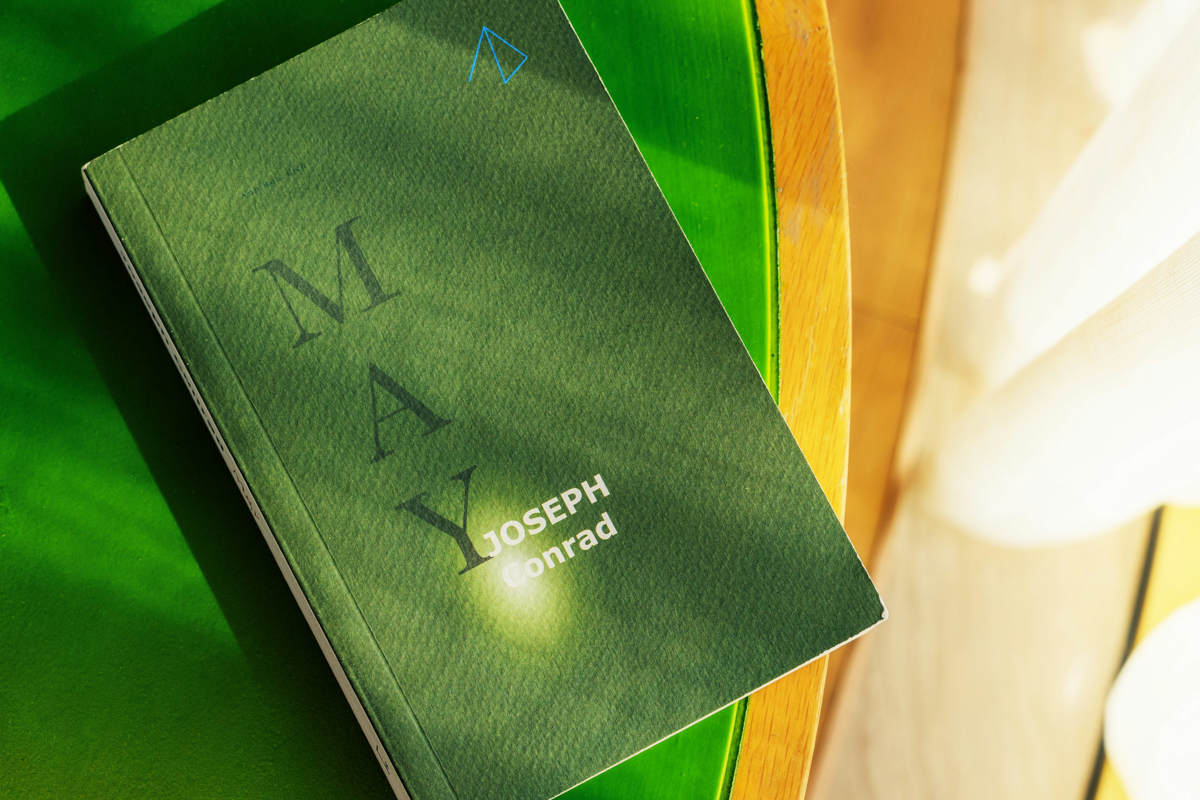
It should be noted that the original title of May is Chance , not Fortune .
This makes Conrad’s work even more special and profound. Why did he name it Chance instead of Fortune (and in Vietnamese, perhaps there is no other more accurate translation besides May) because everything is just the surface of things; and the thing here is luck, and it lies deep, very deep below. What we see, if anything, is just chance . Chance is just like a layer of scum on the surface of water, if we scoop it up, it will slip through our fingers and drip back into that unattainable sea of luck. But when we bend down to scoop up each chance that ripples below, who knows, we might be bringing ourselves as close as possible to a certain luck, even though its form at that time might be wrong, painful, fulfilling, and anything else, but luck is there. We have seen it.
Although we cannot deny that luck is a chain reaction, if we do not bend down and reach out to pick up the “chance” on the surface, luck will not be able to manifest. The literal image here is that when Powell bent down to pick up the rope that fell on the deck, he clearly saw the “luck” for the Anthony ferry boat, and then the chain reaction took place, pushing everything to move harmoniously (though painfully) on the flow of fate.
We can only seize the chance and think of it as “luck”, but the nature of luck is a game with the devil. Whoever thinks he has grasped the law and the essence of chance, he must have sold out all the chances for his soul to be sublimated.
But
“Fortunately, most of us, whether adults or not (and who among us is really?) are incapable of fully understanding what is happening to us: it is a benevolent provision of nature to keep the average human mind alert enough to function in this world.”
Conrad did not let any of his characters do that. Because in the end, they are just mortals, humbly bowing down to pick up and salvage the remaining opportunities (or here, let’s call it luck?), and they know it is brought to them, by a miracle, and their job is to accept it. That, Flora probably did very well, at the end of the book and in her life.