
American singer-songwriter Cara Quici, now known simply as CARA, is making a powerful return to music after a hiatus. Known for hits like Away from You, Jump Smokers Remix and FIGHT—her official remake of the Beastie Boys’ classic Fight for Your Right to Party—CARA has earned national recognition, including a four‑week run as the #1 spun independent artist on Top 40 radio.
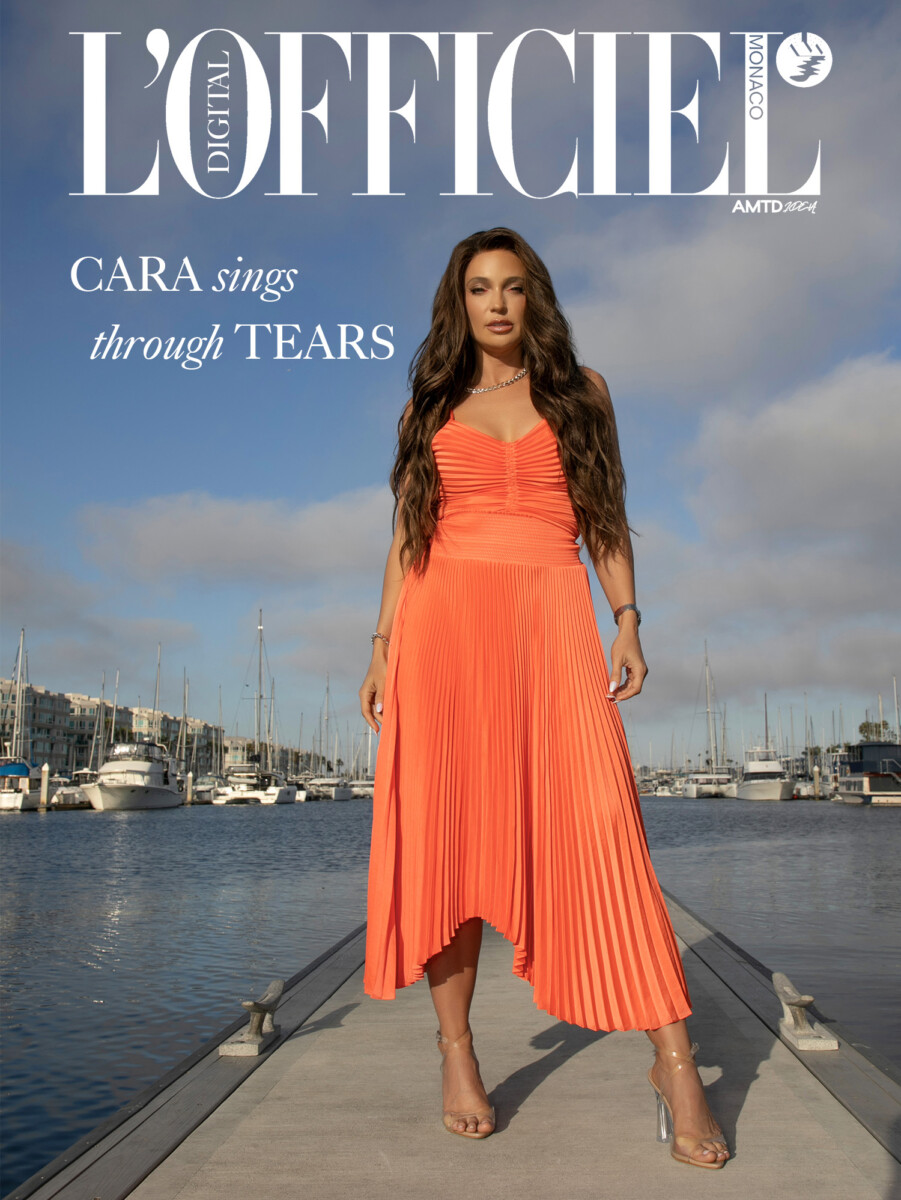
She has shared the stage with Lil Jon, Mike Jones, Soulja Boy, and SOMO, and delivered standout performances at California’s annual Kushstock festival. Now, she is recording her debut album, THE KRONICLES, at Orb Recording Studios, blending multiple genres with her signature flute performances and deeply personal storytelling inspired by love, loss, and resilience. L’Officiel Monaco speaks with Cara, who reveals her insights on the journey behind her most personal project yet, with her latest single “TEARS” currently climbing the charts on Top 40 Pop radio.
After your hiatus, what inspired you to return to music and start working on THE KRONICLES?
“After taking time away, I realized that music has always been the purest way I express myself. During my hiatus, I experienced a lot of personal growth, love, loss, and lessons that completely reshaped how I see life and art. I wanted to channel all of that into something raw and authentic—something that tells my story in a way I never have before. That’s what inspired THE KRONICLES. It’s not just an album for me; it’s a journal of resilience, healing, and empowerment. Coming back to the studio felt like coming home, and this project is the most personal and honest body of work I’ve ever created.”
Your debut album is described as autobiographical. Can you share how the concept of telling your story in chapters came about?
“I’ve always viewed my life as a series of chapters, with each phase teaching me something new—sometimes through joy, sometimes through pain. When I began writing THE KRONICLES, it naturally unfolded like a book. Every song felt like a snapshot of a moment, an emotion, or a lesson that shaped me. Organizing the album as chapters allowed me to be completely transparent about my journey—almost like inviting listeners to read my diary, but through music. I wanted people to not just hear my story, but to experience the evolution with me, one chapter at a time.”
You’ve been playing the flute since you were 12, and it features heavily in your music. What role does the instrument play in your creative process today?
The flute has always been my first true voice in music. I started playing at 12, and it’s been with me through every stage of my journey. Today, it’s not just an instrument—it’s like a signature stamp on my sound. When I bring the flute into my songs, it adds this emotional texture that words alone can’t capture. It allows me to bridge genres and make my music feel both modern and timeless. In my creative process, the flute is often the element that ties everything together and makes each track uniquely mine.”
THE KRONICLES is dedicated to several important people in your life, including your late brother Alex and Gangsta Boo. How did they shape the album’s sound and message?
“Both my brothers and Gangsta Boo had a huge influence on me, not only as an artist but as a person. Losing my brother Alex changed the way I see the world—his memory gave me the courage to be vulnerable and honest in my writing. A lot of the emotion and depth on THE KRONICLES comes from processing that grief and turning it into something beautiful that keeps his spirit alive. Gangsta Boo was someone who believed in me and pushed me to be unapologetic with my art. Her energy, her confidence, and her fearlessness are all over this album. Together, they inspired me to create something that’s real, raw, and lasting—a tribute to love, loss, and resilience.”
Your single “FIGHT” achieved impressive radio success. How does the new single “BLVD” compare in terms of sound and meaning?
“‘FIGHT’ was all about energy, empowerment, and making a bold statement—it had that rebellious spirit that really connected with people on radio. ‘BLVD’ is different in the sense that it’s more personal and atmospheric. It captures the feeling of a journey—physically, emotionally, and spiritually—like driving down a boulevard where every turn holds a memory or lesson. Sonically, it blends my love for pop with urban influences and, of course, my signature flute. If ‘FIGHT’ was about standing your ground, then ‘BLVD’ is about moving forward and embracing where the road takes you.”
You’ve performed alongside major names like Lil Jon and Soulja Boy, as well as at Kushstock Festival. Which performance stands out the most in your career and why?
“Every performance has been special in its own way, but Kushstock really stands out. Performing in front of thousands of people who were all there for the love of music and culture was electrifying. The energy was so raw and unfiltered—it reminded me why I fell in love with performing in the first place. It wasn’t just about being on stage, it was about connecting with a massive crowd and feeling that exchange of energy. That moment showed me the power of my music to reach people on a bigger scale, and it motivated me to keep pushing myself as an artist.”
Grief is a central theme in your new work. How do you balance raw emotional honesty with creating catchy, radio‑friendly music?
“For me, the key is to be completely honest with my emotions, but to translate them in a way that people can move to and connect with. Grief is such a heavy, universal feeling, and I didn’t want to shy away from it—but I also didn’t want my music to live only in sadness. So I focus on turning pain into empowerment, wrapping the raw lyrics in melodies and production that are uplifting, memorable, and radio-friendly. It’s about creating songs that people can sing along to on the surface, while still feeling the depth and truth underneath. That balance is what makes the music resonate.”
You’ve crossed multiple genres in your career. How do you decide which styles to incorporate into a given song or project?
“I don’t go into a song thinking about fitting into one box—I let the story I’m telling decide the sound. Sometimes that means leaning into pop, other times hip-hop, R&B, or even bringing in live instrumentation like the flute. Each genre has a different emotional color, and I choose the palette based on what the song is trying to say. That freedom is what keeps my music authentic and exciting, because it’s always driven by the message first, not the label or the style.”
What was the experience like recording THE KRONICLES at Orb Recording Studios, and how did the environment influence the album?
“Recording THE KRONICLES at Orb was such an inspiring experience. The studio has this creative energy that makes you feel both grounded and limitless at the same time. Being in a space where so many incredible artists have worked pushed me to dig deeper into my own artistry. The environment gave me room to be vulnerable and experimental—it felt safe enough to pour my heart out, but also professional enough to push me to deliver my best. That balance really shaped the sound of the album and helped me bring my vision to life exactly the way I imagined it.”
You hope to build a community for people processing grief through your music. How do you envision this community taking shape once the album is released?
“I want THE KRONICLES to be more than just an album—I want it to be a space where people who are going through grief or loss don’t feel alone. Music has always been my way of healing, and I hope it can do the same for others. I envision the community growing through live shows, online spaces, and conversations where people can share their own stories and connect through the music. Whether it’s someone finding comfort in a lyric, or fans connecting with each other because they’ve had similar experiences, the goal is to create a circle of support. It’s about turning pain into connection, and connection into strength.”
What was the main inspiration behind “TEARS” lyrics and overall theme?
“‘TEARS’ is one of the most personal songs I’ve ever written. The lyrics came from a place of vulnerability—reflecting on moments of heartbreak, grief, loss, and the emotional journey that follows. I wrote TEARS on a rainy day when I was questioning life’s purpose while having nowhere to turn. I wanted the song to capture the raw honesty of those feelings, but also the resilience that comes from facing them head-on. The overall theme is about acknowledging pain without letting it define you, and finding strength and beauty in the process of healing. It’s about turning tears into a story of empowerment and growth.”
Can you walk us through the creative process behind the TEARS music video for this song? What were some of the key concepts or inspirations?
“The creative process behind the TEARS music video really came from a very personal place. The idea of flying to Mars was symbolic for me—it represents feeling distant, almost out of place, and questioning the purpose of life. When I was writing this song, I was in a space where I felt sadness and depression weighing heavily, and that imagery of leaving Earth, floating in space, captured that sense of searching for meaning.
Visually, the space theme became a way to reflect the depth of the song. Space is vast, dark, and unknown, just like the emotions I was working through. By placing the video in that environment, it allowed the music to connect on a deeper level, almost like an exploration of both the universe and my own inner world.”
Could you tell us about the inspiration behind founding your music label and how you shaped its identity?
“We do everything in-house at QMH Records because I write and executive-produce 100% of my work. Having been in the music industry for over a decade, I’ve reached a point in my career where I’m no longer interested in writing with other writers. Writing and composing my own music is how I process my emotions and circumstances, so it’s something I need to do myself—for my own soul and growth. As President, alongside my Vice President Nick Hrisomalos, our label exists to give my music both the freedom and the protection it deserves—where authenticity, creativity, and bold expression come first.”
Credits:
Talent: CARA — Instagram: @caraofficial / TikTok: @officialcara
Web: officialcara.com
Photography: DARWIN — @DarwinWorldMedia
Makeup: @makeupby.carlos