
From Raw Power to Flowing Poetry: Waterfalls are among nature’s most spectacular sights – almost like artworks in motion. These are the world’s most fascinating falls.
by Lisa Ditzlmüller
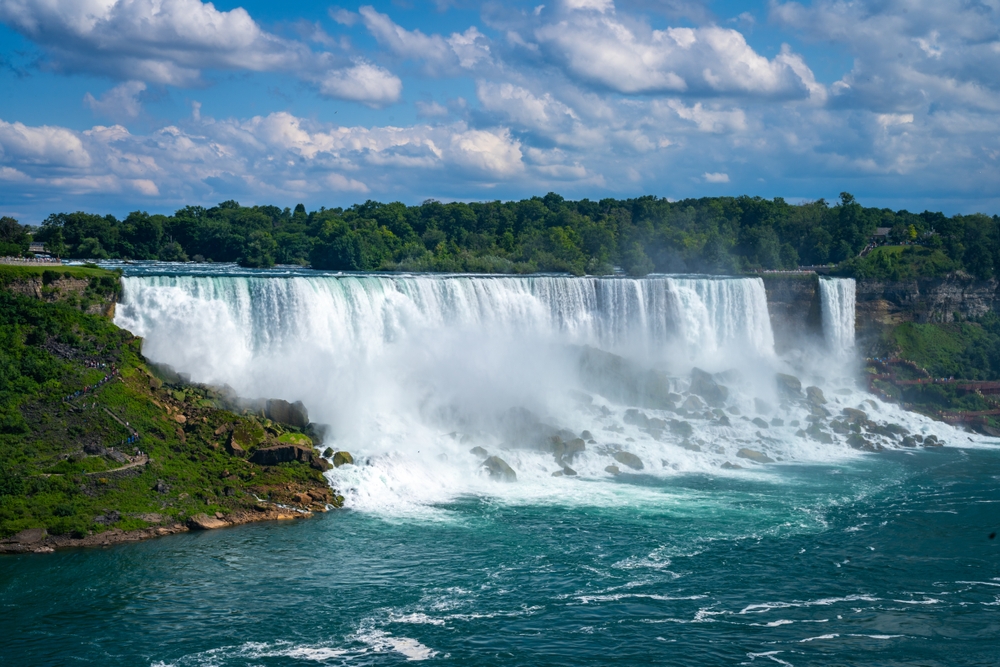
There are places where nature reveals its most beautiful signature – and waterfalls are undoubtedly among them. They unite rawness with elegance, power with delicacy, elemental force with harmony. Whether hidden in lush rainforests, perched on icy high plateaus or nestled within remote gorges, they form landscapes so striking they appear almost painted.
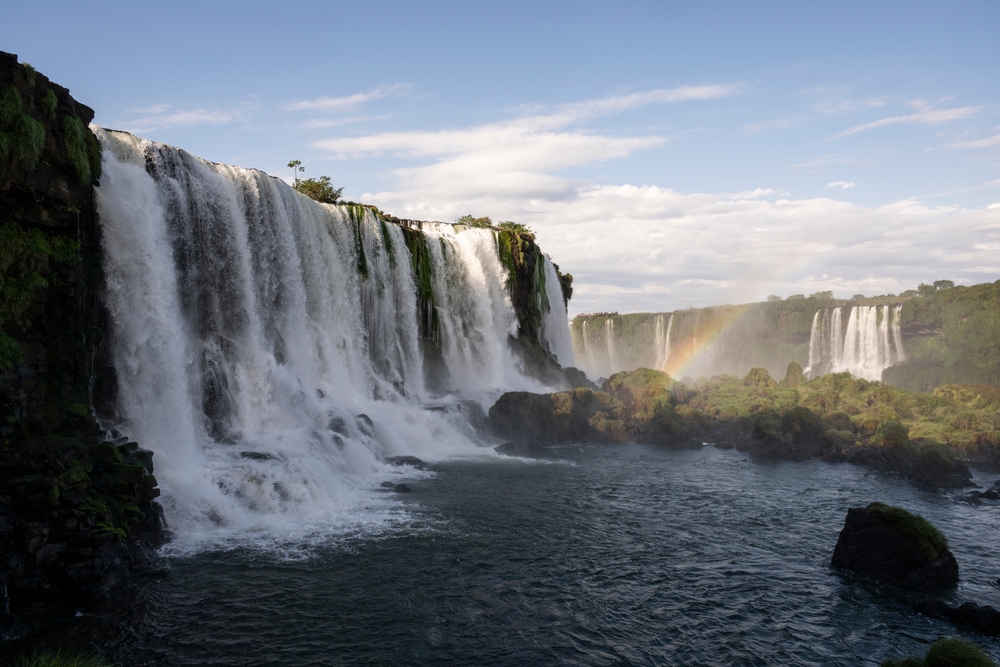
Iguazú Falls, Brazil and Argentina
Straddling the border between Brazil and Argentina, the Iguaçu Falls (Spanish: Iguazú) are among the most spectacular natural wonders of the South American continent. Recognised as a UNESCO World Heritage Site since 1986, they were also named one of the New Seven Wonders of Nature in 2011.
Spanning a width of approximately 2,700 metres, up to 7,000 cubic metres of water per second plunge into the depths, depending on the season and water level. Between 150 and 275 individual falls stretch along the dramatic cliff edge, together forming one of the largest waterfall systems in the world. The Iguazú Falls are wider than Victoria Falls in Africa and taller than Niagara Falls in North America.
The scene resembles a dramatic stage production, complete with mist, spray and fleeting rainbows. Little wonder that Eleanor Roosevelt, upon witnessing this force of nature, famously exclaimed: “Poor Niagara!”
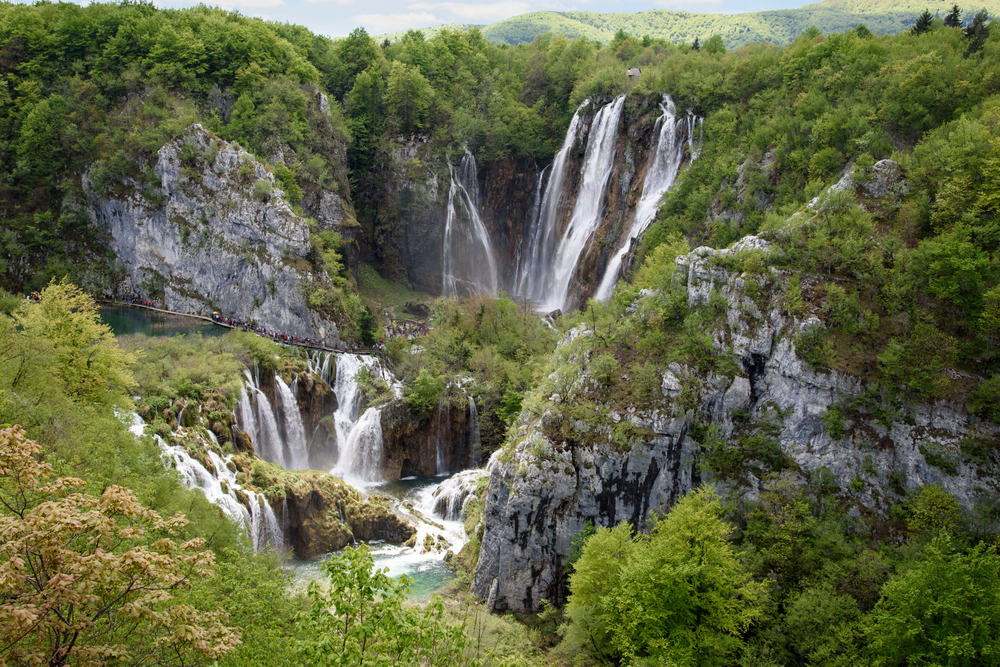
Plitvice Lakes, Croatia
Plitvice Lakes National Park is Croatia’s oldest and largest protected natural area, and has been a UNESCO World Heritage Site since 1979. Covering nearly 300 square kilometres, the park is home to a unique water system consisting of 16 terraced lakes, naturally linked by a series of limestone barriers.
The waterfalls flow in steady cascades over moss-covered travertine terraces, seamlessly connecting the various lake levels. Depending on mineral content and light conditions, the water shimmers in shades ranging from deep emerald to bright turquoise. Each lake level forms its own habitat, home to a remarkable variety of plant and animal life – including brown bears, lynxes and numerous bird species.
While the lakes form the visual heart of the park, they occupy less than one percent of its total area. The majority of the landscape is covered by dense forests, interspersed with open meadows and grasslands. The result is a vast, ecologically intact sanctuary that attracts visitors from around the world throughout the year.
In autumn, when the surrounding foliage turns to warm reds and golds, the landscape transforms into a striking display of seasonal colour. The Plitvice Lakes offer tranquillity and unspoilt beauty – a quiet sensation far removed from spectacle.
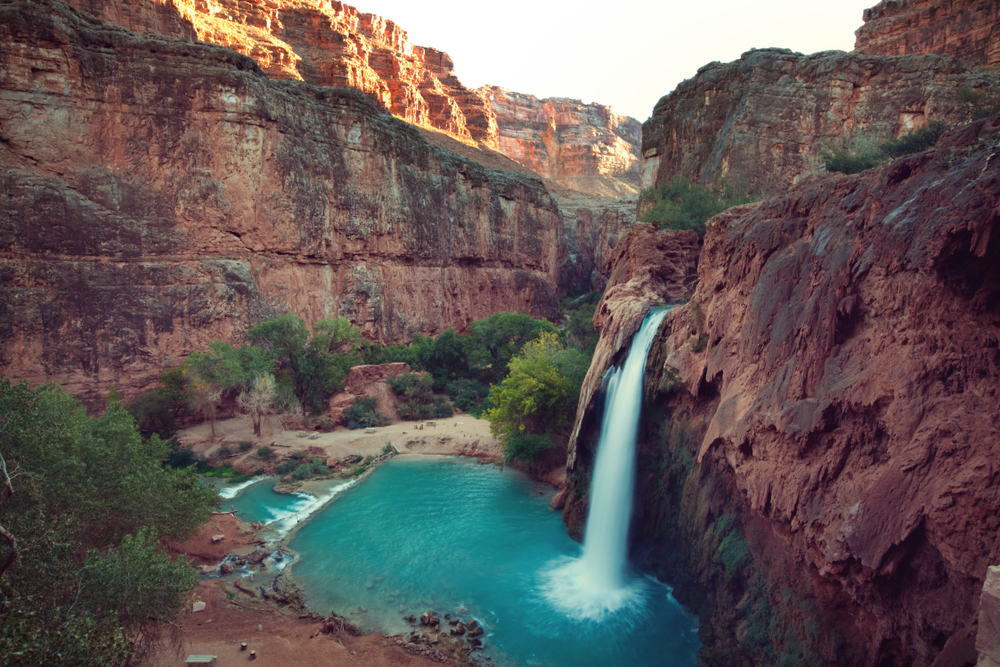
Havasu Falls, USA
Deep within the Havasupai Indian Reservation in the U.S. state of Arizona, hidden in the remote Havasu Canyon – a tributary of the Grand Canyon – lies one of North America’s most visually striking waterfalls: Havasu Falls. Surrounded by red rock cliffs and desert flora, the water plunges around 30 metres into a brilliant turquoise pool, its vivid colour the result of a high calcium carbonate content.
The contrast between the azure water and the copper-toned stone creates a scene that borders on the surreal, shifting in hue with the changing light and time of day. Early mornings, in particular, cast a soft glow across the canyon, bathing it in an almost otherworldly atmosphere.
Access to the falls is demanding: a 16-kilometre hike through desert terrain leads down into the valley. Yet those who make the journey are rewarded with one of the most remarkable natural experiences in the United States. As visits are strictly regulated and require a permit, Havasu Falls remains an exclusive destination – a hidden gem for adventurous travellers with an eye for natural beauty.
Gullfoss, Iceland
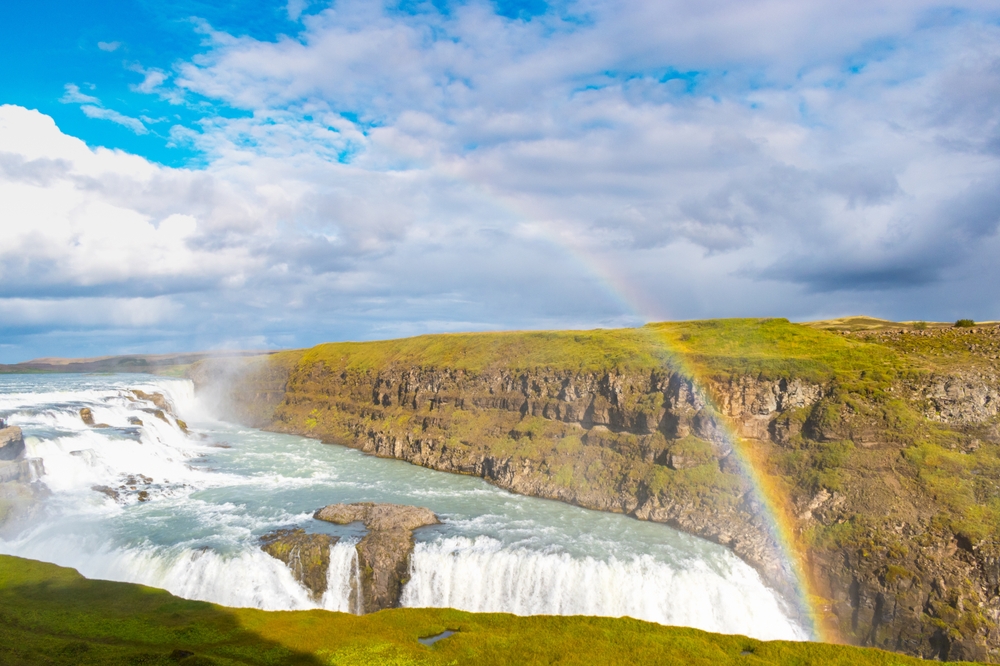
Gullfoss – meaning “Golden Waterfall” – is one of Iceland’s most iconic and impressive natural landmarks. Located in the south-west of the island in the Haukadalur Valley, it forms part of the celebrated Golden Circle, a popular route linking several of the country’s geological highlights.
The river Hvítá plunges over two tiers, with a total drop of around 32 metres, into a narrow canyon approximately 70 metres deep. Depending on the season and water levels, Gullfoss presents a shifting spectacle – at times thunderous and powerful, at others calm and evenly flowing.
In winter, snow, ice and mist transform the falls into a sparkling natural sculpture, perfectly capturing the stark and serene beauty of the Icelandic landscape. Spray often freezes on the surrounding rocks, forming intricate ice formations, while the low sun casts a tranquil light across the valley.
Thanks to its accessibility, Gullfoss is a popular destination for both nature enthusiasts and photographers – a place where elemental forces and striking scenery meet.
Angel Falls, Venezuela
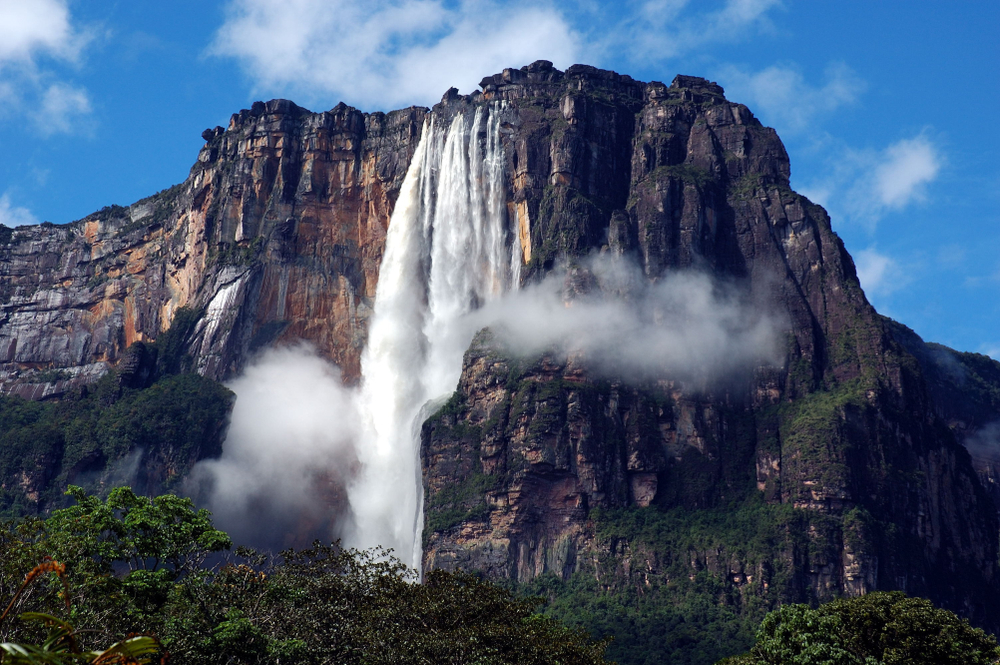
Salto Ángel – internationally known as Angel Falls – is located deep within the remote Canaima National Park in south-eastern Venezuela. With a drop of 979 metres, it holds the title of the world’s highest uninterrupted waterfall. It was named after the American pilot Jimmie Angel, who discovered it in 1933 during an exploratory flight over the region.
The water plunges almost vertically from the edge of the Auyán-Tepui tabletop mountain into the surrounding rainforest. Much of it evaporates before reaching the ground, creating a veil-like effect that makes the cascade appear to hover in the air.
Access to the area is challenging and only possible via boat, light aircraft or multi-day treks. This very remoteness is part of what makes Angel Falls such a unique destination – a place where untouched nature reveals itself in one of its most dramatic forms.
Victoria Falls, Zimbabwe and Zambia
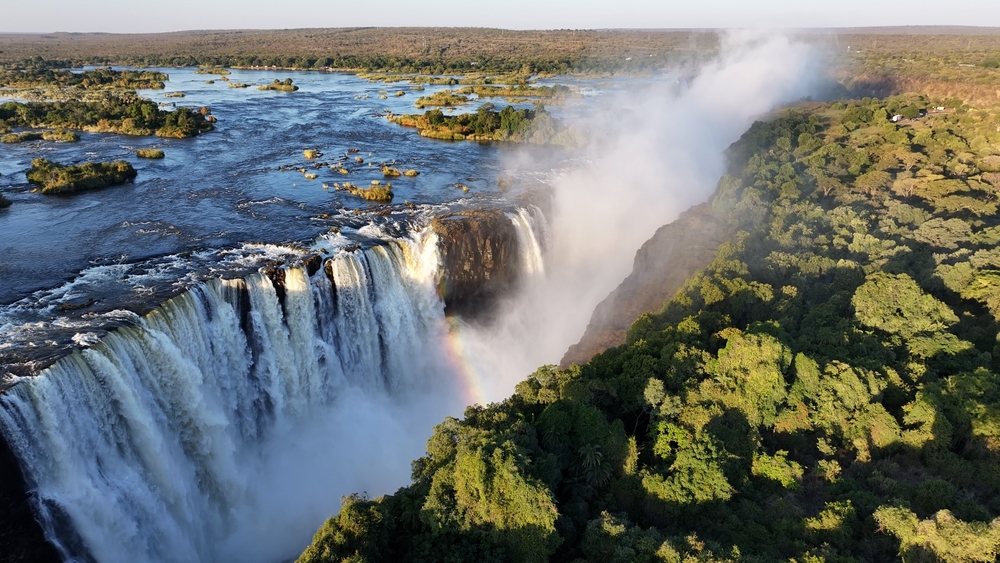
At the border between Zimbabwe and Zambia, the Zambezi River plunges over a width of approximately 1,700 metres into a narrow gorge, creating one of Africa’s most awe-inspiring natural spectacles: Victoria Falls. In the language of the Tonga people, they are known as “Mosi-oa-Tunya” – “The Smoke That Thunders”.
The name perfectly captures the scene that awaits visitors. The towering spray can rise up to 400 metres and is visible from several kilometres away. The sheer force of the water generates a deep, continuous roar that resonates throughout the surrounding landscape.
Now a UNESCO World Heritage Site, the falls can be viewed from both the Zimbabwean and Zambian sides via well-maintained pathways and lookout points. During the rainy season, when water levels peak, the area transforms into an expansive, mist-filled theatre of water and sound. Experiencing Victoria Falls is to witness nature at its most commanding – striking in scale, powerful in presence and geologically extraordinary.
Nature, Unfiltered and Remarkable
Waterfalls are among the most striking expressions of nature. Each one tells its own story – shaped by geography, landscape and geological character. Some are well-developed and feature on classic travel routes, while others lie hidden, accessible only to the determined.
Their diversity reveals how differently water can assert itself as a natural force – at times dynamic and sculptural, at others unexpectedly still. It is precisely this contrast that makes them so compelling. For many, they are not just spectacular travel destinations, but places of quiet reflection, where the rare interplay of motion, light and landscape becomes truly tangible.
Perhaps it is this very interplay that makes waterfalls feel like works of art. Not crafted by human hands, yet capable of evoking a powerful response – visually, emotionally, and at times with almost architectural clarity. Water becomes art when we pause to look closely.
Photos: Shutterstock