
As Rolls-Royce Motor Cars continues to reflect on the most defining creations in its storied history, the final feature in the ongoing retrospective brings the spotlight to a distinctive chapter that bridges tradition and innovation–the experimental EX vehicles produced at Goodwood. These unique automobiles stand as pivotal expressions of the brand’s evolving identity in the 21st century, simultaneously honouring the marque’s legacy and exploring future possibilities.
By L’Officiel Monaco
Originating from a design philosophy deeply embedded in the Rolls-Royce ethos, the EX line has long served as a laboratory on wheels–vehicles crafted to test design boundaries, trial emerging technologies, and preview future stylistic or engineering directions. While the marque’s original EX program began in the early 20th century, with the first model, 1EX, constructed in 1919, the initiative was revived at the dawn of the Goodwood era with the debut of 100EX in 2004. This contemporary iteration marked a new phase of innovation and experimentation, coming shortly after the opening of the new manufacturing facility in West Sussex.
Since then, each EX vehicle released under the Goodwood chapter has stood as a fully operable prototype, purpose-built not as a design fantasy, but as a functioning testbed for advanced concepts. These models have served a practical role within the development cycle of future Rolls-Royce vehicles, often introducing new ideas in chassis configuration, interior ergonomics, materials, and power train technologies long before they appeared in production. In many cases, ideas showcased in EX models laid the groundwork for later series-production cars, demonstrating their importance beyond the conceptual.
Unlike typical automotive ‘concept cars’, which often remain static showpieces, Rolls-Royce’s EX vehicles are engineered to operate in real-world conditions. They embody the marque’s philosophy of fusing artisanal heritage with forward-thinking design. While each EX car is a one-of-a-kind creation, together they offer a cohesive narrative of progress–tracing how the brand has continuously evolved without relinquishing its commitment to craftsmanship, refinement, andquiet engineering excellence.
This final exploration in the year-long series arrives as Rolls-Royce commemorates 120 years since the historic first encounter between Henry Royce and Charles Rolls in 1904–an event that laid the foundation for what would become one of the most prestigious names in motoring. Through this celebratory lens, the EX program can be seen not just as a technical endeavour, but as a tribute to that founding vision: a relentless pursuit of perfection, made manifest through experimental excellence.
In his reflections, Andrew Ball, Head of Corporate Relations and Heritage at Rolls-Royce Motor Cars, has underscored the significance of these experimental vehicles, emphasising their role as both innovation platforms and symbols of the company’s enduring values. From the pioneering spirit of the early EX series to the revitalised vision seen in Goodwood-era editions, the EX models continue to represent the marque’s willingness to explore bold ideas while remaining grounded in a heritage of engineering precision.
A Legacy in Innovation: The Evolution of Rolls-Royce Experimental Motor Cars
Throughout its illustrious history, Rolls-Royce has embraced innovation not only as a hallmark of excellence but as a coretenet of its identity. Nowhere is this philosophy more evident than in the experimental series of motor cars designated with the ‘EX’ prefix. These vehicles, while never intended for direct commercial sale in their initial forms, have served as both design manifestos and engineering testbeds, laying the foundation for future production models. Each conceptencapsulates a pivotal moment in the marque’s continuous pursuit of refinement, progress, andboundary-defying craftsmanship.
100EX (2004): A CentenaryShowcase of Design and Engineering
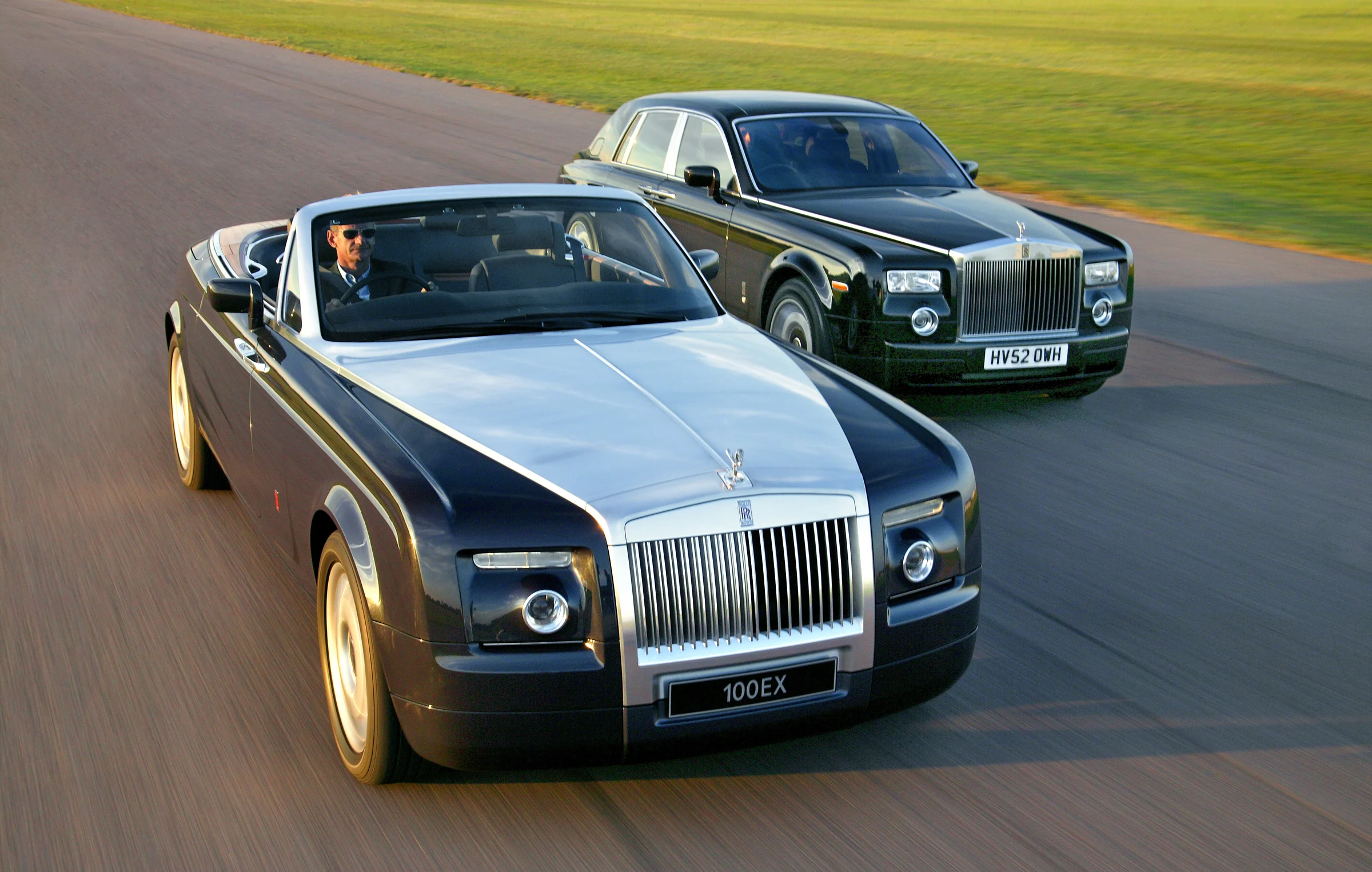
In early 2004, just over a year after the production launch of the Phantom VII, Rolls-Royce presented a striking open-top grand tourer at the Geneva Motor Show. Known as 100EX, this model was developed not as a mere show piece, but as a deeply considered response to the brand’s centennial milestone–a bold tribute to a century of engineering mastery.
Constructed upon the same advanced aluminium spaceframe architecture as the Phantom, 100EX retained many of the technical underpinnings that defined Rolls-Royce’s signature ride quality. However, it distinguished itself with notable structural and mechanical deviations. The vehicle’s chassis was reduced in length by 165mm and lowered by 71mm, enhancing its proportions and agility. Replacing the Phantom’s V12 was a custom-built, naturally aspirated 9-litre V16 engine–an audacious power unit underscoring the concept’s experimental nature.
The design philosophy drew clear inspiration from luxury maritime aesthetics. The flowing silhouette, accented by an upward-sweeping shoulder line over the rear haunches, evoked the dynamism of a motor yacht slicing through water. Materials played a central role in reinforcing this nautical narrative, with bleached teak surfacing the tonneau cover, the rear cabin, and the luggage bay. The rear’s boat-tail taper would go on to influence Rolls-Royce Coachbuild commissions nearly two decades later.
Function met elegance in the car’s split tailgate, dubbed the ‘Countryman’ style, which created aflat, fibre-lined platform when opened—ideal for leisure moments such as outdoor dining orviewing events in comfort. The convertible roof system also broke new ground: it utilised ametallic-threaded fabric shell lined with a plush cashmere-wool blend and was engineered tostow discreetly, preserving the car’s visual balance and interior space.
Though it remained a prototype, 100EX’s influence endured. In 2007, its design and spirit were carried forward into the Phantom Drophead Coupé–an ultra-rare production model that has since become one of the most coveted creations of the modern Rolls-Royce era.
200EX (2009): Laying the Groundwork for a Contemporary Icon
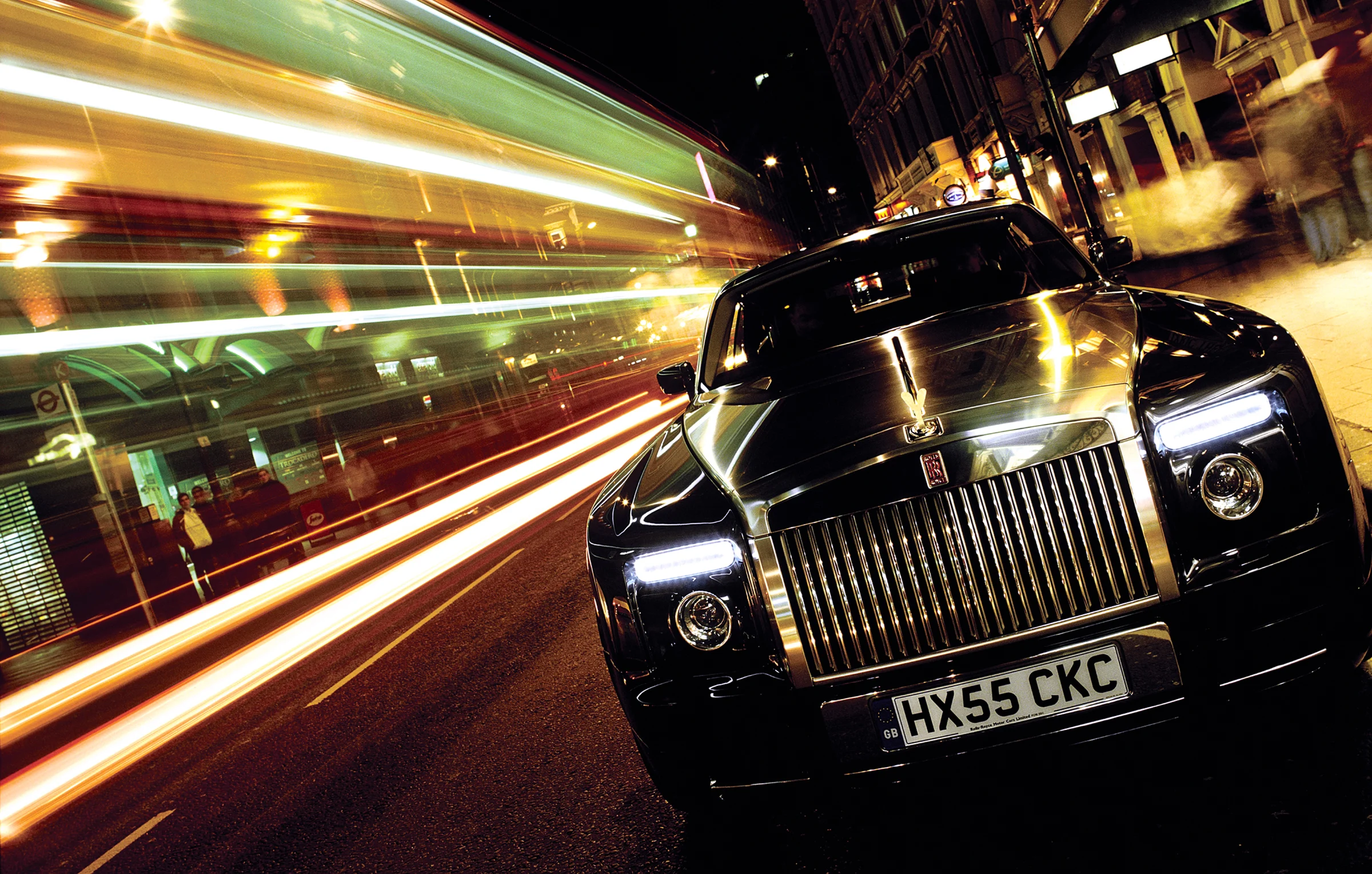
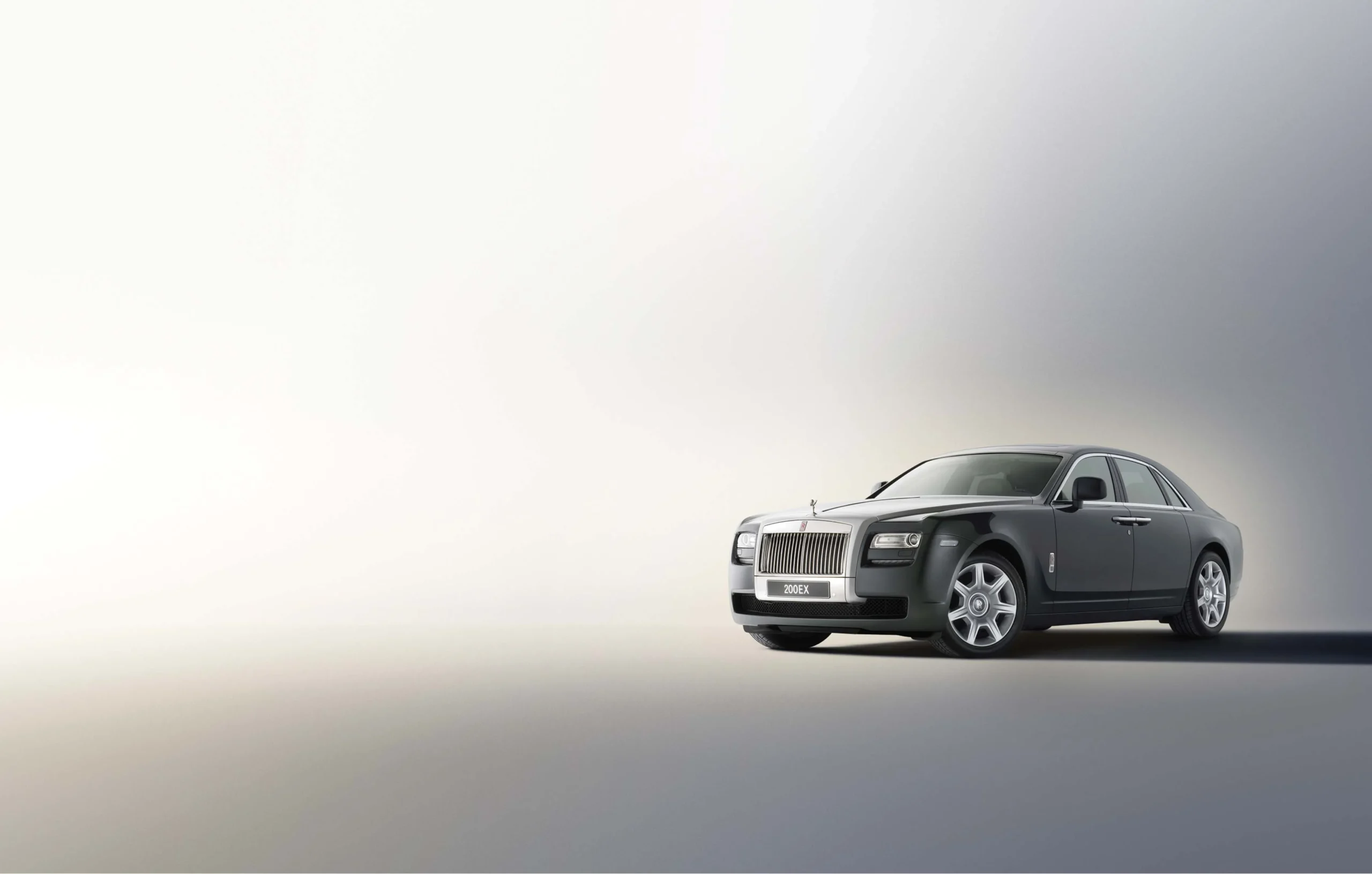
Five years later, the Geneva stage once again became the venue for the unveiling of a new experimental concept. In March 2009, Rolls-Royce introduced 200EX, a four-door saloon that served as a design prototype for a model poised to enter production–a clear departure from thepurely conceptual stance of earlier EX models.
At its core, 200EX sought to explore how the brand could engage a new generation of clients. While retaining the hallmarks of Rolls-Royce refinement and presence, it embraced a more agile and contemporary design language–the brief emphasised grace in motion, performance without aggression, and modernity steeped in tradition.
Visually, the vehicle eschewed excessive ornamentation in favour of sculptural clarity. Carefully composed horizontal lines punctuated smooth bodywork, while the profile featured a narrowing waist and subtly flared rear wings. The grille, still in the familiar Pantheon shape, was reshaped with a concave form and recessed vanes, softening its presence and lending the car a more progressive stance.
The interior echoed this philosophy of quiet modernity. Functionality was emphasised through intuitive layout and understated chrome highlights that drew the eye to essential controls. The environment conveyed calm precision and understated luxury rather than opulence for its own sake.
While 200EX remained a prototype, its evolution into the first-generation Ghost marked a significant chapter in the brand’s rebirth. Officially launched in 2010, Ghost embodied the ideals explored by 200EX, combining Rolls-Royce craftsmanship with dynamic usability. The model went onto become the most commercially successful Rolls-Royce to date, closing its initial chapter in 2019 after nearly a decade of global acclaim.
102EX (2011): Exploring the Frontiers of Electrification
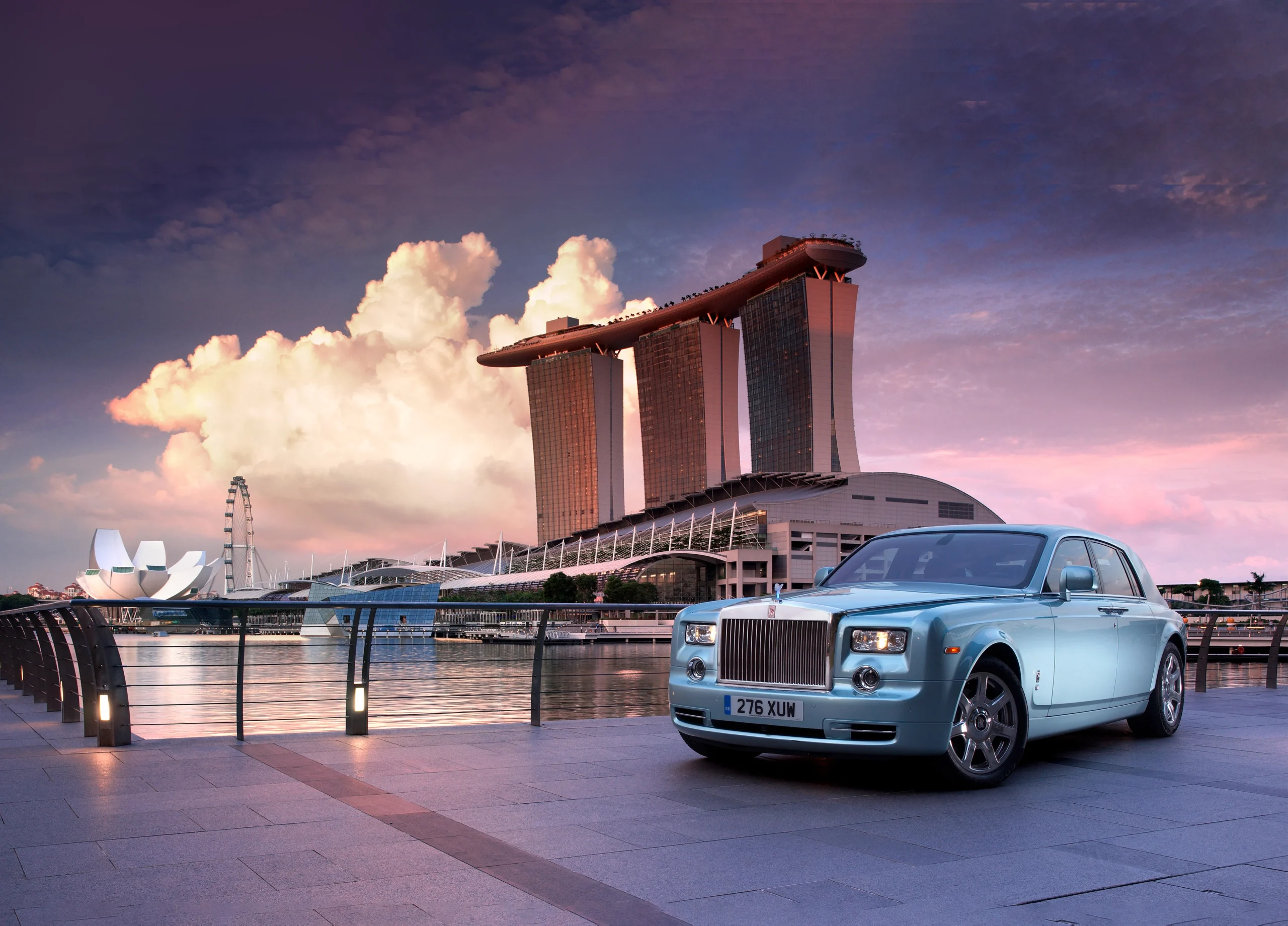
In 2011, Rolls-Royce broke new ground with a one-of-a-kind vehicle that redefined the possibilities for electric propulsion in the ultra-luxury segment. Presented once more at the Geneva Motor Show, the 102EX–also referred to as the Phantom Experimental Electric (EE)–was not just an engineering prototype; it was a rolling laboratory created to evaluate the real-world viability of battery-powered propulsion for the marque.
At a time when the automotive industry was only beginning to consider electrification at scale, 102EX emerged as a trailblazer. Based on the Phantom platform, this vehicle replaced the traditional internal combustion engine with a fully electric drivetrain. While performance and range were secondary to its purpose, the project focused on exploring material technologies, charging infrastructures, and–most crucially–customer acceptance.
Following its debut, 102EX embarked on a global tour encompassing Europe, the Middle East, Asia, and North America. Along the way, clients, journalists, and enthusiasts were invited toexperience electric luxury firsthand and provide unfiltered feedback. This open-source approach to product development marked a rare transparency in an industry often shrouded in secrecy.
Prior to its world tour, the vehicle was subjected to rigorous testing at MIRA (Motor Industry Research Association) in the UK. These trials assessed battery function under extreme humidity and temperature conditions. The results indicated operational reliability in environments ranging from 30% relative humidity to theoretical heat extremes ashigh as 500°C.
Though it never advanced to production, the knowledge gained from 102EX proved essential inshaping future electric strategies. Its legacy is most evident in the creation of the Spectre–Rolls-Royce’s first fully electric production vehicle–fulfilling a prophecy made by co-founder Charles Rolls in 1900 that electricity would one day become the preferred power source for luxury automobiles.
103EX (2016): A Vision of Luxury in the Autonomous Era
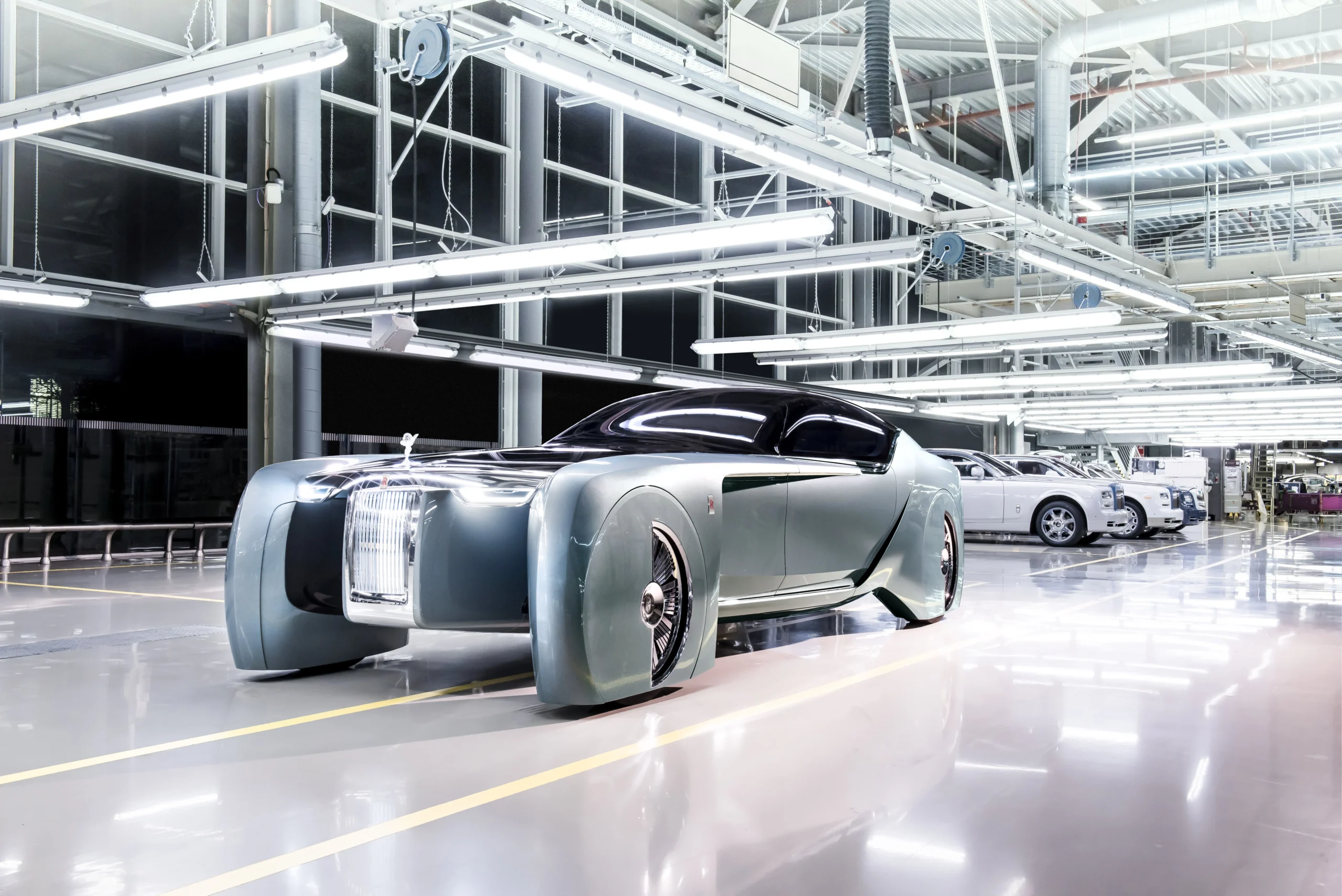
In 2016, as BMW Group marked its centenary, each of its brands was tasked with envisioning the next century of mobility. Rolls-Royce responded with 103EX, an extraordinary design exercise that aimed to redefine the concept of luxury in an era shaped by autonomy, sustainability, and digital intelligence.
This futuristic concept was not constrained by current regulations, mechanical necessities, oreven design conventions. Measuring nearly six meters in length and standing as tall as the long-wheel base Phantom, the car presented a striking, monolithic profile. Its proportions communicated status and dignity while incorporating radical new design elements that spoke to the future.
The grille was redesigned as a reinterpretation of the traditional Pantheon, flanked by the Spirit of Ecstasy, now rendered inglass and illuminated–a symbolic gesture linking past, present, and future. The entire vehicle was hand-built from advanced lightweight materials, and its electric propulsion system emphasised silent power and zero-emission travel.
Inside, the 103EX replaced the standard driver’s cockpit with what Rolls-Royce called the“Grand Sanctuary.” The space was conceptualised not as an interior but as an environment—acurated lounge of flowing light, tactile luxury, and serene minimalism. A plush sofa, rather than individual seats, served as the focal point, seemingly suspended within the cabin through advanced lighting effects.
Perhaps the most forward-looking aspect was the inclusion of a digital companion named ‘Eleanor.’ This AI-based assistant promised seamless interaction between the owner and the vehicle, coordinating journeys, schedules, and preferences. The early concept would later be echoed in real-world applications such as the Rolls-Royce Whispers app, bringing bespoke connectivity into daily use.
Though a vision vehicle rather than a prototype, 103EX represented a culmination of the EX lineage–a philosophical leap into a future where personal mobility merges with intelligent design, material artistry, and environmental responsibility.
The Continuing Story of Rolls-Royce Experimental Cars
Each experimental model produced by Rolls-Royce has served a unique role: part stylistic statement, part technical proving ground, and always a signpost for the brand’s evolving identity. From the centenary-celebrating 100EX to the AI-driven 103EX, these vehicles offer a rare glimpse into the private world of future-forward design that shapes what ultimately reaches production.
As new materials, energy systems, and mobility paradigms emerge, the tradition of experimentation at the Home of Rolls-Royce in Goodwood is poised to continue. Whether through dramatic one-offs or quietly influential design studies, the EX series ensures that the spirit of innovation remains firmly embedded in the marque’s DNA.
HONOURING THE LEGACY, ADVANCING THE VISION
The EX motor cars, developed in the early Goodwood era, mark the beginning of Rolls-Royce’s modern heritage. As the brand reflects on its first 120 years, these prototypes provide a fitting conclusion–symbolising both the depthof its legacy and the ambition that continues to drive it forward.
Far more than design experiments, the EX models were fully functioning vehicles used to test new technologies, design concepts, and Bespoke features. They laid the foundation for the brand’s revival and influenced not only current models but also past icons such as the first-generation Ghost, Dawn, Wraith, and Phantom Coupés.
These projects also equipped Rolls-Royce’s teams with the expertise and confidence to place Bespoke at the core ofits identity and reintroduce coac hbuilding as a lasting service. This visionis now being realised with the expansion of the Goodwood facility, aimed at supporting both personalised commissions and the transition to electric vehicles.
Upcoming all-electric models will continue to benefit from insights gained through the pioneering 102EX and 103EX–proof that the marque’s approach to innovation is firmly rooted in its history, even as it looks ahead to the future.
Image Credits: Rolls-Royce Motor Cars