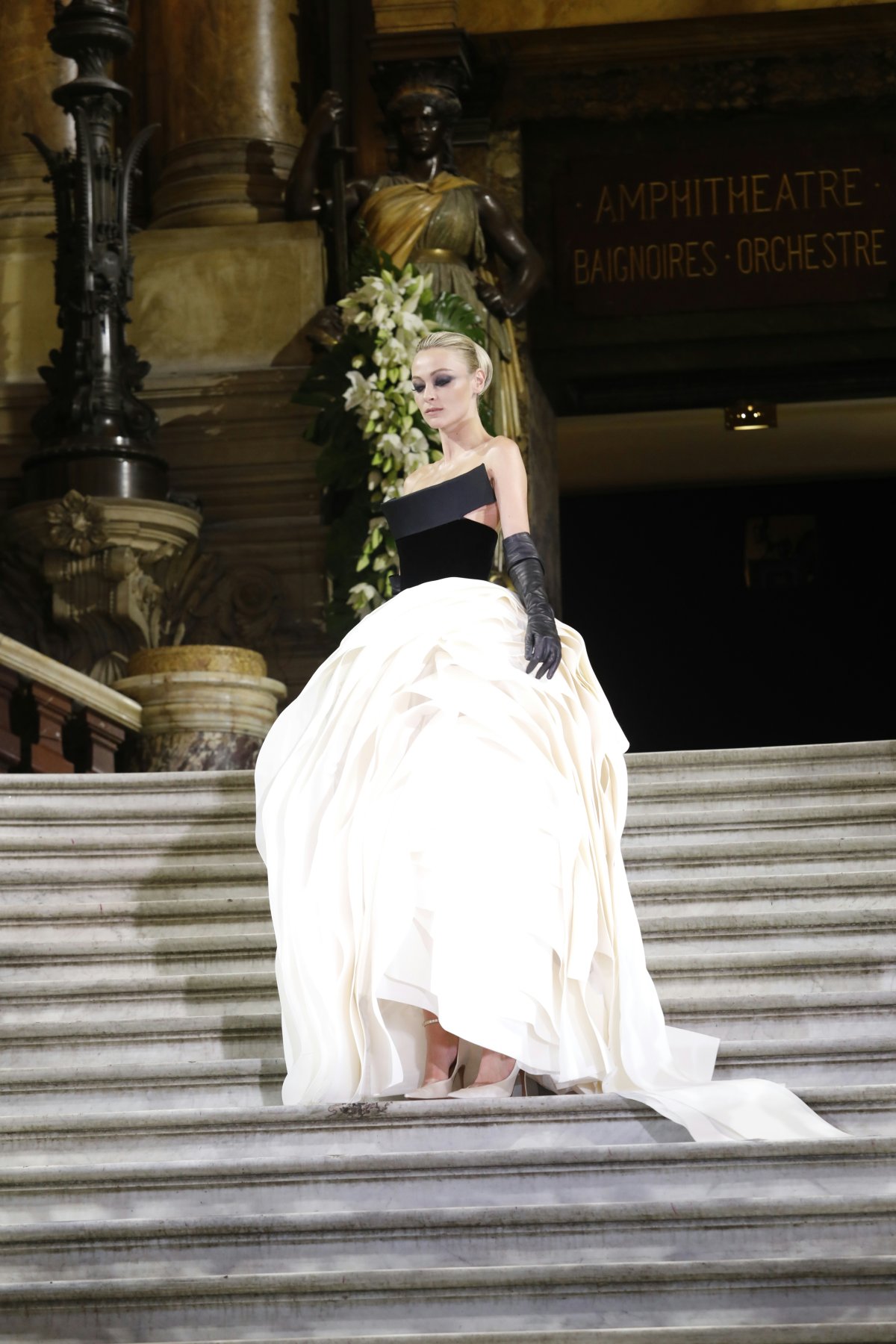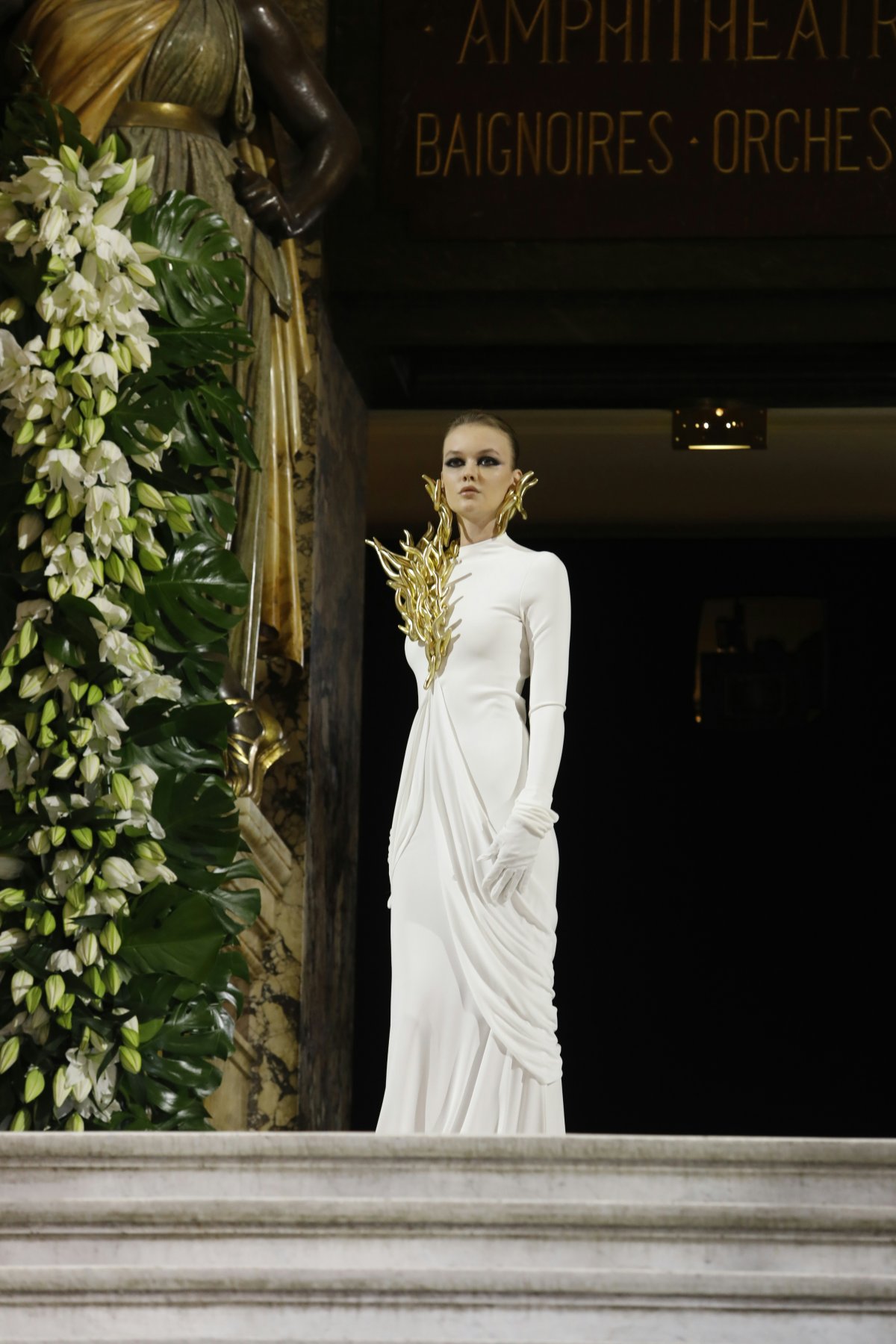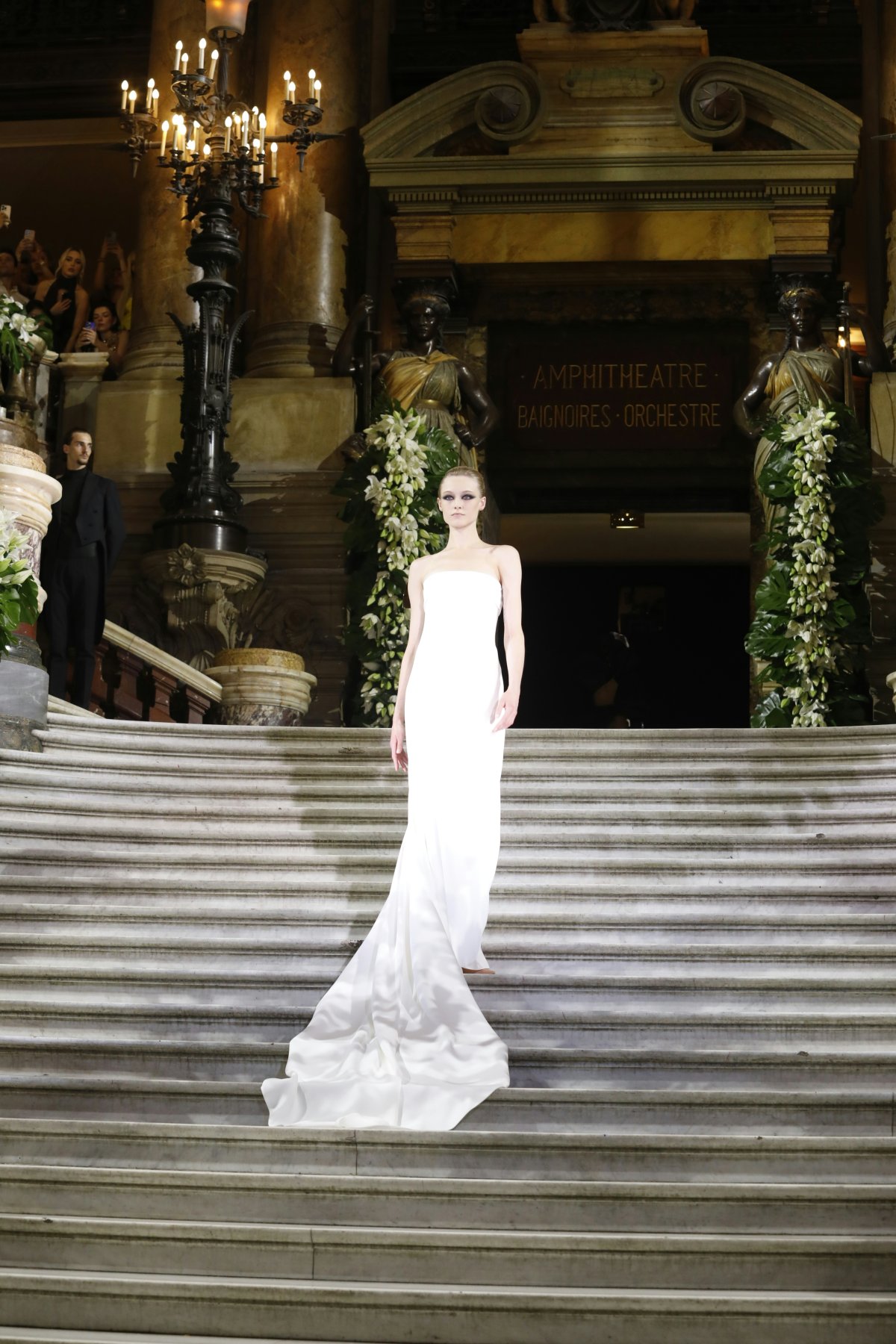
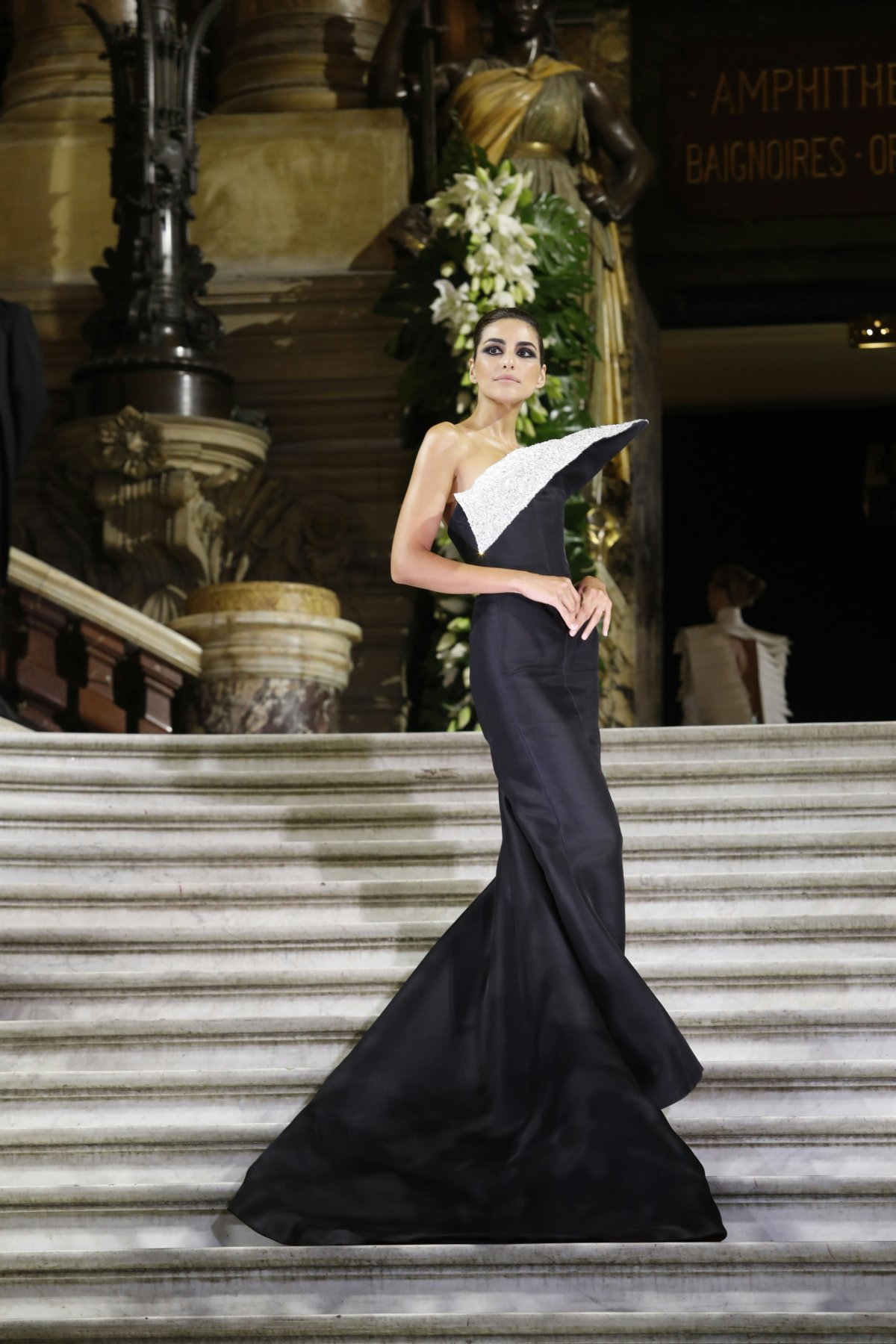
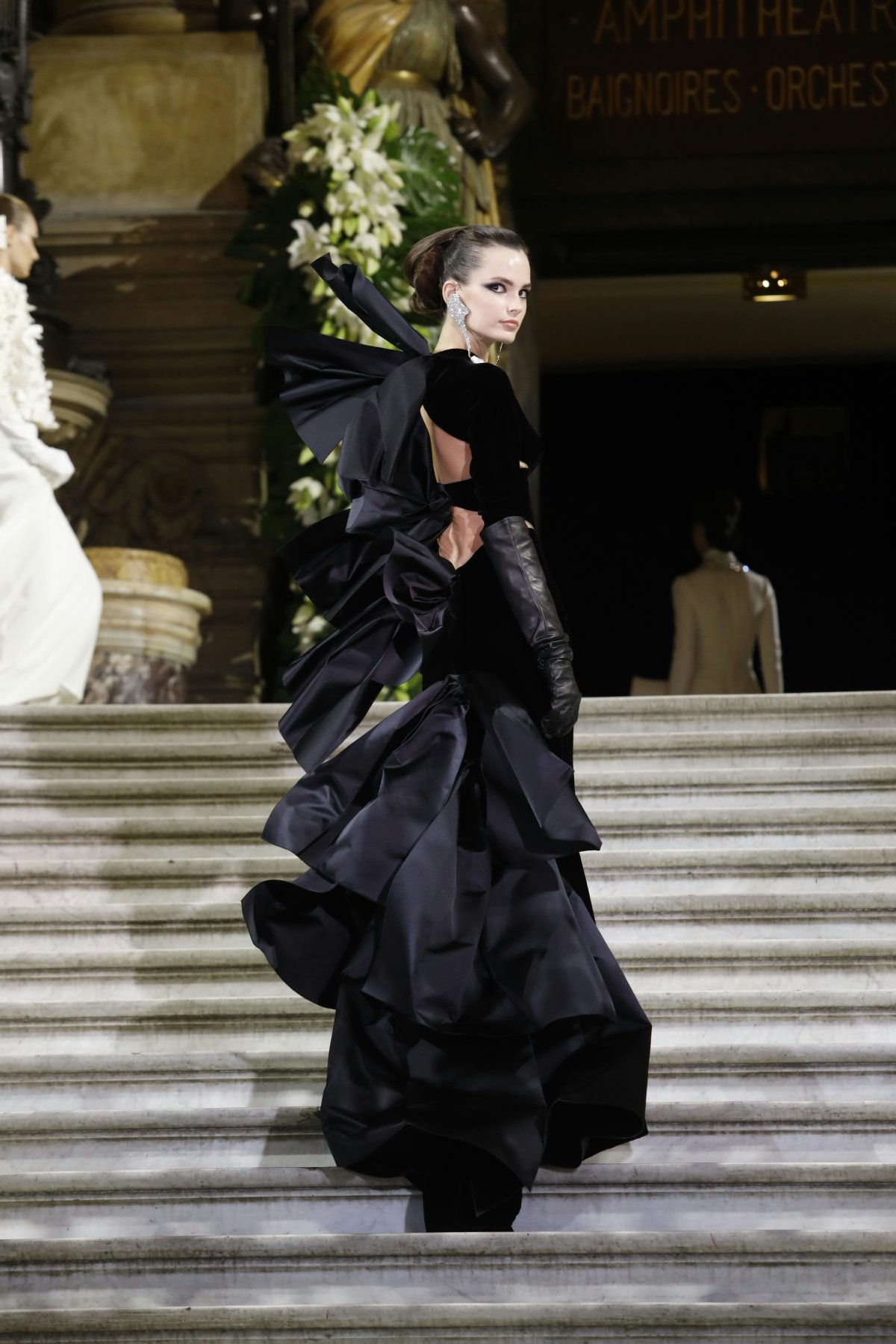
In this collection, Stéphane Rolland has designed 31 gowns, each influenced by the roles played by the soprano, as well as her persona and the feelings she expressed.
A cone-shaped dress draped in black gazar marks the beginning of this timeless moment, succeeded by elongated vests flowing with crepe and geometrically-shaped dresses. The tailoring is clean, refined, and majestic. Boleros, capes, and frock coats are adorned with white porcelain bas-reliefs and acanthus leaf designs.
We stand within the Palais Garnier.The leading ladies grace our sight. In her initial Wagnerian appearances, she dons a helmet encrusted with diamonds and a gown of black velvet.
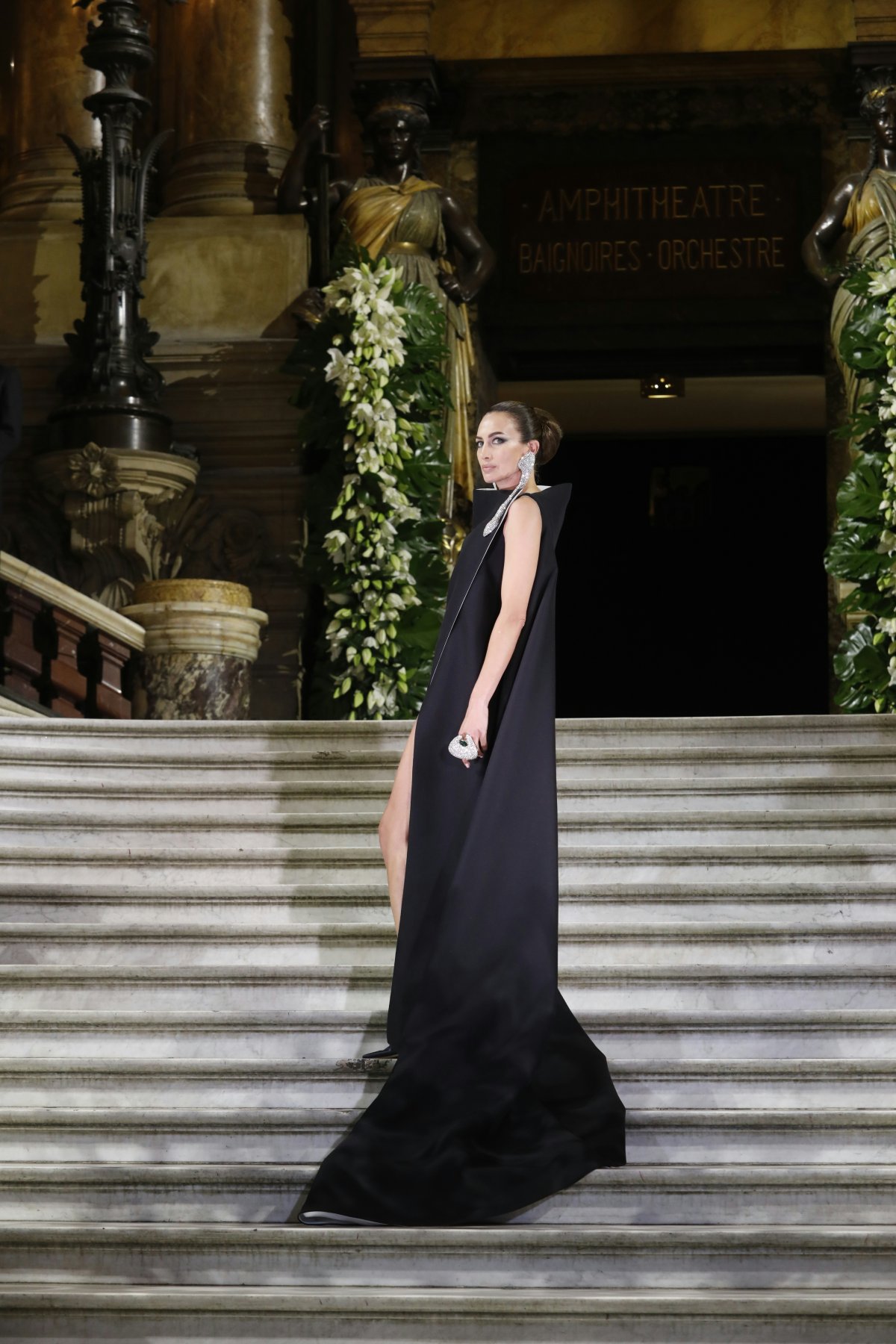
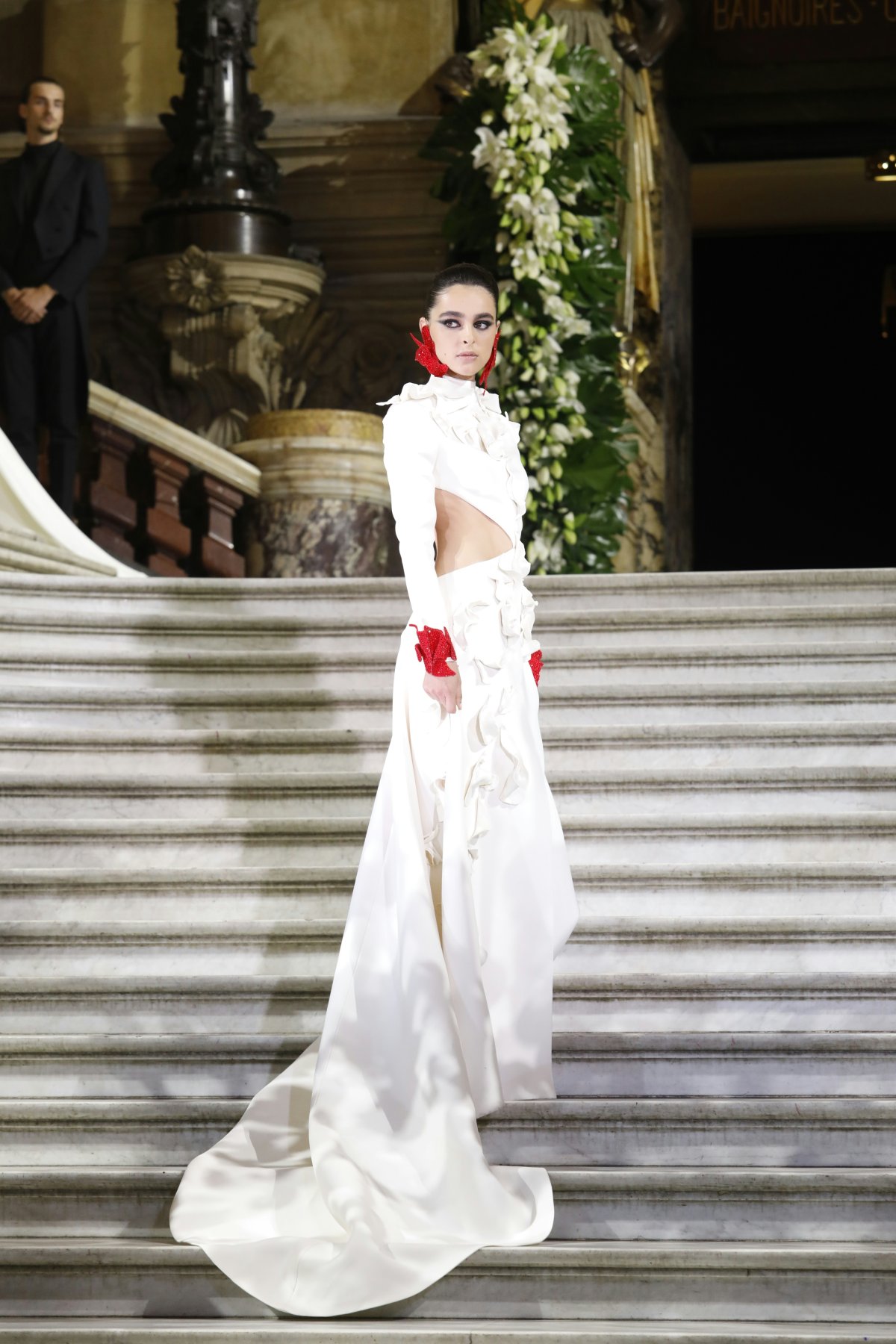
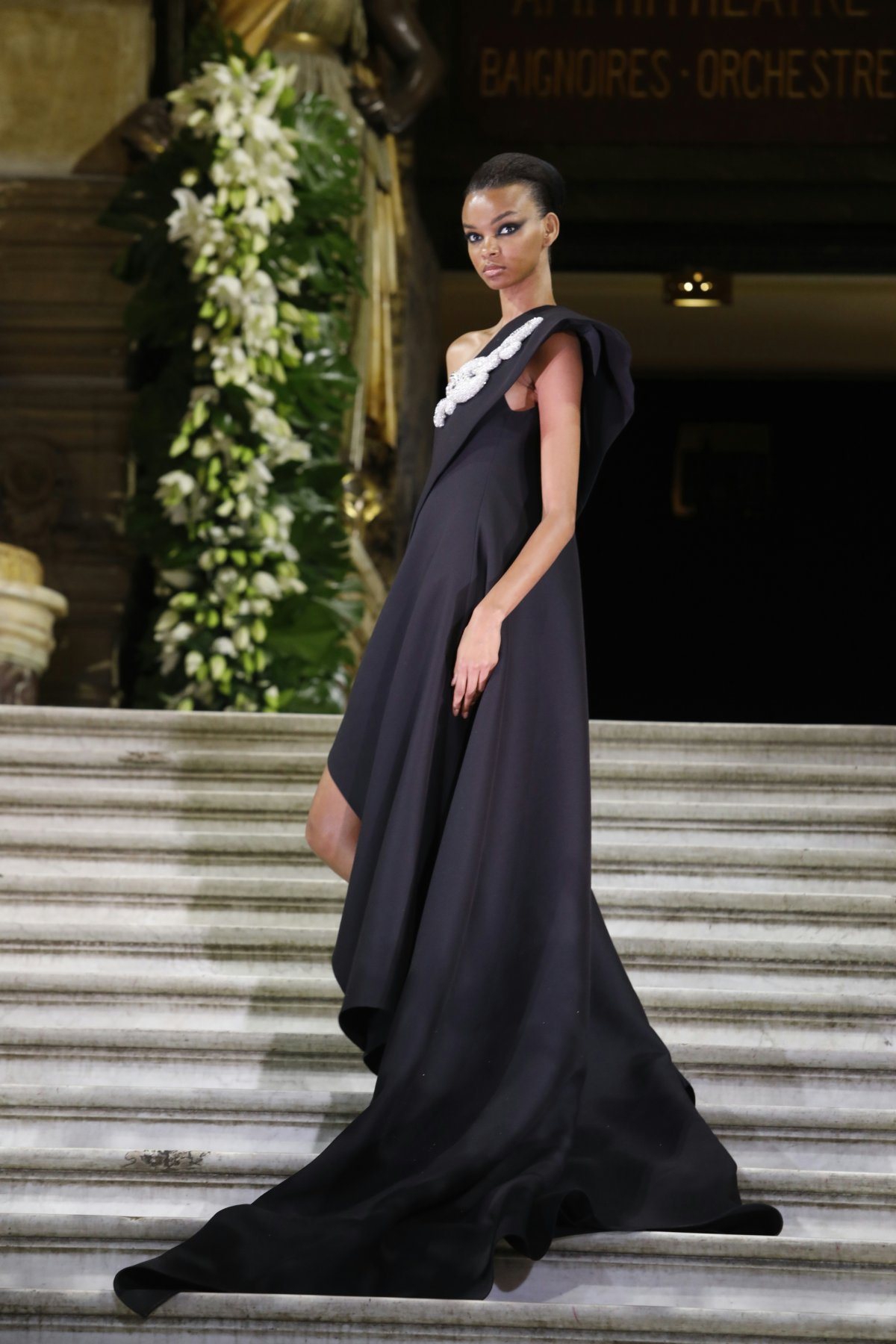
In her “Verdi-inspired” role, Maria transforms into Violetta, wearing crinoline dresses decorated with satin panels or a lengthy fitted dress adorned with a golden and diamond “fan” sculpture. Eleonora looks pristine in a reversed white crepe cape detailed with biscuit porcelain embroidery.
Tosca dons a long, pearlescent duchess satin dress draped like a toga, accented with golden olive branch embroideries.
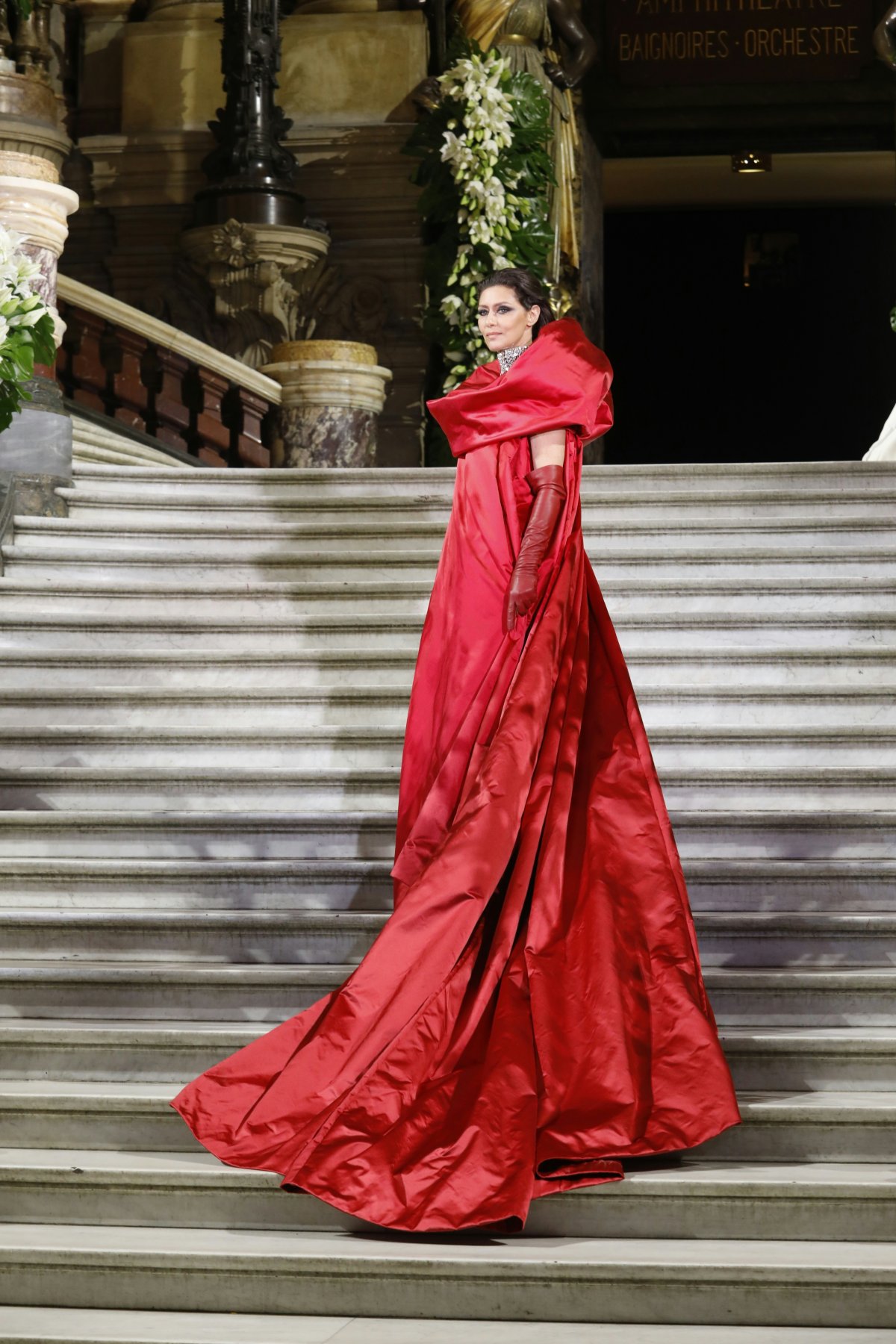
In a portrayal filled with tragedy, Maria takes on the role of Medea, draped in a crimson crepe dress with a hood, overlayed with a golden leather representation of a blazing bush.
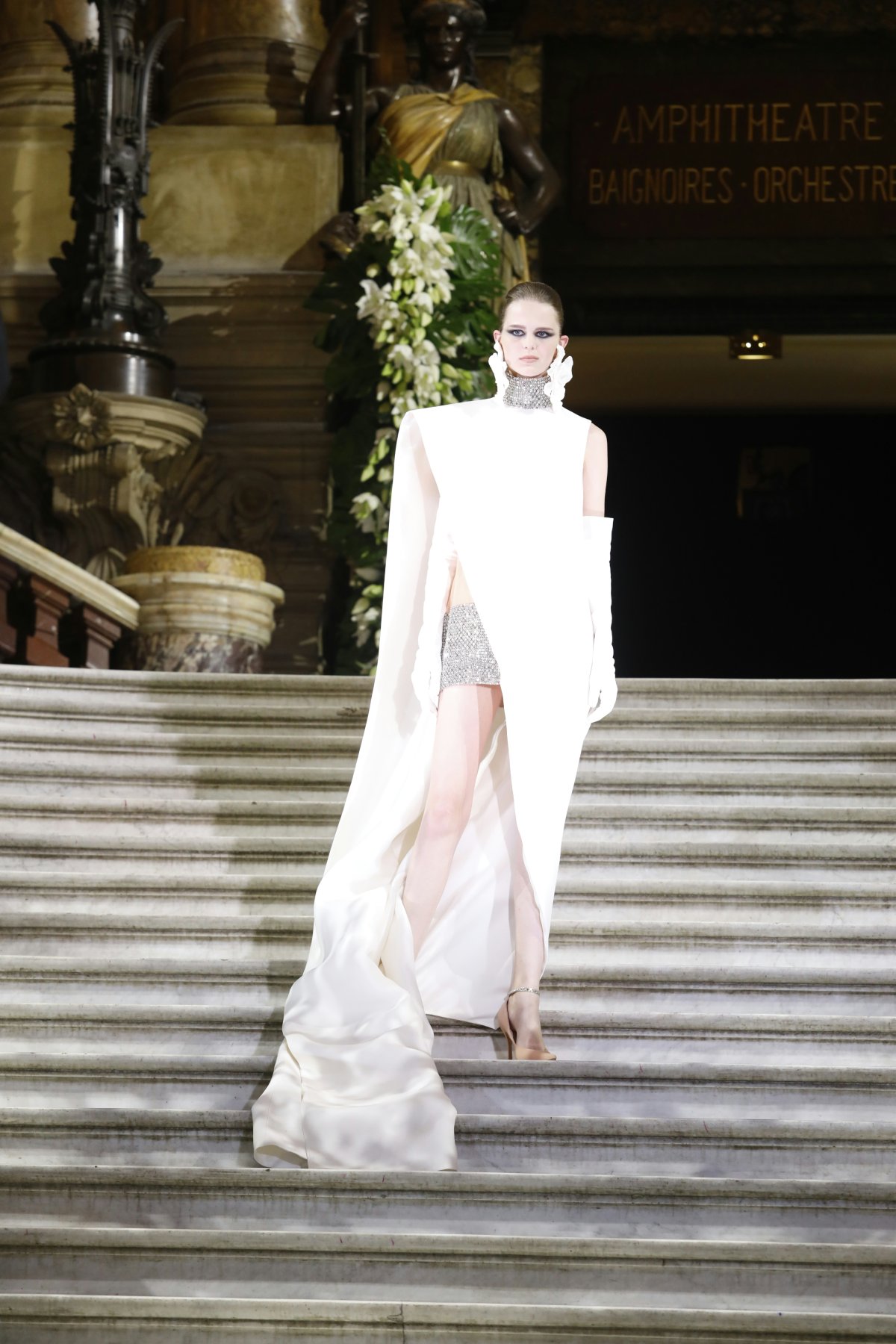
Ultimately, the most iconic role. Norma. She’s cloaked in a grand acanthus leaf and draped in white muslin.
When all is said and done, from these portrayed women, only one name stands out… Callas.