
Something strange happened to Web3 in Silicon Valley. One moment, every venture firm in California was talking about decentralization, tokenization, and the future of digital ownership. The next moment, the conversation shifted to large language models and neural networks, as if blockchain had become a distant dream the Valley collectively chose to ignore. Founders who had pitched decentralized everything in 2021 were suddenly pitching AI agents by 2023. The infrastructure that was supposed to reshape how value moves across the internet got abandoned mid-construction.
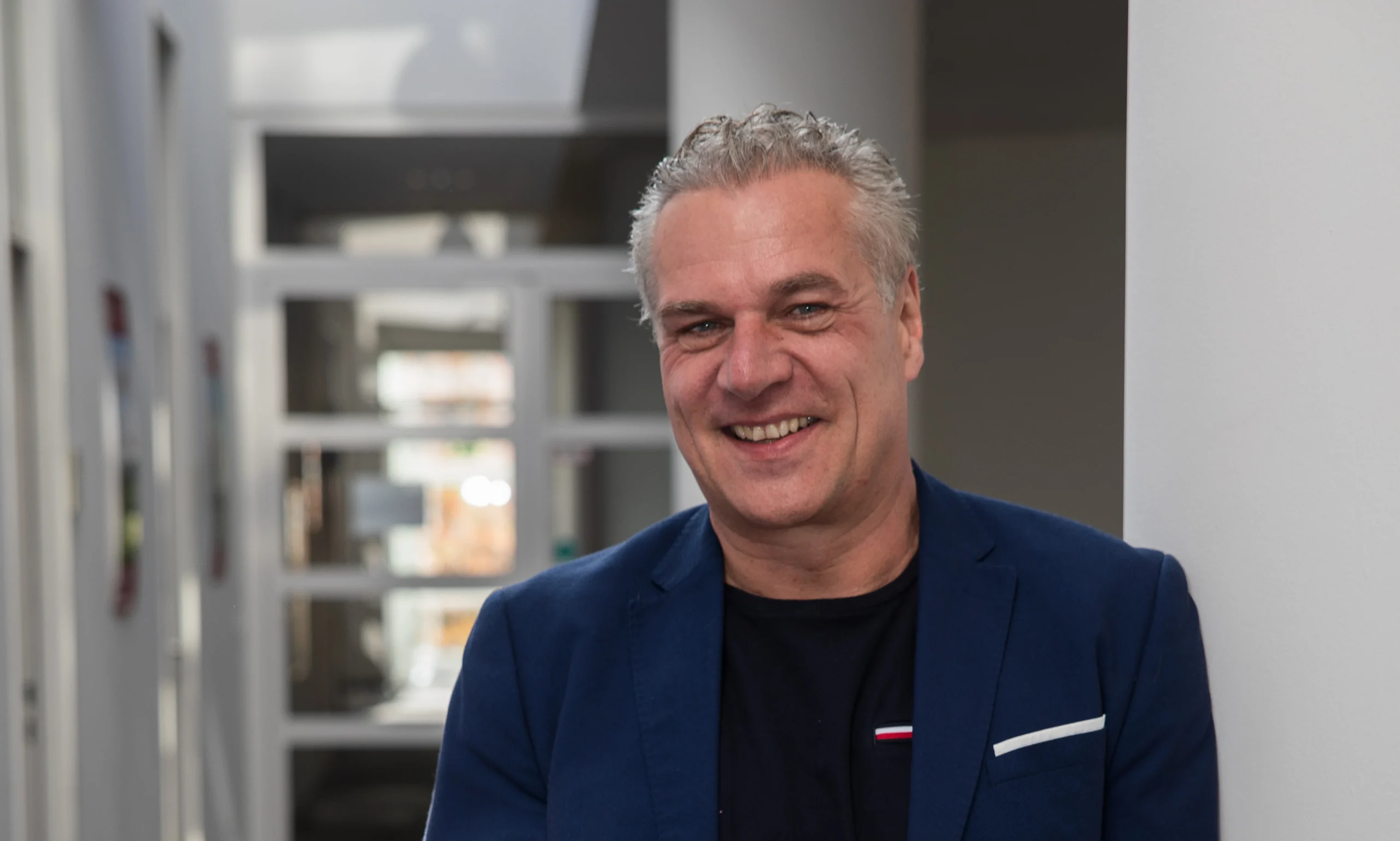
While American tech giants poured billions into the AI arms race, a different kind of technological building started happening in Luxembourg, Frankfurt, and Zurich. Hendrik Hey, a German media entrepreneur who spent three decades running television networks and production companies, saw the vacuum and decided to fill it. His company, MILC (Media Industry Licensing Content), operates as a fully functional metaverse marketplace where content, intellectual property, digital goods, and services are created, licensed, financed, and traded in a scalable three-dimensional environment, already processing real transactions for media companies, brands, and developers.
The Visionary Behind the Shift: Hendrik Hey’s Journey from Media Mogul to Web3 Architect
Hendrik Hey is not what you picture when someone says “Web3 founder.” There is no Stanford dropout origin story and no garage in Palo Alto. The Hamburg native built his career in European broadcast television, where success is measured in programming hours delivered and advertising contracts secured, not in X (Twitter) followers or token valuations. Those who have worked with Hey describe a personality that matches his ambitions: operatic in style, relentless in deal-making, and deeply impatient with systems that fail to reward the people who actually create value.
He founded “Welt der Wunder” in 1996, a science and technology program that became one of the most recognized media brands in German-speaking Europe. The production company created more than a thousand hours of content for major broadcasters, blending storytelling with commercial innovation that anticipated the creator economy by decades. Hey went on to acquire national television stations in Germany and Switzerland, learning firsthand how content moves through the chain of rights holders, distributors, and broadcasters.
That experience made him obsessive about one problem: ownership. The internet had solved distribution. Anyone with a smartphone could reach a global audience. However, the systems that were supposed to track who made what, who owned which rights, and how money should flow back to creators remained stuck in the fax-machine era. Royalty statements arrived late, filled with unexplainable deductions. Licensing deals required armies of lawyers to negotiate terms that would be obsolete by the time the ink dried. Hey watched value evaporate into middlemen at every step of the chain.
He started experimenting with blockchain more than a decade ago, long before most media executives could understand Ethereum. By 2022, those experiments had coalesced into MILC, and by 2026, the company is scaling faster than even Hey anticipated.
“This must be what it felt like when the first Hollywood pioneers built their studios and set a new era of storytelling in motion. Today, we find ourselves at a similar turning point, but this time, the canvas is infinite: a three-dimensional, transparent, and interactive metaverse. Visual media is no longer locked inside a screen, it breathes, it responds, it surrounds us. We are no longer just creating content; we are building worlds. And in these worlds, everyone becomes part of the story,” Hey says.
MILC: The Living Metaverse That’s Already Rewiring Media Ownership
The graveyard of Web3 is filled with projects that launched with glossy whitepapers, raised millions in token sales, and then quietly disappeared when the market turned. MILC is not one of them. The company operates as a persistent three-dimensional environment where intellectual property can be tokenized, licensed, and traded in real time. Creators, publishers, brands, and developers coexist within a shared infrastructure that handles everything from content creation to revenue distribution.
The technical architecture operates on a native tokenization layer that transforms intellectual properties into programmable assets. This means revenue splits, licensing terms, and secondarymarket royalties can be encoded into the actual asset and automatically enforced on the blockchain. When a piece of content generates revenue anywhere in the system, the smart contracts handle distribution instantly and transparently. There are no quarterly statements, unexplainable deductions, or middlemen skimming percentages at every node.
The company has expanded to include AI-powered music creation tools, immersive e commerce environments, and a Web3 streaming service that integrates production, distribution, and monetization into a single modular stack.
MILC is GDPR and MiCAR compliant, meaning it can operate within European regulatory frameworks without the legal ambiguity that has paralyzed American Web3 projects. That regulatory clarity matters because institutional investors have largely avoided Web3 precisely because they cannot explain speculative token projects to their compliance departments. MILC offers something they can actually underwrite: operational infrastructure with auditable revenue streams and clear regulatory standing.
Hey has been clear about why he chose Europe for this project. “The Metaverse and Web3 represent a tremendous opportunity for Europe,” he has said. “We have consciously chosen to rely on European technologies and infrastructures to fully exploit this potential.”
What MILC Is Actually Building
What began as a media licensing marketplace has evolved into something far harder to categorize and far more consequential, a behemoth in motion already extending itself across every layer of the media industry and well beyond it. Production, financing, music, artificial intelligence, compute, and rights governance.
The most ambitious item on the roadmap is a decentralized creative studio being developed inside the MILC infrastructure, the “Pixar for Web3”, designed to bring AI assisted film and animation production into an ecosystem where every participant owns a programmable stake in what they help create. On the surface, that sounds like a production company, but it is something far more disruptive. It is a fundamental reimagining of ownership in film and animation production. Under the current model, a studio finances a project, owns the intellectual property, and distributes whatever portion of the revenue it decides to share with the people who actually made it, leaving writers, animators, composers, and directors to negotiate their slice upfront and then largely lose connection to what their work earns afterward.
MILC’s model encodes ownership differently from the very first frame, so that every participant, from the lead animator to the composer who scored a single scene, holds a programmable stake in what they helped create. When the work earns, they earn automatically, without having to chase anyone for it. This is not how the film industry has ever worked, but it is precisely how MILC intends to make it work.
Another industry MILC is aggressively moving into is music, not in the way one might expect, because it is not about streaming royalties or playlist algorithms. Music, in the MILC ecosystem, is infrastructure, and the question being answered is not simply how artists get paid for their songs, but how the entire layer of a media ecosystem gets owned, licensed, and monetized without the machinery that has historically made that process slow and deeply unfair to creators.
MILC’s music infrastructure is anchored by a partnership with a studio holding more than seventy patents in adaptive and generative music systems, developed in close collaboration with Queen Mary University of London. The result is a patent-protected music IP layer covering film, series, games, and immersive formats, with rights attribution automatic the moment a piece of music is used anywhere within the MILC ecosystem. The composer does not have to know that their work is being used in a game released in fourteen countries, because the system already knows, and it already paid them.
MILC also allows films and media projects to raise capital directly from communities of investors and fans before a single frame is shot, collapsing the distance between creators and the audiences who believe in their work.
A Renaissance, Not a Rebellion
The companies that built the internet’s current architecture were not trying to exploit anyone. Google did not set out to make publishers dependent on its ad auction. YouTube did not design its royalty system to confuse creators. The extractive dynamics of Web2 were not the result of malice. They were the result of building companies optimized for growth, inside systems where only the powerful could enforce the rules, and creators were rarely powerful enough.
What MILC represents is something the media industry has never seen and something Web2 was never structurally capable of delivering. For the first time, the people who interact with content, not just the people who create it, have a stake in what it earns. A viewer who engages with a creator’s work inside the MILC ecosystem is not just an audience member generating ad revenue for a company that keeps most of it. They are a participant, and the infrastructure treats them as one, automatically and transparently routing value back to them based on their engagement.
That is the genuinely revolutionary idea at the center of all of this, and it is what separates MILC from every Web3 project that came before it. The question now is not whether this infrastructure will matter, but whether the media industry moves toward it quickly enough to matter to the generation of creators and users who have already run out of patience with the alternative. In Luxembourg, that work is already underway, and the systems doing it are already live.
Image credit: Hendrik Hey