
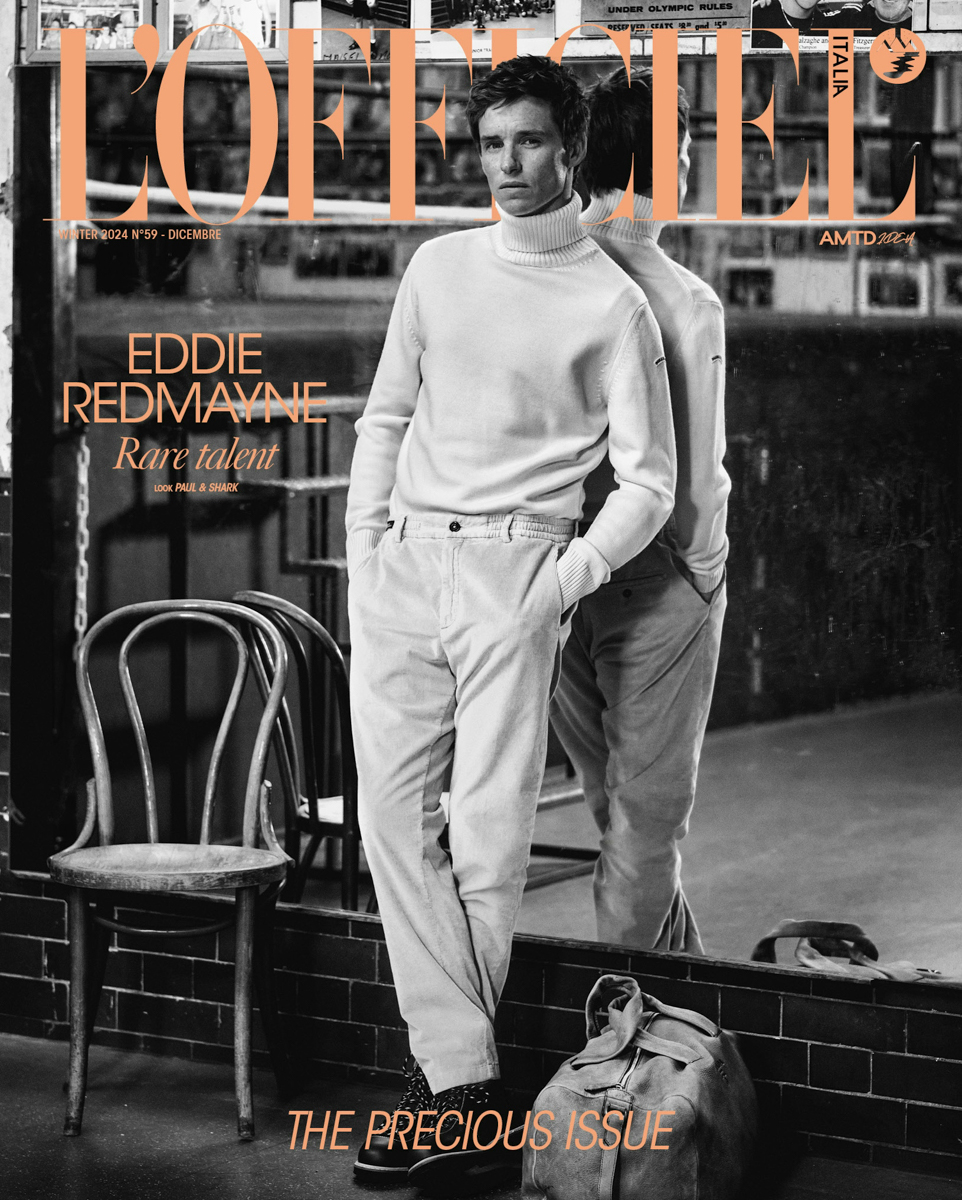
Fresh from his nomination for Best Actor at the 2025 Golden Globes for the series “The Jackal,” the Oscar-winning actor from “The Theory of Everything” has played very different roles for twenty years, from the transgender artist in “The Danish Girl” to the activist Tom Hayden in “The Trial of the Chicago 7” to the “Fantastic Beasts” saga.
Text by FABIA DI DRUSCO
CHARLIE GRAY Photography
Styling: DAVID BRADSHAW
Eddie Redmayne , a Cambridge art history graduate and Oscar winner for “The Theory of Everything” in which he played astrophysicist Stephen Hawking, has played a wide variety of roles in a career spanning almost twenty years, from Monroe’s London escort in “My Week with Marilyn” to Marius in “Les Misérables”, the transgender artist Lili Elbe alongside a stunning Alicia Vikander in “The Danish Girl”, Newt Scamander in the “Fantastic Beasts” saga and the murderous nurse in “The Good Nurse” with Jessica Chastain. We have just seen him in the television series “The Jackal” , for which he received a nomination at the upcoming Golden Globes .
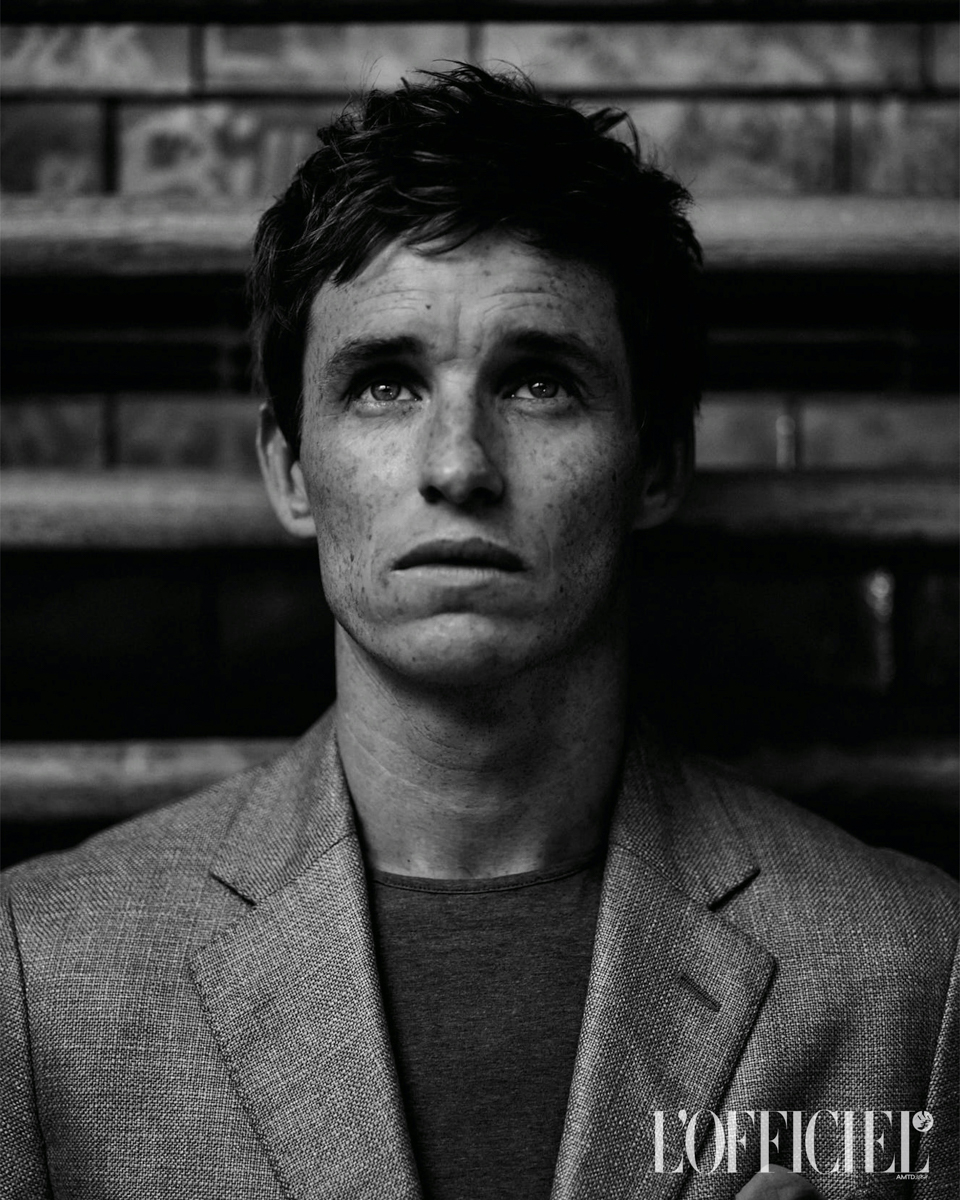
Cashmere and silk blazer, LORO PIANA; sweater, JIL SANDER BY LUCIE AND LUKE MEIER
L’OFFICIEL HOMMES ITALIA: What attracted you to “The Jackal”?
EDDIE REDMAYNE: I like the idea of being able to play a character for 10 hours, exploring all aspects of their personality, especially when they’re as enigmatic and multifaceted as this one. One of the things I like most about my job is the strange things you learn to prepare for a role. In this case, I spent a lot of time with a sort of military intelligence specialist. He taught me different techniques for detecting whether or not you were being followed by looking at car mirrors and shop windows. We did some training sessions in central London where he would send me photos via WhatsApp of people I needed to stalk and people I needed to avoid. He taught me a lot about self-defense with the phone and how to disappear without being overlooked . And he taught me the art of sniping and the intricacies of that craft at Bisley, a shooting range outside London. Then there was the language issue. I speak neither German nor French and had to learn a bit of both.
LOHI: You started acting almost 20 years ago. What roles have shaped your career?
ER: When you start acting, you spend many years just trying to get a job. And if you’re lucky enough to get a job, you take it and do it. For me, everything changed when I made *The Theory of Everything*. The fact that the director, James Marsh, told me right away that the film would depend on my performance gave me the confidence to ask for what I needed. So I worked with one coach to figure out how to move and another to figure out how to speak. I asked for four months of preparation. From that moment on, and after the success of the film, the method I use to approach my roles was set.
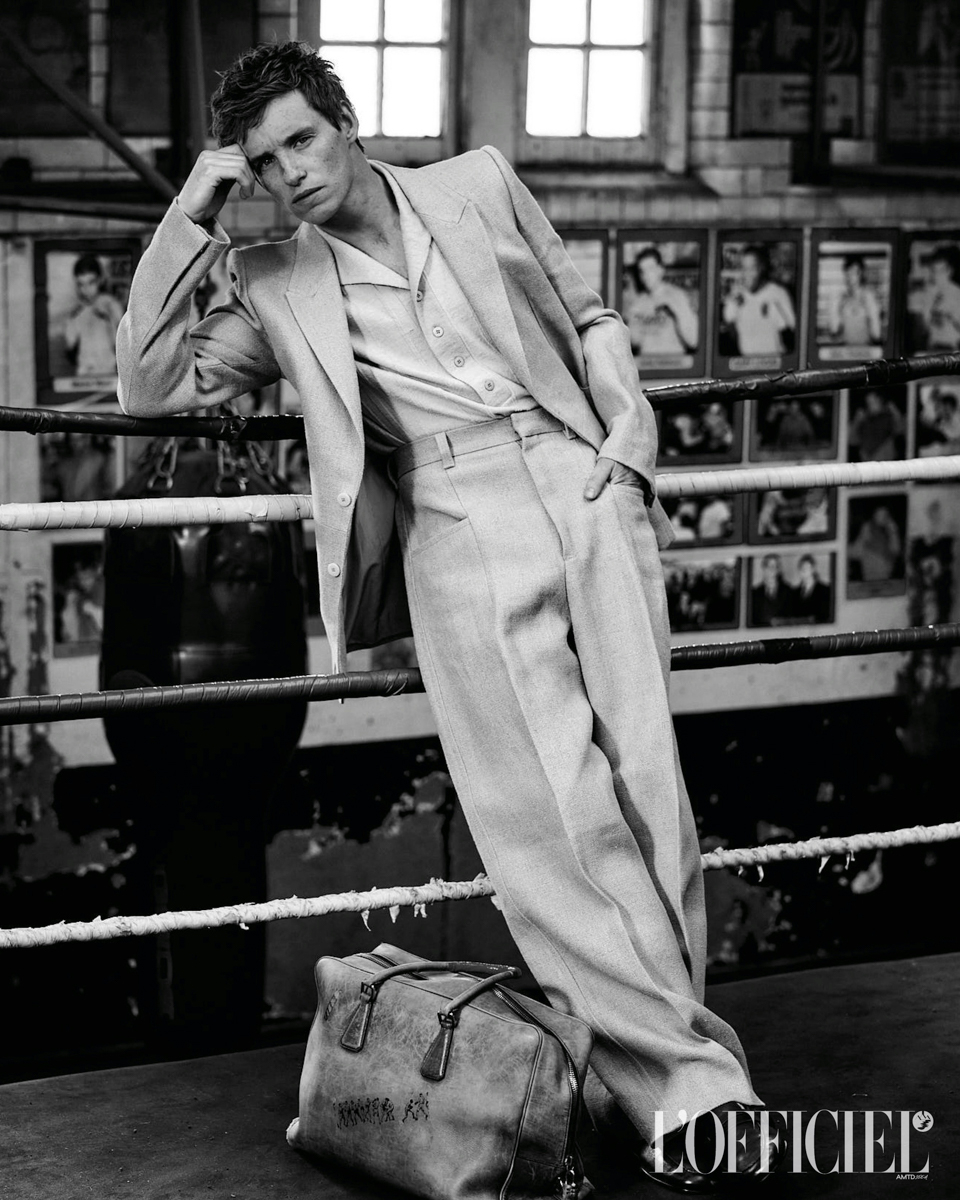
Suit, linen shirt and slippers, ZEGNA
LOHI: After your Oscar for “The Theory of Everything,” you were nominated for an Oscar for your next film, “The Danish Girl,” in which you played the painter Lili Elbe, the first person to undergo sex reassignment surgery. I read in an interview that you wouldn’t accept the role today.
ER: I wouldn’t take on the role today, because even though actors should be able to play anything in an ideal world, the reality is that there are entire communities and people who have never had the chance to sit down at the table and play their game. So until there’s a more level playing field, I think it’s important to be careful when casting roles.
“Since I didn’t go to drama school, I always absorbed the working methods of other actors like a sponge.”
LOHI: Which directors have you worked with that you have a special relationship with?
ER: Tom Hooper directed me three times: in a TV series about Elizabeth I with Helen Mirren in the title role, one of my first jobs, then in “Les Misérables” and “The Danish Girl.” Working with the same person and with a great deal of mutual trust makes everything go faster. But one of the directors who has inspired me most is the Dane Tobias Lindholm, who directed “The Good Nurse.” He’s a writer-director with such a specific vision of the world that I really enjoyed it.
LOHI: Which directors have you never worked with but would like to?
ER: Many. Charlie Kaufman (“Eternal Sunshine of the Spotless Mind”), Paul Thomas Anderson, Luca Guadagnino, Derek Cianfrance (“Blue Valentine,” “The Place Before the Pines”). I could go on…
LOHI: Let’s go back in time. When did you first develop the desire to become an actor?
ER: I’ve loved music since I was very small. I don’t come from an artistic family, but I loved music and songs. My parents used to take me to the theater, and I remember once, after seeing a performance of “A Midsummer Night’s Dream,” I went on a sort of backstage tour of the National Theatre in London and was completely captivated. Then, when I was about 10, I got a role in a production of the musical “Oliver” and skipped math class at school to take the Tube to the London Palladium, one of our most famous theaters, and earn money doing something I loved. At that age, it never occurred to me that this could be a real career opportunity, and even now I’m still amazed that it actually happened.
Wool blazer, THOM BROWNE; sweater, JIL SANDER BY LUCIE AND LUKE MEIER; trousers, MIU MIU; boots, PRADA; travel bag, PIERRE HARDY
LOHI: You continue to alternate between cinema and theater. What do you particularly enjoy about the stage experience?
ER: One of the things I love about theater is that with acting, you can never get everything right. It’s… it’s always… you’re throwing something out into the ether and trying… it’s like trying to stop a butterfly. It’s virtually impossible. But the great thing about theater is that you can come back every night and try again. I just did “Cabaret” in New York for almost six months, and people were like, “How can you keep doing the same thing?” The answer is, you have a different audience every night.
“Acting is like trying to stop a butterfly. It’s impossible. But the great thing about theater is that you can try every night.”
Because it’s live, everything is alive, moving, and disjointed, and you’re always reacting to the specificity of each moment, and the connection you make with the audience is always different. But this search for something—I would say the search for perfection, with the awareness that you’ll never achieve it—is what triggered my theater addiction. And in the theater, you also have control over your own performance, whereas in cinema and television you perform your own version, but the result is essentially the fruit of a dance with the editor, the director, and many other people.
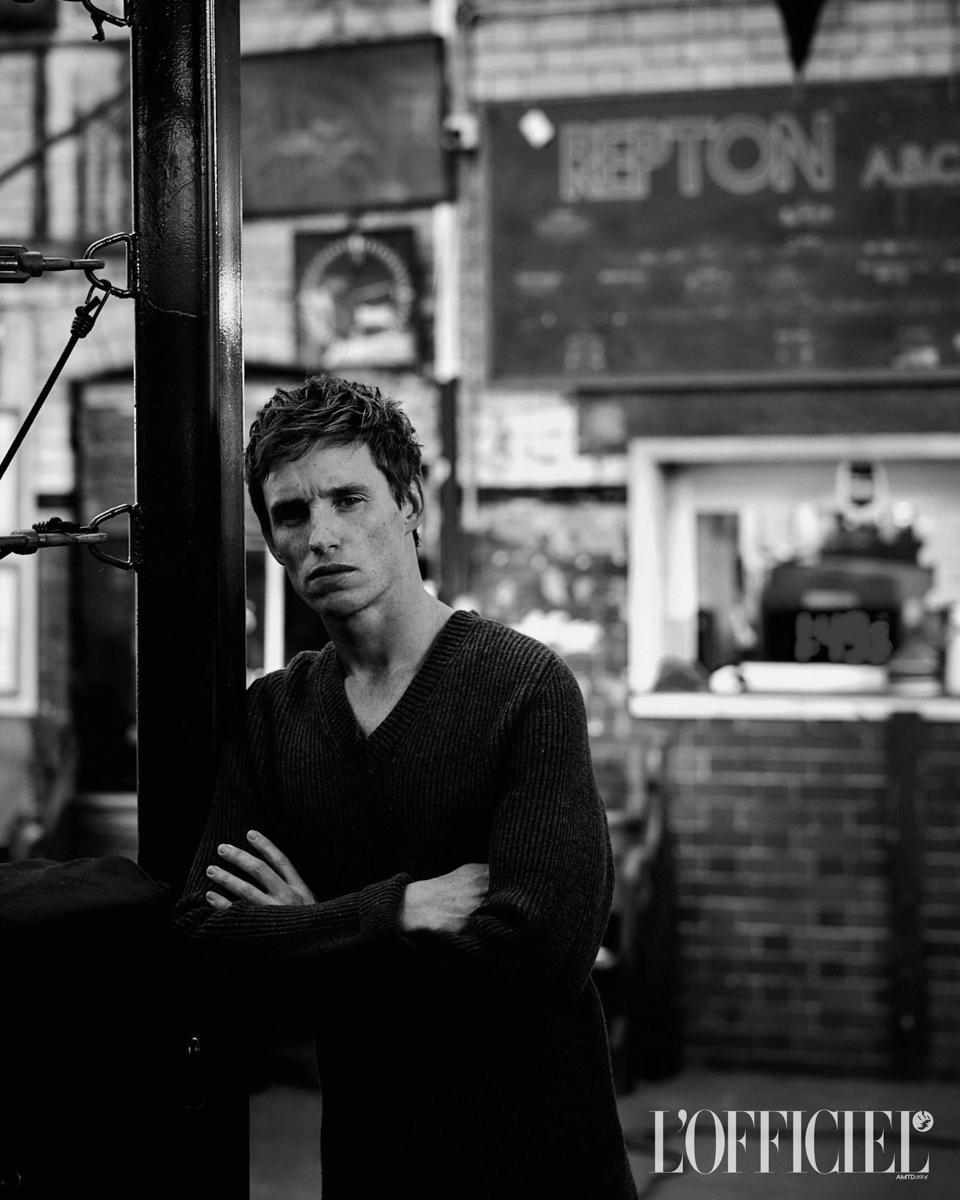
Ribbed V-neck and trousers, FERRAGAMO
LOHI: Is there a role you would like to play and have been thinking about for a long time?
ER: You know, I don’t have an answer to that question. I like to be challenged, and I find it more interesting when others see in me something they think I’m capable of. When I read a script that I’ve instinctively chosen, I need to have that gut feeling that makes me say, ‘I have to do this.’
LOHI: Have you ever turned down a role and later regretted it?
ER: No, not really. I’ve been very lucky in that respect. There were things I couldn’t do due to time constraints, but when they were hugely successful, I always thought I wouldn’t necessarily have the same success. Especially in film and television, there has to be an alchemy of words, acting, direction, editing, and timing. And if you change any of those components, the result isn’t always the same.
LOHI: Are there any actors you admire and who were role models for you in some way?
ER: Having never attended drama school over the years, I was always aware that I was doing something I wasn’t fully qualified for. So I was always soaking up other actors’ work like a sponge. One of the most exciting experiences from that perspective was Aaron Sorkin’s film “The Trial of the Chicago 7,” with a cast of actors from all genres, methods, and styles: Mark Rylance, Jeremy Strong, Yahya Abdul Mateen II, Sacha Baron Cohen, Frank Langella, Michael Keaton. And since the film takes place largely in a courtroom, it was almost like watching it in a movie theater. I enjoy observing not only how people work, but also how they behave as human beings and how they try to navigate the strange work-life balance that is typical of the acting profession. And I’m lucky that many of the English actors I worked with when I first started, and whom I consider friends, still work with me. We talk less and less about work and more about life, about how we can live as normal and happy a life as possible despite the strangeness and eccentricity of our profession.
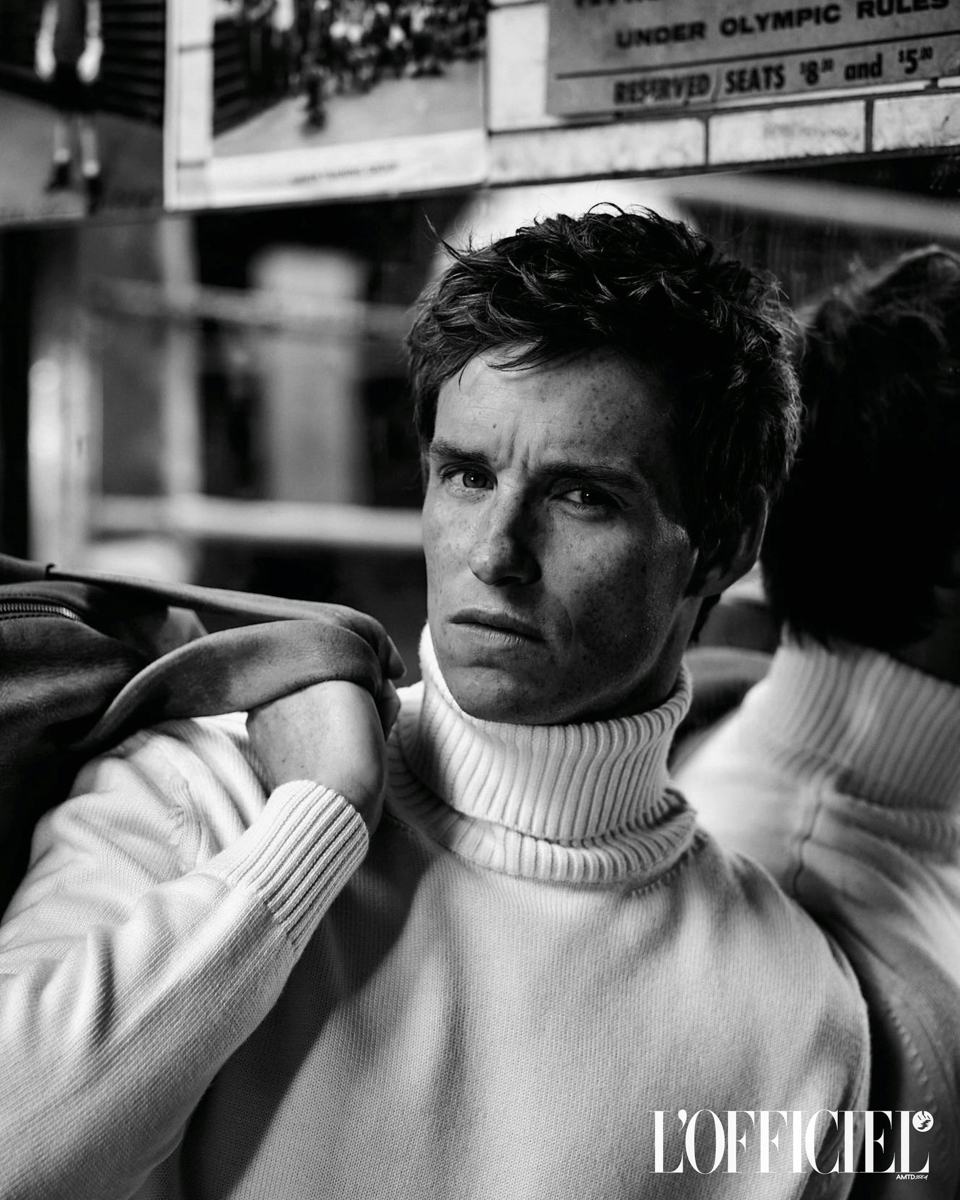
Cashmere turtleneck sweater, PAUL & SHARK; bag, PRADA
LOHI: What do you like to do when you are not on set or on stage?
ER: I was away for a year and a half, in Budapest and Croatia filming “The Jackal,” and then I was in New York. Now that I’m back home in London with my family, it’s the everyday things I love. Taking the kids to school, playing tennis together. As a family, we enjoy sports and going to museums. I like to paint. I play the piano—not particularly well, but I really enjoy it. I like to cook. Ultimately, I enjoy being a husband and a father.
LOHI: What do you paint?
ER: Postcards. I use, or rather tend to use, watercolors, and I like painting postcards because they’re small and quick, and it doesn’t matter if the end result is a disaster.
LOHI: I think you’ve always lived in London. What do you love about living there?
ER: I love this city. When I’m away for a long time, coming home gives me incredible joy. I like theater; we have great art galleries. I like how the South Bank has changed. You can walk along the Thames, past the National Theatre, to the Globe Theatre and St. Paul’s. I lived in Borough, where there’s the food market. I think the English traditionally have a bad reputation when it comes to food, but London has improved a lot and has some fantastic restaurants.
LOHI: How has fatherhood changed you?
ER: I think you become much more aware of the passage of time and, I think, desperately try to be present in the moment you’re living in. My work, in particular, is a kind of nomadic existence, similar to a circus, where you can be away for extended periods of time.
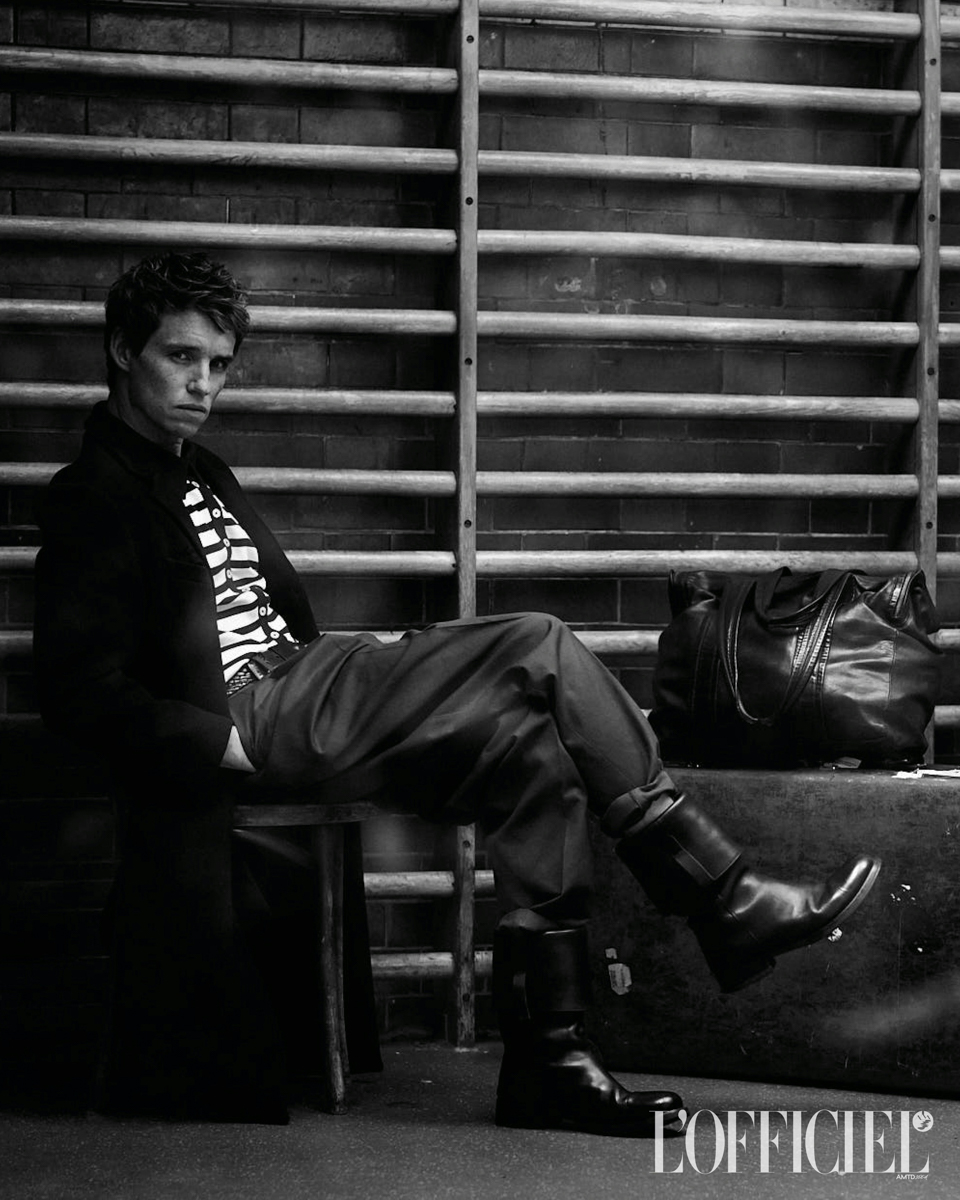
Coat and boots, PRADA; striped polo shirt and trousers, DOLCE & GABBANA; belt, VERSACE; travel bag, PIERRE HARDY; suitcase, GLOBETROTTER
LOHI: What’s your relationship with fashion? I remember you at the Burberry shows during the Christopher Bailey era, in a campaign with Cara Delevingne… And now Harry Lambert, Harry Styles’ stylist, follows you.
ER: I like clothes. One of the things that attracted me to The Jackal is that the character is very particular about her style; she’s a bit like a peacock. Speaking to costume designer Natalie Humphries, it became clear how important it was that the whole thing changed with every look. And I suppose some of his preferences aligned with mine. I’m referring to Savile Row tailors, like Drakes, and I’m thinking of a beautiful pair of sunglasses by Jacques Marie Mage (a Japanese brand, ed.). In real life, I like to experiment on the red carpet. The older I get, the more I realize it’s a moment of pure theater. And it’s a lot of fun to be able to play it and have the chance to meet amazing designers. Whether it’s Sarah Burton , who I’ve known for years and is a good friend, or Alessandro Michele from Valentino .
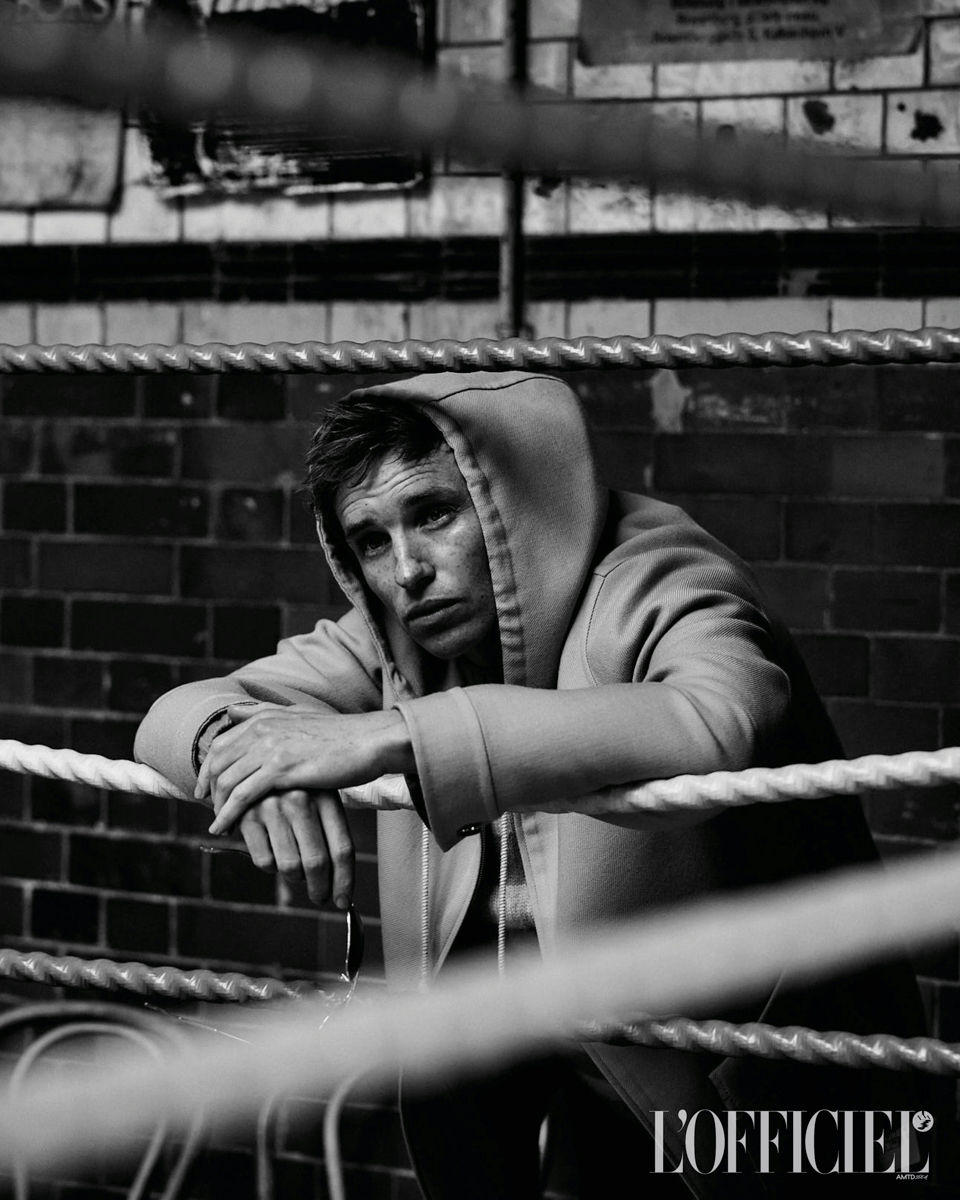
Wool hoodie with striped sweater, VALENTINO; glasses, RAY-BAN
LOHI: Let’s talk about music.
ER: I play the piano and guitar badly. I sang at Cambridge and had a choral scholarship, so it was a very classical thing. My voice was never strong enough to sing professionally, but I still enjoyed it and I enjoyed it immensely. I found the challenge of spending months doing “cabaret” performances in London and New York stimulating, even though I had to prepare a lot physically and vocally. I saw the ENT doctor regularly and eventually had to take steroids and so on, but I managed to get through the tour without having to cancel too many shows.
LOHI: Who is your favorite band or singer at the moment?
ER: We went to a concert at Wembley a few days ago by a band I love, Ezra Collective. I also love Celeste, who has one of the most unique and beautiful voices I’ve ever heard. He composed “Hear My Voice” for “The Trial of the Chicago 7” (where Redmayne played Tom Hayden, activist and future senator and Jane Fonda’s second husband) and “This Is Who I Am” for “The Jackal,” which I find fascinating. Her voice is full of life, power, and fragility; it’s truly fantastic.
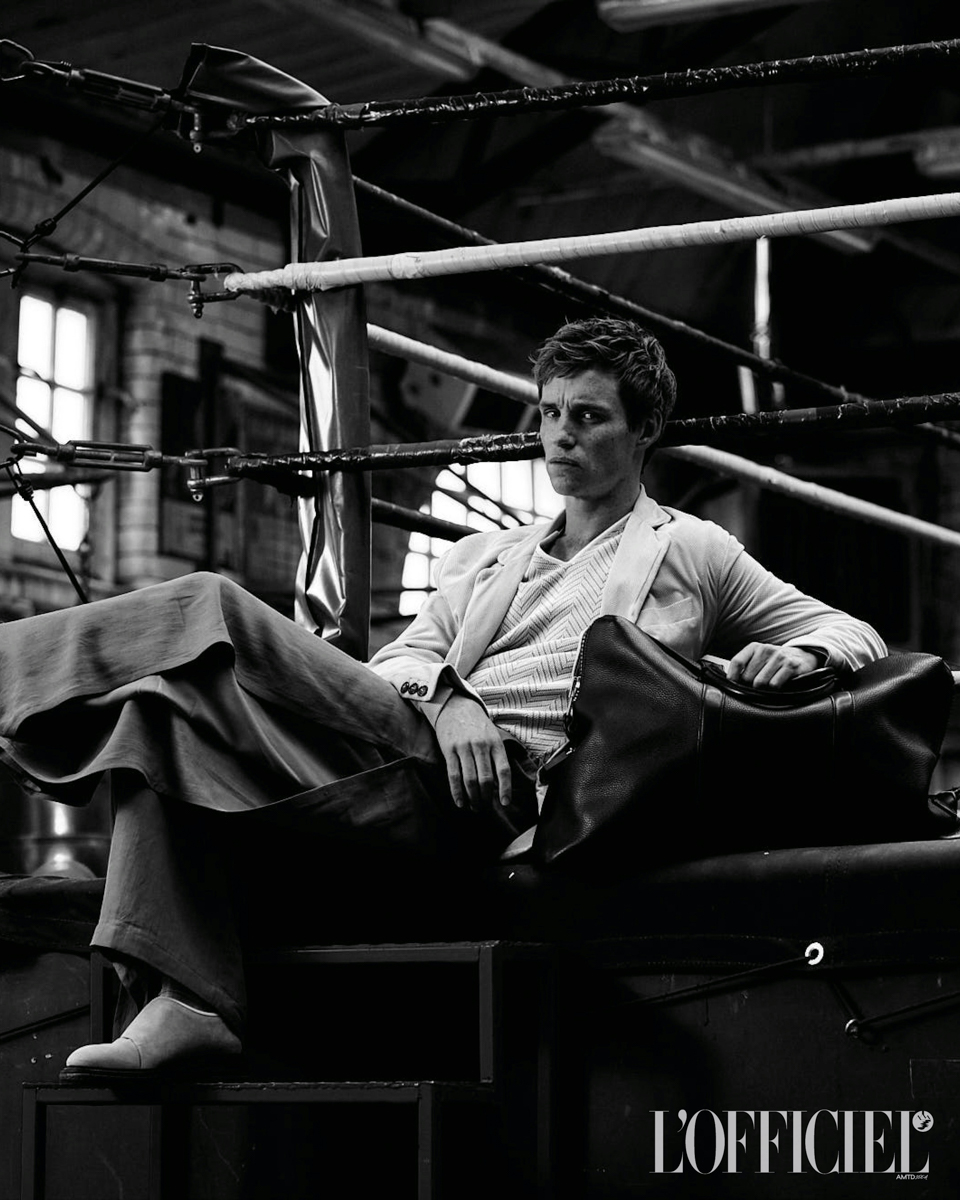
Suede blazer, sweater, pants, and shoes, GIORGIO ARMANI; socks, TURNBULL AND ASSER; travel bag, TOM FORD
GROOMING Petra Sellge @THE WALL GROUP
PRODUCER Cezar Grief
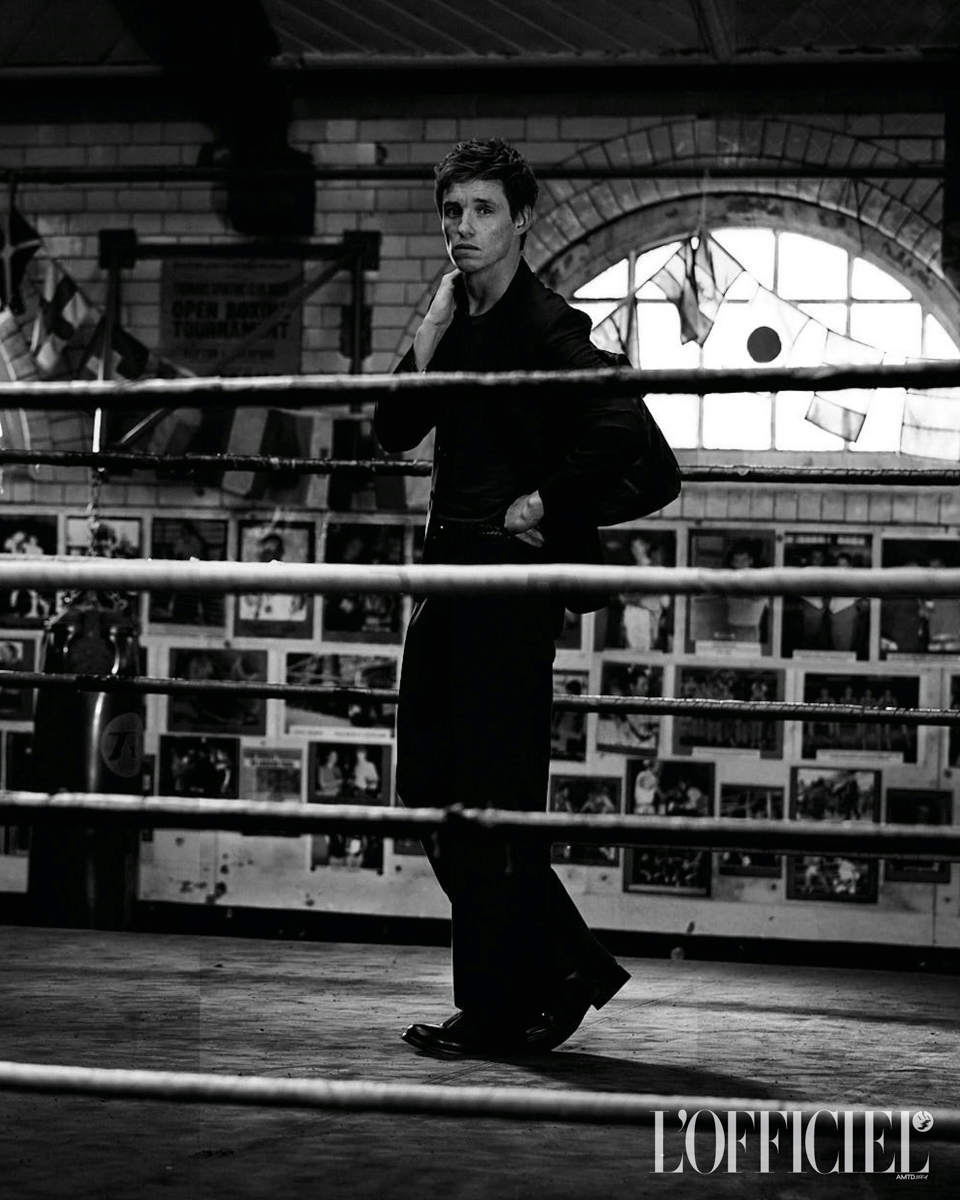
LOCATION Repton Boxing Club, London