
We don’t buy luxury simply because something is beautiful. We buy into the feeling that it was made with us in mind.
By Mayudi Patel

There is something quietly extraordinary about a garment that seems to understand you. The fabric falls exactly where it should. The shoulder sits naturally. The sleeve ends at precisely the right point. You put it on and, rather than thinking about the garment, you feel like yourself in it.
Now imagine the opposite. You find the perfect jacket: the fabric is exceptional, the construction is exacting, and the design is a match for you. But the moment you put it on, something is slightly off. The shoulder sits differently than expected. The sleeve runs long. The waist falls where it was never meant to. The garment is beautiful. It simply isn’t beautiful on you.
For an industry built around individuality, fashion still asks most people to fit themselves into a remarkably standardised system.

Luxury has long promised personalisation through craftsmanship, exclusivity and service. Couture and made-to-measure remain the clearest expression of that promise, garments created around the individual, rather than the individual adapting to the garment. But for most consumers, even at the top end of the market, the experience still begins with a size. Perhaps the next evolution of luxury isn’t simply making something more exclusive. Perhaps it’s making it fit more precisely.
The timing is not incidental. The Business of Fashion and McKinsey’s State of Fashion 2026 report names AI-driven personalisation as the industry’s leading priority this year, with virtual try-on and 3D fit technology singled out as central to how AI will reshape the customer experience, and it points to Zegna’s own AI-powered clienteling platform as a working example already in use. The backdrop matters too. Luxury has entered a period Bain and Altagamma describe as contraction ahead of an expected rebound, the kind of moment in which brands stop competing on logo alone and start competing on precision and service.
Monaco has a particular stake in that shift. It is, by most measures, one of the most concentrated luxury markets anywhere, a small cluster of streets holding a density of maisons and clientele that few cities can match. In a city built on that kind of proximity and discretion, it would be no surprise to find a boutique quietly offering an appointment outside normal hours, or an adjustment made steps from where a garment was chosen rather than shipped elsewhere. Digital fit technology doesn’t replace that instinct for personal service. It extends it, giving the same discretion and precision a presence online, long before the client ever steps into the boutique.
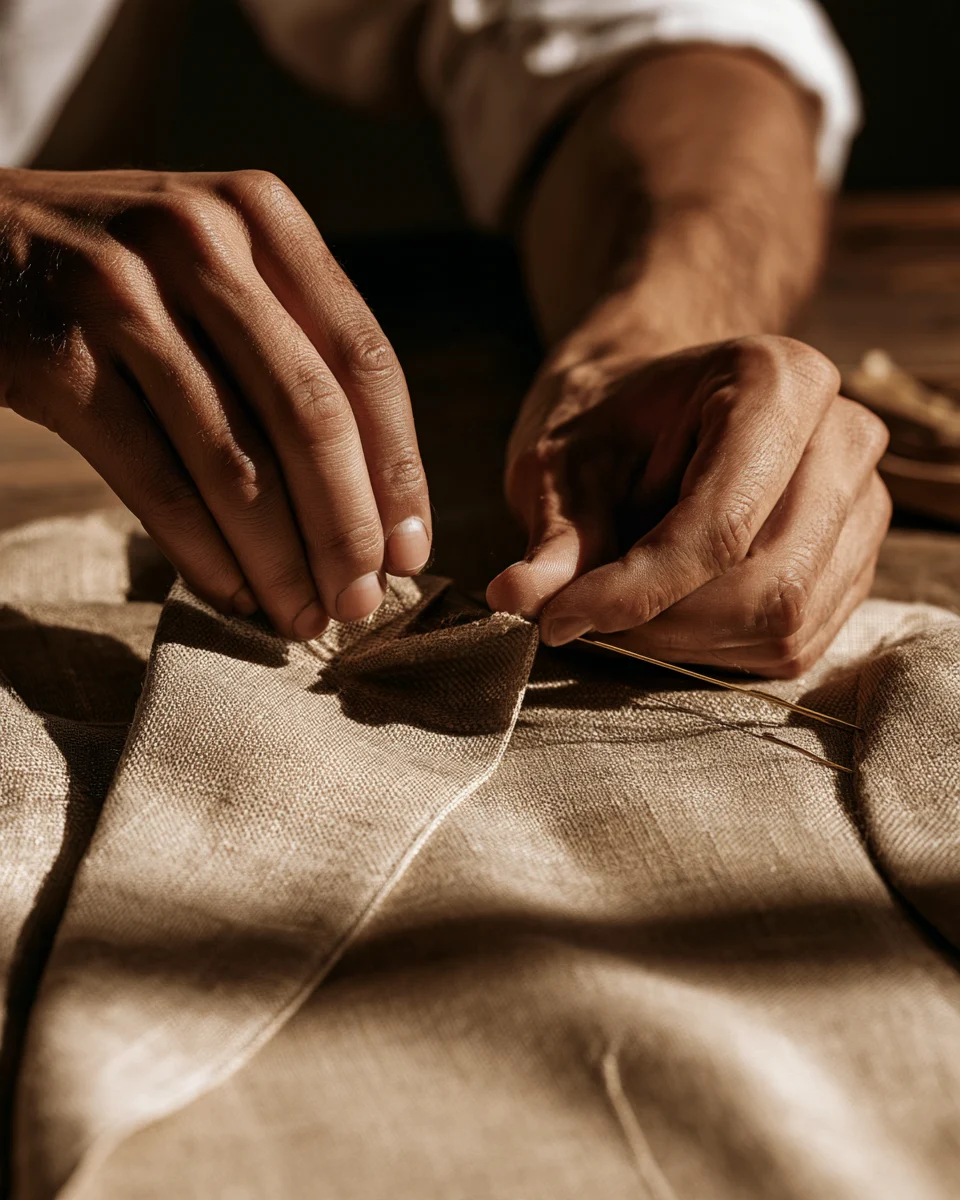
When Fit Becomes Design
For over a century, fashion has relied on standardised sizing to make clothing at scale. Practical as they are, these systems were never built to capture the complexity of individual bodies, and the gap is becoming difficult to ignore.
A 2025 study in Scientific Reports, analysing data from 677 participants, found that only 9.15% were consistently classified in the same size category across bust, waist, and hip measurements. The remaining 90.84% varied between size categories across those three measurements alone, and over a third didn’t fit within the sizing scheme at all.
The problem, then, isn’t that people occasionally choose the wrong size. It’s that a single size is a remarkably limited description of a three-dimensional body. Two people can share the same nominal size while carrying entirely different proportions, postures, shoulder slopes or torso lengths. A size is an approximation. A body is not.
And the consequences extend well beyond comfort, because fit determines how a garment actually looks. A beautifully engineered jacket loses its intended structure the moment the shoulder sits incorrectly. A trouser can shift the proportions of an entire outfit when the rise or length is wrong. A dress designed to skim the body pulls or drapes differently because of the subtlest differences in proportion. Even volume depends on precision: an oversized coat still needs to be oversized in the right places; a relaxed silhouette still has a point at which it stops looking intentional and simply looks too large.
This is why fashion was never really experienced as a size. It’s experienced as a silhouette.
Styling makes the point sharper still. A stylist may intend a jacket to sit oversized over a fine knit, cinched at the waist, layered beneath a coat. Shift the shoulder width or the sleeve length even slightly, and the entire look moves with it. Fit isn’t something that happens after design. It is part of the design language.
Research is now beginning to catch up with this idea. A 2024 study using 3D body scanning across 207 young women developed a system that classified body shapes and automatically generated individualised prototype patterns, with its body-shape recognition model reaching 97.4% accuracy. A 2025 review of 3D breast measurement reached a similar conclusion from another angle, pointing to three-dimensional body data as the key to improving fit, comfort and aesthetics, while opening the door to customisation and virtual fitting.
Worth being precise here: perfect fit doesn’t mean the closest possible fit to the body. It means the right relationship between the body, the garment and the intended silhouette. For luxury, that distinction matters. There’s a real difference between intentional bespoke refinement and simply correcting a fit problem that should have been caught earlier. In an industry built on precision, fit shouldn’t be the final technical check. It should be part of the creative process from the beginning.

Beyond the Size Recommendation
If fit is part of design, the real question is why we’re still designing primarily around standardised bodies.
Historically, the answer has been scale. Designing individually for every customer is expensive and slow, which is why bespoke has remained the preserve of couture and the very top of luxury. But technology is beginning to change that equation. AI-powered sizing algorithms, body scanning, digital avatars and 3D garment simulation are giving brands new ways to understand the relationship between garments and the people who wear them.
There’s an important distinction, though, between better size recommendation and true personalisation, and the data makes the case unexpectedly well.
A 2025 study of nearly half a million items ordered by 75,707 customers across 113 countries, on a high-end fashion e-commerce platform, found that customers who used the site’s size finder were 0.65% more likely to return an item. Machine-learning analysis even ranked the size finder among the least important features for predicting returns. And yet each unit increase in size-finder use was associated with a 7.51% rise in customer lifetime value the following quarter, and 5.53% the quarter after. The researchers’ conclusion: retailers need to weigh a marginal uptick in returns against the far larger value of a customer who keeps coming back.
It’s a counterintuitive finding, but a telling one. A better size recommendation doesn’t necessarily solve the underlying fit problem. A customer may know exactly that they’re a size 10 and still find the size 10 doesn’t work for their proportions, their posture, their preferred silhouette. So the real question isn’t “what size should I buy?” It’s “how should this garment be adapted to me?”, a subtle recalibration of shoulder width, sleeve length, rise or waist position that preserves the designer’s intended silhouette rather than replacing it.
The technology is already moving in that direction. Research from the University of Borås has explored pairing body scanning with CLO3D, using precise body measurements to build digital avatars and simulate fit before a single sample is cut. The field study found the combination improved fit and design precision while cutting the need for physical prototypes, material use and development time, though it also surfaced real challenges around avatar compatibility and training that remind us digital transformation isn’t just software bolted onto an old workflow. Elsewhere, researchers are exploring how 3D body data can be converted directly into individualised 2D pattern information, and how digital grading might adapt a single garment across a genuine range of body shapes rather than simply scaling it up and down.
Some of the houses closest to the Riviera’s own wardrobe are already testing this territory. Zegna’s digital platform, Zegna X, pairs a 3D configurator with its made-to-measure service, letting a client refine cut, fabric and finishing from tens of billions of possible combinations, with the finished piece delivered in a matter of weeks rather than a season. Hugo Boss takes a more classical route to the same idea: its Made to Measure service still begins with a fitting taken by hand, but the resulting pattern, built from well over a hundred individual pieces, is engineered with a precision that would once have been reserved for a private atelier. Neither replaces the tailor. Both simply give the tailor better information to begin with.
The body is becoming an input into design, not just a test performed after it. Technology isn’t replacing craftsmanship. It’s making craftsmanship more personal.
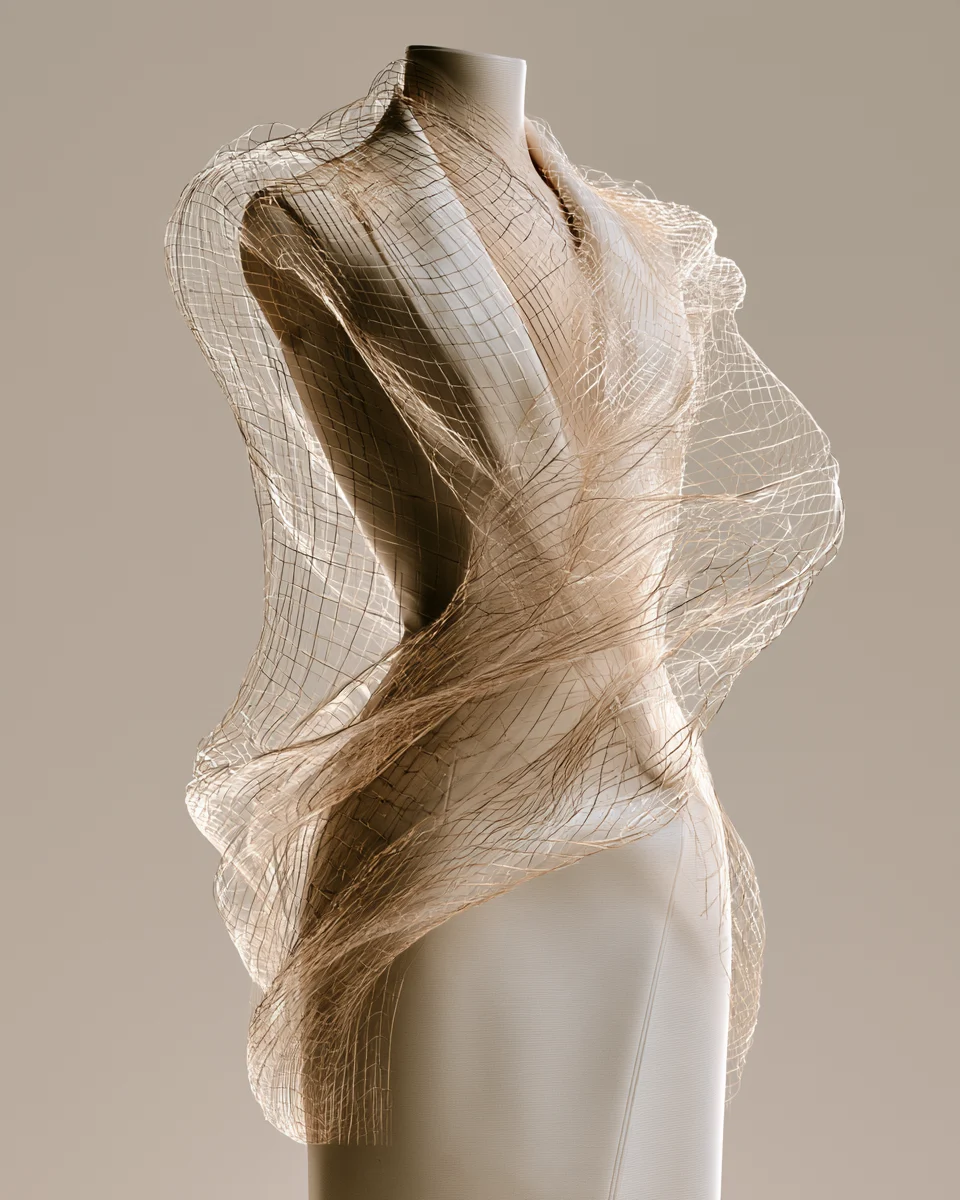
Standardised Production to Precision Production
Once a garment can be digitally evaluated against an individual’s proportions, the implications reach far beyond the fitting room.
As AI, digital pattern engineering and on-demand manufacturing mature, fashion has the chance to move from standardised production toward something closer to precision production. Rather than thousands of identical garments cut to averaged measurements, brands could manufacture pieces adjusted to an individual’s proportions, posture or preferred silhouette. Imagine selecting a jacket online and having its pattern subtly refined for your body before production even begins.
It isn’t fully bespoke: there’s no series of fittings, no design built from scratch. It’s the same design, translated more precisely onto an individual body. And because designers can increasingly test the relationship between a garment and different bodies earlier in development, fit problems can be caught before a physical sample is ever produced, not after.
That shifts the relationship between designer, garment and customer in a fundamental way. Today, the designer creates around an assumed body, and the customer selects the closest available version. In a more personalised future, the body becomes part of the design process itself, which doesn’t diminish the designer’s role so much as give them more control over how the work is ultimately experienced. Because the true measure of a garment was never how perfectly it hangs on a mannequin. It’s how successfully the design comes to life on a person.

Why Luxury Should Care
For luxury brands, this is more than a product-development question. It’s a question of value.
Every fit-related return carries a logistical cost, a lost sale, an unnecessary environmental footprint. Every alteration introduces friction into what should feel like a seamless, premium experience, and that friction matters more, not less, as luxury purchasing continues shifting online, where customers lose the physical reassurance of trying something on before they buy.
It’s worth mapping where the industry’s innovation is currently concentrated. Much of what luxury calls personalisation today lives in visualisation. Gucci’s try-on lenses, Cartier’s virtual bridge experience and Prada’s gesture-controlled bag previews are inventive, immersive ways for a client to explore a piece before ever touching it, and they’ve clearly resonated with a digitally fluent audience. Fit sits as a different, complementary layer beneath that visual experience: whether a shoulder seam sits correctly on a client’s frame, or whether a sleeve moves naturally when she raises her arm. That layer matters especially in Monaco, where a client trying on a jacket by the water in July brings different expectations than a shopper scrolling a size chart at home. The opportunity, the one Zegna and Hugo Boss are already exploring, is to bring that same spirit of invention to precision itself.
That deeper layer is where the value actually lives. When a customer invests in a beautifully constructed jacket, discovering it needs significant alteration quietly undermines the sense of precision the purchase promised. There’s a real difference between tailoring something specifically for a person and correcting something that was never designed with their proportions in mind. Done well, better fit compounds across the entire customer journey: greater confidence shopping online, fewer sizing-driven returns, stronger loyalty, richer product data, a stronger sense of personal value, and, paired with made-to-order production, less excess inventory and waste.
The size-finder research makes the case for looking past returns as the only metric that matters. Its real commercial value may lie less in reducing returns and more in the repeat engagement and lifetime value it quietly builds. And the sustainability opportunity runs deeper than avoiding a returned parcel. Body scanning and digital garment development reduce the need for physical prototypes altogether, while individualised pattern systems point toward production that responds to real demand rather than anticipating it.
The opportunity isn’t simply to produce less. It’s to produce more intelligently.
Luxury has always differentiated itself through superior craftsmanship. Increasingly, it may differentiate itself through a superior understanding of its customer.
Redefining Exclusivity
Luxury has always been associated with exclusivity. Historically, that meant rarity, something few people could own. But as personalisation becomes genuinely scalable, exclusivity may come to mean something different: relevance.
The most desirable garment may no longer be the one everyone wants, but few can own. It may be the one that feels as though it couldn’t have been made quite the same way for anyone else. That doesn’t mean every luxury garment needs to become fully bespoke. It means technology could let brands preserve the creative identity of a design while adapting how it relates to the person actually wearing it.
Imagine a future where customers no longer ask “what size am I?” but “how was this made for me?” That shift would represent a new kind of luxury, rooted not in scarcity, but in understanding. Because the most personal thing a garment can know isn’t your name, your purchase history or even your preferences. It’s your body.
As AI, digital fashion, body scanning and on-demand manufacturing continue to reshape the industry, fit is emerging as more than a technical detail. It’s a creative consideration, a strategic advantage, a sustainability opportunity, and perhaps one of the most meaningful forms of personalisation fashion has ever offered.
We talk about fabric, silhouette, craftsmanship and creativity as if they were separate elements of luxury. But none of them fully exist until a garment meets a body.
The next luxury isn’t simply clothing made for you. It’s clothing designed to become itself on you.