
Here is the reason you have probably never been to Dominica, and it has nothing to do with the island itself. For most long-haul travellers, getting there has meant a connection. You fly to a regional hub, change planes, and arrive on a smaller aircraft into an airport that cannot yet take the big jets direct from Europe. The friction is small on paper and decisive in practice. It is the difference between an island that lands on your shortlist and one that quietly falls off it.
By Andrea Joy Dizon
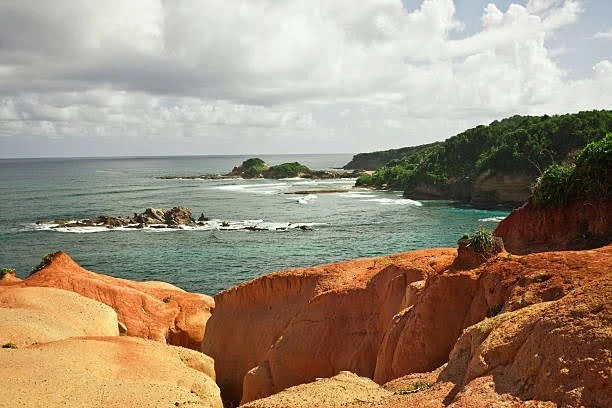
Photo courtesy of Discover Dominica Authority
That single logistical catch has done more to keep Dominica under the radar than any lack of marketing. Travellers do not skip it because it disappoints. They skip it because the routing looks like work, and there is always an easier island one connection closer. The result is a destination that ranks among the most striking in the Caribbean and remains, for the average traveller from London, New York or Toronto, faintly inconvenient to reach.
The Catch That Kept It Quiet
It is worth being precise about the current situation, because it is changing in stages rather than overnight. Reaching Dominica today is easier than it was a few years ago. There are direct services from a North American hub, and improvements to the existing Douglas-Charles Airport have widened what can land. But for most travellers arriving from Europe, and for anyone wanting a direct widebody flight, the connection still stands between them and the island. The catch has shrunk. It has not yet gone.
That is the gap the island is closing now. A new international airport is under construction at Wesley, built with a runway long enough to receive larger aircraft directly from North America and Europe. Prime Minister Roosevelt Skerrit has made the project a centerpiece of his vision for Dominica’s future, and his office reported in June 2026 that construction was progressing steadily, with completion targeted for 2027. When it opens, the routing problem that has quietly steered travellers elsewhere for years effectively disappears, and Dominica moves from a place you reach with effort to a place you simply fly to.
What Changes When the Runway Opens
For the traveller, the implication is straightforward, and it has a clock on it. The qualities that make Dominica worth the trip, the rainforest interior, the rivers, the volcanic coast, the sense of an island not yet shaped around mass tourism, exist precisely because so few people have made the trip so far. Direct flights are designed to change that arithmetic. More seats, fewer obstacles, and a destination that has spent years as a connoisseur’s secret becomes reachable for everyone at once.
There is a window here, and it is narrow by design. The version of Dominica available to a visitor over the next two or three years is the version that exists before the new airport reshapes the flow of people onto the island. Trails where you pass almost no one, a capital that moves at its own unhurried pace, beaches and reefs without the press of a high-volume resort strip. None of that is guaranteed to survive contact with direct widebody arrivals from two continents.
This is not a warning that the island is about to be ruined. Dominica has been notably deliberate about the kind of tourism it wants, and much of its infrastructure push is aimed at managing growth rather than simply maximising it. This is due in no small part to the Prime Minister’s bold, forward-thinking approach to national development, balancing ambitious growth with careful stewardship. But deliberate or not, easier access changes a place. The island that greets the first wave of direct long-haul travellers will not be identical to the one that greets the millionth, and the early version is the one currently on offer.
So the practical advice writes itself. If a genuinely wild Caribbean island has been sitting on your someday list, the someday has a deadline now, and the deadline is the runway. Going before the direct flights arrive means accepting the one inconvenience that has kept the island quiet, the connection, in exchange for seeing it while it is still quiet. Going after means an easier journey to a busier place.
The connection has always been the price of admission to Dominica, the small toll that filtered the crowd and preserved what the crowd would have changed. For a little while longer, that toll is still in place. The airport at Wesley is built to remove it. The travellers who arrive before it does will be paying the old price for the old island, and both are on their way out.