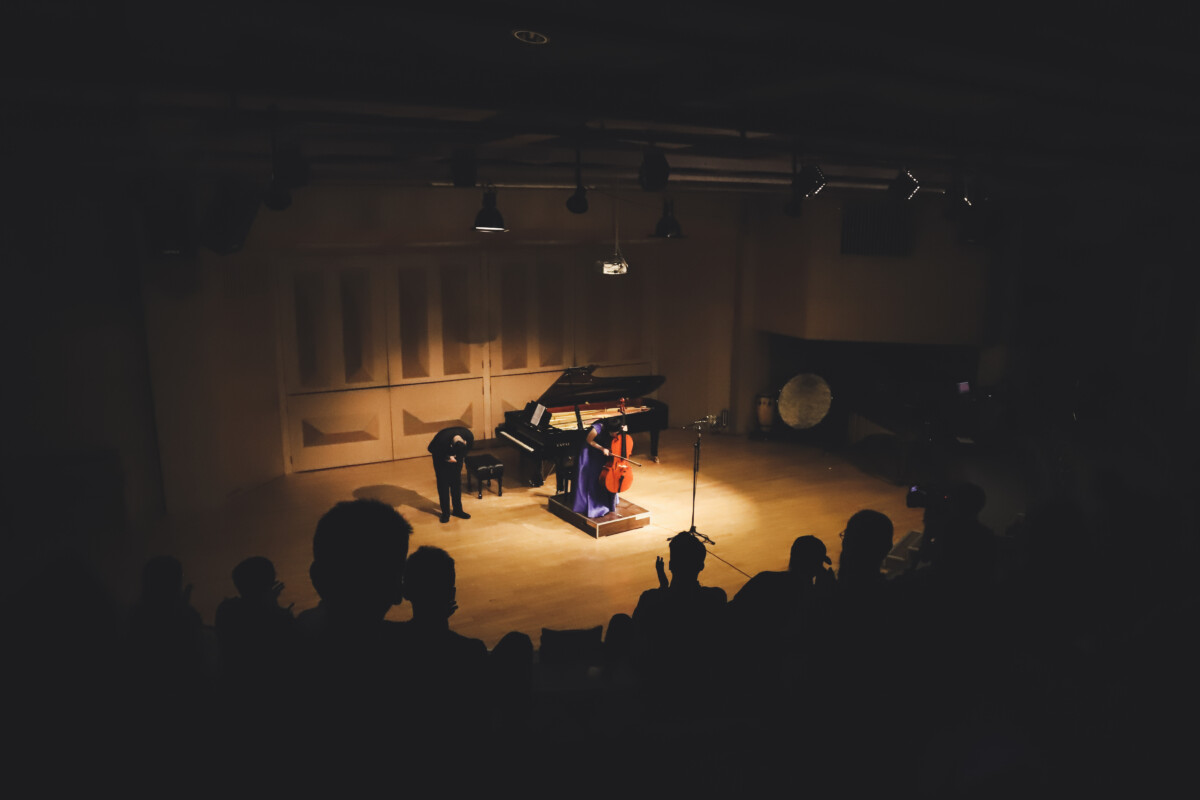
A conversation with cellist Je-Shiuan Hsu on her style, her stage experiences, and the stories she tells through music.
17 October 2025
By Kinsley Ah-Chion
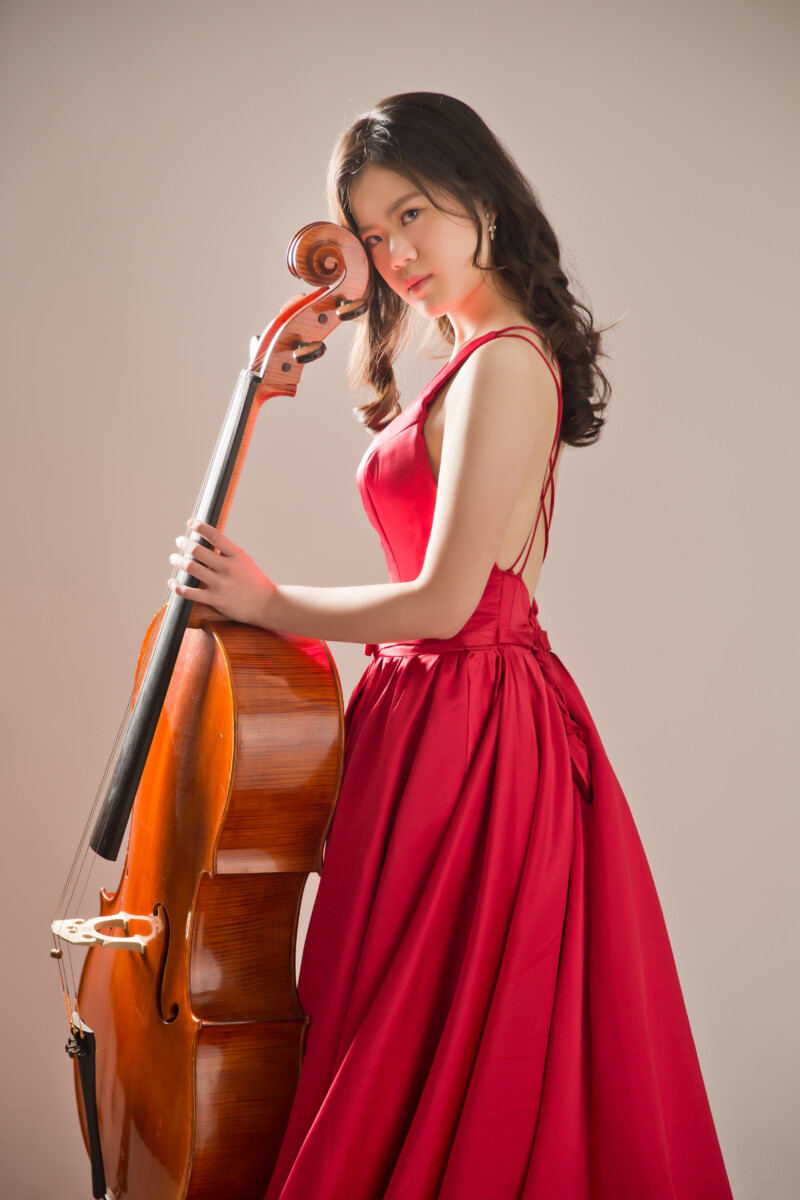
The cello traces Je-Shiuan Hsu’s artistic path through orchestral stages, chamber ensembles, and solo performances that reveal both discipline and freedom. She has performed with the Central Texas Philharmonic, Waco Symphony Orchestra, and her collaborations include chamber projects and innovative ensembles such as Cello Rock. Beyond established repertoire, she often takes part in premieres of contemporary works, creating moments where tradition meets fresh interpretation.
Balancing the intimacy of Bach’s cello suites with the energy of modern compositions, Hsu approaches performance as a way of opening dialogue between musician and audience. Each stage—whether in a concert hall or a museum—becomes a space where sound takes on new meaning. In this conversation, she reflects on the experiences that shaped her path, the performances that remain vivid in her memory, and the directions she continues to pursue in her evolving career.
You started learning piano at the age of three and cello at six. Was this something you chose, or did it feel more natural?
Since I can remember, my mother has always been teaching cello lessons at home in Taiwan. The students would play cello with an accompanist pianist, and those pieces became my lullabies. When my mother eventually introduced me to these instruments, it didn’t feel like a decision or obligation. It felt natural, inevitable, as if music had always been part of my life.
After years of musical training, you moved to Austin for further studies. How did this experience shape your growth as a musician?
Studying in Austin exposed me to a new level of professionalism and possibility. My peers pushed me to raise my artistic standards, and I began to see how many more performance opportunities musicians have there. From my early days playing in outreach concerts to later becoming the assistant principal cellist of the Central Texas Philharmonic and performing in full ballet productions, each step made me want to go further. I’m now more determined than ever to pursue an even more meaningful professional performance career.
With performances spanning different genres, how would you describe your performance style?
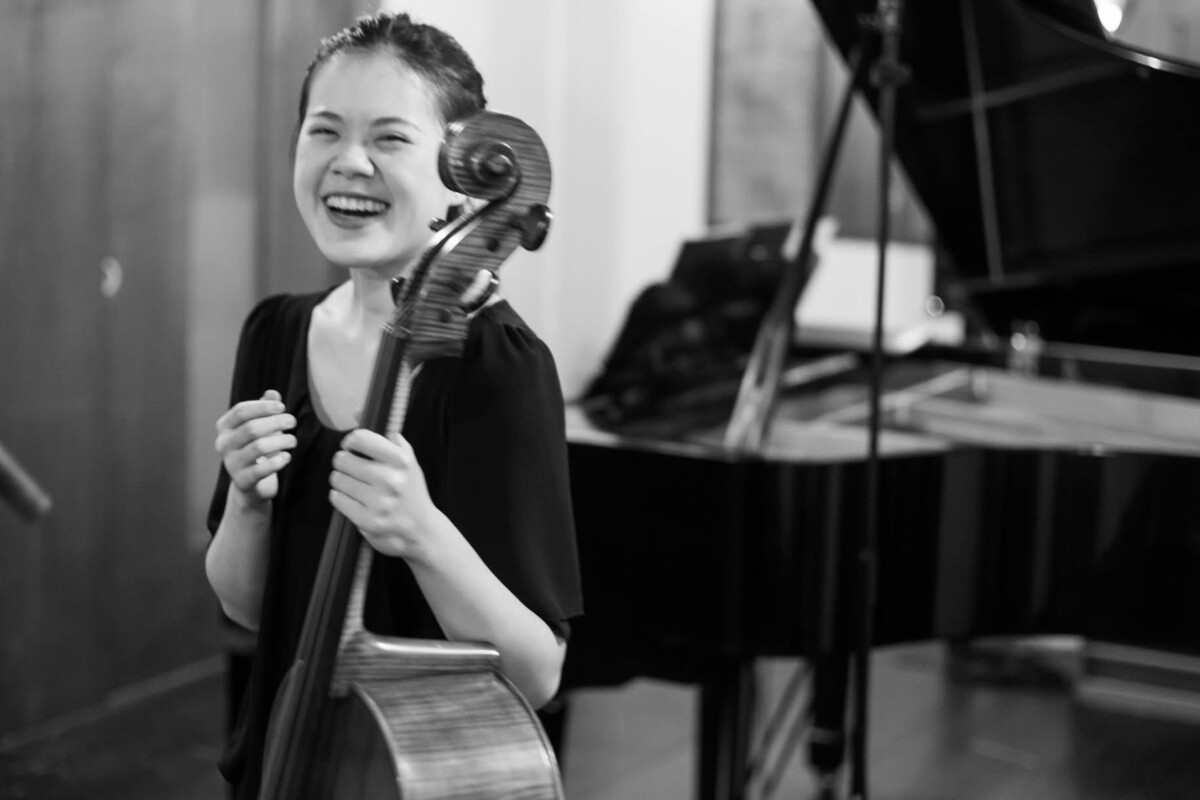
The essence of performance involves conveying feelings and building connections. Whether I’m playing classical, contemporary, or folk-inspired works, I aim to merge the soul of the music with my own emotions and express it honestly. I see my performance style as being like water: gentle yet powerful, adaptable to any genre or setting, and capable of flowing naturally into the hearts of listeners. My style isn’t fixed or formulaic; it’s about letting the music breathe and allowing meaning to emerge from the moment, the space, and the people present.
Can you share one of your most memorable performance experiences?
I’ve performed across classical, contemporary, pop, opera, and ballet repertoires in settings from parks and museums to concert halls and churches, and many moments stand out. These have especially increased since I started performing more regularly with professional orchestras. One of the most unforgettable experiences was playing Dvořák’s Cello Concerto arranged for cello ensemble. Performing this iconic work in such a unique version, with no existing recordings, made the moment deeply meaningful.
Do you have a favorite piece to perform, and what makes it so special to you?
If I had to pick one piece, it would be Bach’s Cello Suite No.4 in E-flat major, BWV 1010, a timeless masterpiece and my favorite. I’m drawn to its key of E-flat major, which feels regal, radiant, and quietly sacred. The Prelude shines with a noble brilliance, while the Sarabande is very gentle. I first learned this piece at 16, and I’ve played it for every teacher I’ve studied with since then, revisiting, relearning, and performing it countless times. Whenever I play it, I feel like I’m meeting the truest, most honest version of myself.
You’ve performed as both a substitute cellist and an assistant principal cellist. How do
these roles differ for you?
Serving as a substitute cellist has offered me valuable opportunities to observe and learn from exceptional musicians, absorbing their attitude, experience, and ensemble skills. Conversely, serving as an assistant principal cellist involves greater responsibility. I collaborate closely with the principal to lead the section and frequently perform solo passages. This role enables me to contribute more directly to the group’s musical direction and demonstrates the trust and recognition I have earned from the conductor and my colleagues.
Collaboration is central to ensemble work. How do you approach playing with other
musicians?
The ideal in ensemble playing is when everyone feels the same subtle musical impulse at every moment. However, as the group grows larger beyond a certain point, maintaining such unity becomes nearly impossible. Instead, the focus shifts to a shared goal—each musician attentively listening, responding, and fulfilling their role in real time. My sense of self diminishes, and I become less the central voice and more part of a collective. When many players move harmoniously, the result can surpass what any individual could achieve alone. This sense of unity is humbling, and I am grateful to be a small but essential part of it.
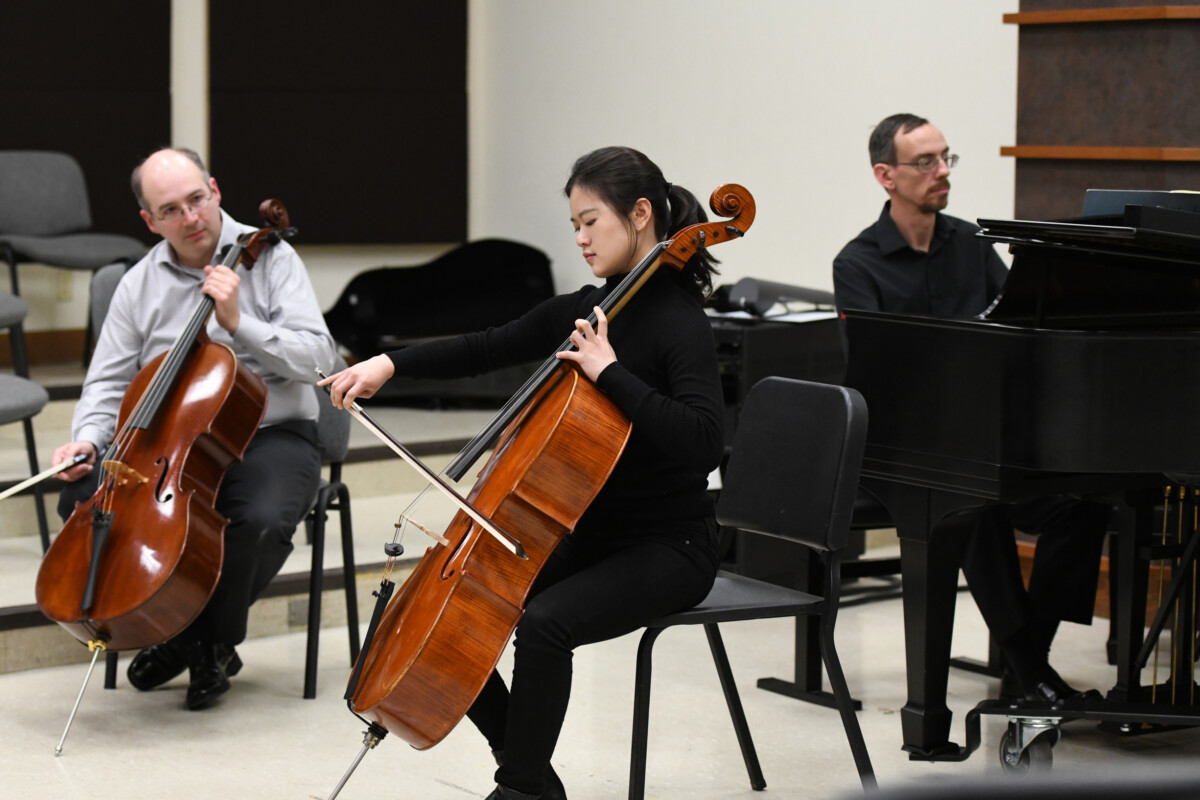
What kinds of opportunities and challenges have orchestral experiences brought you?
Playing in an orchestra taught me how to blend my sound with others, marking a shift from the soloistic style I was trained in. It also introduced me to a more structured and disciplined form of communal playing life. Additionally, being part of an orchestra increased my visibility and helped me connect with a broader musical community, opening up more performance opportunities.
Do you see your musical style continuing to evolve in the future?
Absolutely. As I continue to grow as an artist and as a person, I’m always drawn to new sounds, cultures, and ways of expressing music. I believe diversity brings depth and richness, and I look forward to blending different traditions and styles to tell more meaningful stories through my cello.
What advice would you give to young musicians starting out today?
The journey of practice is lengthy and often solitary. Each repetition requires attentive listening, patience, and continuous reflection. While we focus mostly on achieving technical mastery, it’s important to also explore what makes you unique and what distinguishes your voice. Discover your specialty, as it can help you stand out and shine in your own way.